
When You Need a Restraining Order Attorney: What to Know First
A restraining order attorney can be the most important person in your corner when your safety — or your rights — are on the line.
If you need a quick answer, here is what you should know right away:
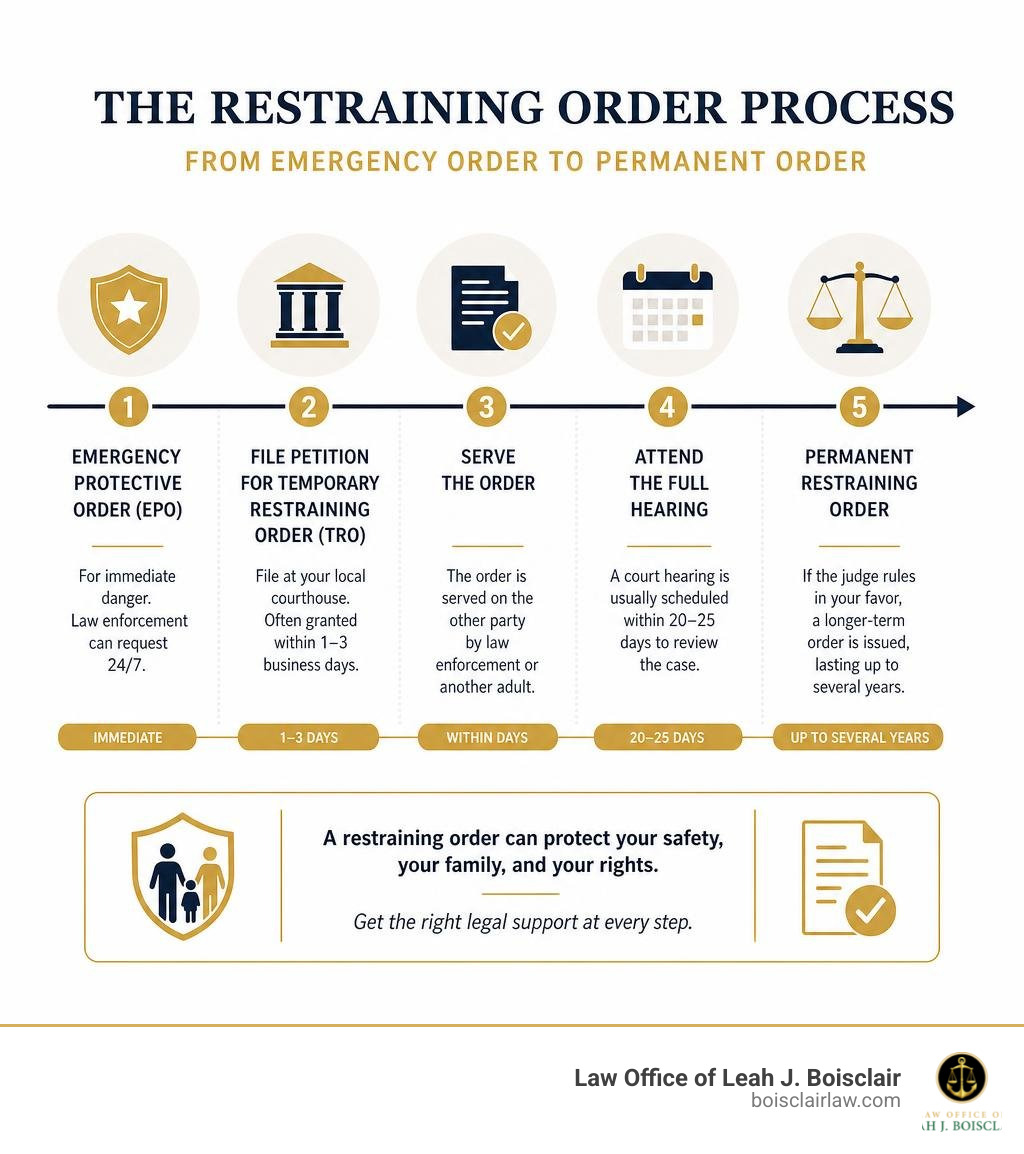
How to get a restraining order with an attorney’s help:
- Contact an attorney immediately — especially if you are in danger or have been served with an order
- File for an Emergency Protective Order (EPO) if you face immediate threat — law enforcement can request one 24/7
- File a petition for a Temporary Restraining Order (TRO) at your local courthouse — often granted within 1-3 business days
- Serve the order on the other party through law enforcement or another adult
- Attend the full hearing (usually within 20-25 days) where a judge decides on a longer-term order
- Receive a permanent order lasting up to several years if the judge rules in your favor
Roughly 3 million restraining orders are filed every year across the United States. Behind each one is a real person — either trying to feel safe again, or trying to protect their reputation and rights against an order they believe is unjust.
Either way, the stakes are high.
A restraining order can affect where you live, whether you can see your children, whether you can own a firearm, and even your immigration status. Getting the process right — from the very first filing — matters more than most people realize.
That is why having an experienced attorney by your side is not just helpful. For many people, it is the difference between being protected and being left vulnerable.
Simple restraining order attorney word guide:
Understanding Restraining Orders vs. Protective Orders
When navigating the legal system in Rhode Island, the terminology can quickly become confusing. You might hear people throw around terms like “restraining order,” “protective order,” and “no-contact order” as if they are the exact same thing. While they all aim to keep someone away from you, they actually stem from different legal pathways and courts.
In Rhode Island, a civil restraining order or a civil protective order is handled through the Family Court or District Court. These are civil orders, meaning they are requested by an individual (the petitioner) against another person (the respondent) to prevent harassment, abuse, or stalking. These civil orders frequently include no-contact provisions, which legally forbid the restrained person from calling, texting, emailing, or coming within a certain distance of the protected person.
Conversely, a “no-contact order” is typically a criminal court order. This is issued automatically by a judge during an arraignment when someone is arrested and facing criminal domestic violence charges. The victim does not have to file a separate petition for this; the state issues it to protect the victim while the criminal case is pending.
Understanding how these orders interact is crucial. For a deeper dive into managing this stressful process, read our guide on How to Get a No Contact Order Without Losing Your Sanity.
To understand the statutory definitions of abuse and the exact legal mechanisms in our state, you can review the Rhode Island General Laws on Domestic Abuse Prevention.
Types of Restraining Orders and Eligibility Requirements
In Rhode Island, the law provides different types of protective measures depending on your relationship with the other party and the nature of the threat. Choosing the wrong type of order can lead to a swift dismissal by the court, which is why having an experienced restraining order attorney is so valuable.
Here is a quick reference table to help you understand the primary differences:
| Order Type | Qualifying Relationships | Key Requirements | Typical Duration |
|---|---|---|---|
| Domestic Abuse Protective Order (Family Court) | Spouses, ex-spouses, cohabitants (past 12 months), co-parents, blood relatives, substantive dating partners | Showing of physical abuse, threats of physical harm, or stalking | Up to 3 years (renewable) |
| Civil Harassment Restraining Order (District Court) | Neighbors, coworkers, strangers, acquaintances | Showing a clear pattern of intentional harassment or a credible threat of violence | Up to 3 years |
If you are experiencing immediate danger, law enforcement can assist in securing emergency protective orders during hours when the courts are closed. Once a formal petition is filed, a judge will review the paperwork and typically issue a Temporary Restraining Order (TRO) to keep you safe until both parties can present their cases at a formal hearing.
To learn more about court locations and local filing guidelines, visit the Rhode Island Judiciary Domestic Violence Resources. You can also read a comprehensive breakdown of local options in this guide on Rhode Island Restraining Orders & Domestic Dispute Lawyers.
Domestic Violence Restraining Orders and Qualifying Relationships
To file for a Domestic Abuse Protective Order in Rhode Island Family Court, you must share a specific relationship with the person you are filing against. Rhode Island law defines these qualifying relationships as:
- Current or former spouses
- Adults related by blood or marriage
- Individuals who have lived together within the past 12 months
- People who share a child in common
- Parties who are or were in a “substantive dating or engagement relationship” within the past year
The court takes these relationships very seriously. If you do not meet these specific criteria, your case belongs in District Court under civil harassment guidelines. If you are dealing with a toxic relationship and considering a split, read our compassionate A Legal Guide to Divorcing an Emotionally Abusive Partner to understand your options.
Civil Harassment, Workplace Violence, and Elder Abuse Orders
What happens if the person threatening you is a neighbor, a former employee, a coworker, or a complete stranger? Because you do not share an intimate or familial relationship, you cannot file in Family Court. Instead, you must file a Civil Harassment Restraining Order in the District Court.
To win a civil harassment case, you must prove that the other person has engaged in a course of conduct that seriously alarms, annoys, or harasses you, and that serves no legitimate purpose.
Additionally, employers in Rhode Island can seek workplace violence restraining orders to protect their employees from credible threats of violence at the job site. Similarly, specialized elder abuse protective orders are available to protect vulnerable adults aged 60 or older from physical, emotional, or financial exploitation.
Step-by-Step Guide: How to File for a Restraining Order
Filing for legal protection can feel overwhelming, especially when you are already dealing with the emotional fallout of harassment or abuse.

Here is the step-by-step process for filing a restraining order in Rhode Island:
- Prepare the Paperwork: You must fill out a petition detailing the specific incidents of abuse or harassment. Accuracy is critical; you must sign this under penalty of perjury.
- File the Petition: Submit your documents to the court clerk. If you are filing a domestic abuse petition, this goes to the Family Court. For civil harassment, it goes to the District Court.
- Ex Parte Review: A judge will review your petition on the same day. If they agree that you are in immediate danger, they will issue a temporary order (TRO).
- Arrange Personal Service: The temporary order has no legal power until it is personally served to the respondent. In Rhode Island, this is typically handled by local law enforcement or a licensed constable. You cannot serve the papers yourself.
- Attend the Hearing: The court will schedule a full hearing, usually within 14 to 21 days, where both sides can present evidence.
Gathering Evidence with a Restraining Order Attorney
A judge cannot grant a long-term restraining order based on accusations alone. You must back up your claims with clear, admissible evidence. Working with a skilled restraining order attorney ensures that your evidence is organized and presented in a way that the court respects.
Essential evidence includes:
- Text messages, emails, and social media messages (printed with clear timestamps and sender details)
- Detailed call logs and voicemails
- Photos of physical injuries or property damage
- Police reports and medical records
- Statements from eyewitnesses who saw or heard the harassment
To ensure you choose the right legal advocate to help compile this vital documentation, check out our guide on How to Choose the Best Domestic Abuse Lawyer for Your Case.
The Filing Process and Emergency Protective Orders
If an incident occurs late at night or over the weekend when the courthouses in Cranston or Providence are closed, you do not have to wait. Local police departments can contact an on-call judge to secure an Emergency Protective Order. These emergency orders provide immediate, short-term protection until the courts reopen and you can file a formal petition for a temporary restraining order.
For more information on how our firm handles these urgent matters, explore our Law Office of Leah J. Boisclair Domestic Offenses Services.
What to Expect at the Restraining Order Hearing
The formal court hearing is where the judge decides whether to turn your temporary order into a long-term, permanent order. This is a formal trial, and you should expect the other party to show up, potentially with their own lawyer.
The burden of proof in these civil proceedings is a “preponderance of the evidence.” This means you must prove that it is more likely than not that the abuse or harassment occurred. Both sides will have the opportunity to testify under oath, present physical exhibits, and cross-examine witnesses.
Walking into a courtroom alone to face your abuser is incredibly intimidating. Having a dedicated advocate by your side makes all the difference. For critical advice on preparing for this day, read our article: Don’t Go It Alone When Facing a Domestic Violence Case.
Preparing Your Case with a Restraining Order Attorney
When we represent clients at a restraining order hearing, we leave nothing to chance. We will work with you to:
- Outline and practice your testimony so you can speak clearly and confidently
- Coordinate and subpoena key witnesses, such as neighbors, family members, or responding officers
- Organize your text messages, photos, and police reports into clean, numbered exhibits for the judge
- Craft a compelling legal argument that directly addresses Rhode Island’s statutory requirements
Defending Against an Order and Understanding the Long-Term Consequences
While restraining orders are vital tools for true victims, they are also sometimes used as weapons. In bitter divorces or child custody disputes, one party might file false allegations of domestic abuse to gain leverage or force the other person out of the family home.
If you have been served with a temporary restraining order, you must take it seriously. Do not ignore it, and do not attempt to contact the petitioner to “smooth things over” — doing so is a criminal offense that can land you in jail immediately.

The consequences of having a permanent restraining order issued against you are severe and long-lasting:
- Firearm Surrender: Under both federal law and Rhode Island state law, you will be required to surrender all firearms and ammunition, and you will be prohibited from purchasing new ones.
- Child Custody: A finding of domestic abuse creates a strong legal presumption against you having custody of your children.
- Employment and Background Checks: Restraining orders are public records. They will show up on background checks, which can destroy your career, cost you professional licenses, or prevent you from renting a home.
- Immigration Status: For non-citizens, a domestic violence protective order can trigger deportation proceedings or block path-to-citizenship applications.
If you find yourself facing these high-stakes allegations, read Why You Need a Criminal Defense Attorney for Domestic Violence Right Now to understand how to protect your future.
Why You Need an Experienced Restraining Order Attorney
Whether you are seeking protection or defending your reputation, trying to navigate the Family or District Courts without legal representation is highly risky. The rules of evidence are strict, and judges have very little time to parse through disorganized stories.
At the Law Office of Leah J. Boisclair, we provide personalized, compassionate advocacy for clients in Cranston, Providence, Warwick, and throughout Rhode Island. We understand the complex intersection of family law and criminal defense. If you are a petitioner, we will fight to make sure the court grants you the maximum protections available. If you are a respondent facing false accusations, we will aggressively challenge the evidence, cross-examine the accuser, and work to keep your record clean.
Frequently Asked Questions about Restraining Orders
FAQ 1: How long does a restraining order last?
In Rhode Island, a Temporary Restraining Order (TRO) typically lasts until your scheduled court hearing, which is usually within 14 to 21 days. If the judge grants a permanent Domestic Abuse Protective Order at the hearing, it can last for up to 3 years. Civil Harassment Restraining Orders can also be issued for up to 3 years. Both types of orders can be renewed or extended if you file a motion before they expire and prove that you still have a reasonable fear for your safety.
FAQ 2: What happens if a restraining order is violated?
Violating a civil restraining order or protective order is not just a civil matter — it is a serious criminal offense in Rhode Island. Under state law, a first-offense violation is a misdemeanor punishable by up to one year in jail and a fine of up to $1,000. Subsequent violations can carry mandatory jail time. If you are protected by an order and the restrained person contacts you, call 911 immediately.
FAQ 3: Can a restraining order be modified or terminated?
Yes. Either the petitioner or the respondent can file a motion to modify or vacate a restraining order. The court will schedule a hearing to evaluate whether there has been a substantial change in circumstances. For example, if both parties have completed counseling and mutually wish to resume co-parenting, a judge may agree to modify the no-contact provisions.
Conclusion
A restraining order is a powerful legal tool that can completely reshape your life, safety, and future. Whether you need to secure immediate protection from abuse or defend yourself against false allegations that threaten your custody rights and career, you should not navigate this complex process alone.
At the Law Office of Leah J. Boisclair, we provide personalized, compassionate, and aggressive representation to clients across Rhode Island, including Cranston, Providence, Warwick, Johnston, and East Greenwich. We know how the local courts operate, and we are ready to stand by your side.
Contact us today to schedule a consultation and learn how we can protect your rights and peace of mind. Protect your rights with expert representation.