

When a Fight Becomes a Criminal Offense: What You Need to Know
Public order offense fighting and brawling can turn a single bad moment into a criminal record that follows you for years.
If you’ve been accused of these offenses, here’s what matters most right now:
- You need a defense attorney immediately — before your arraignment
- These offenses range from minor misdemeanors to serious felonies depending on the circumstances
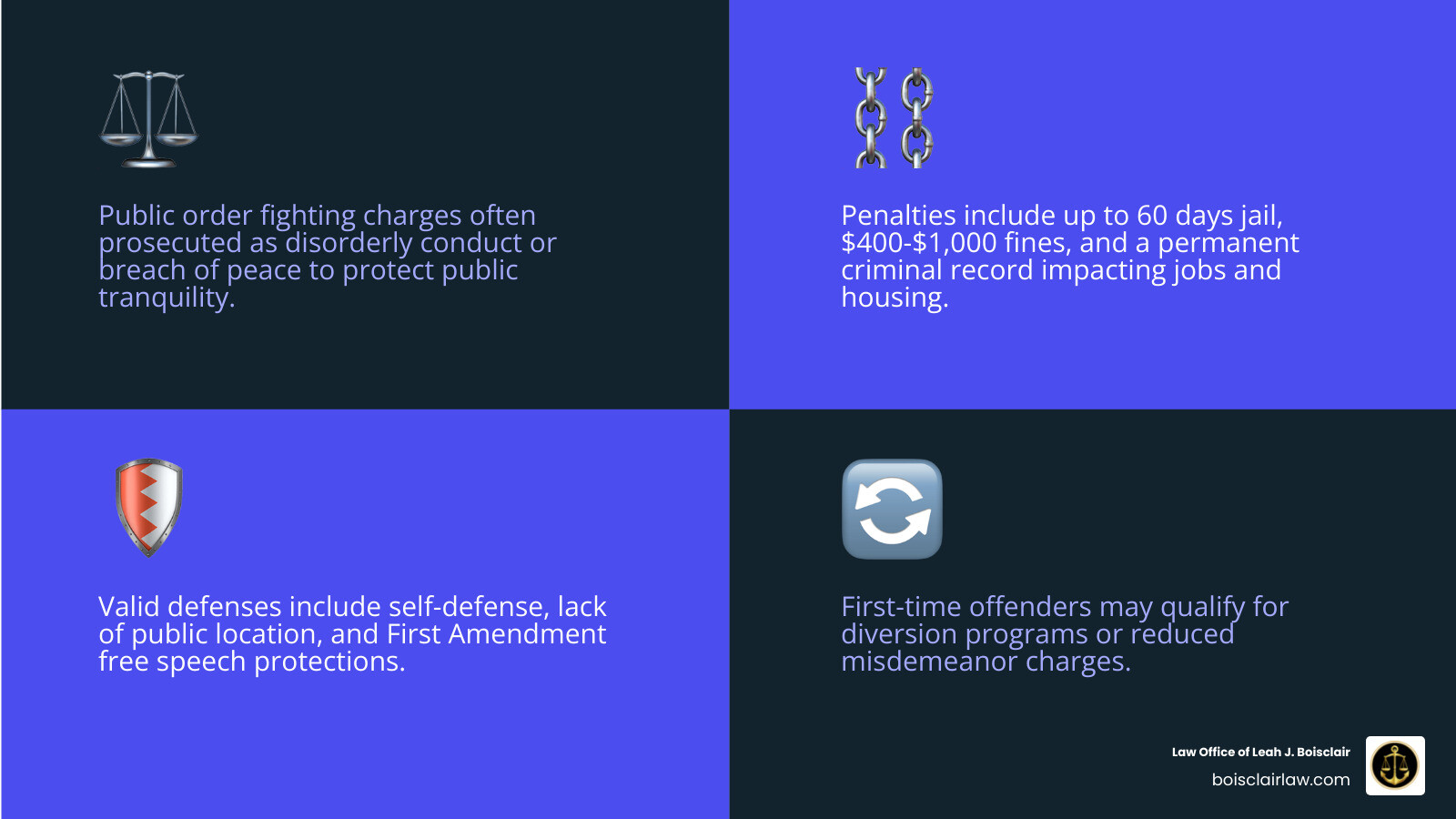
- Self-defense, lack of public location, and First Amendment protections are all valid defenses
- First-time offenders may qualify for reduced offenses or diversion programs
- The Law Office of Leah J. Boisclair defends clients facing these offenses in Rhode Island, Massachusetts, and Connecticut
Fighting in public isn’t just a personal matter. The law treats it as a breach of the social contract — a disruption to the peace and safety that everyone shares in public spaces.
Across the U.S., statutes like California Penal Code § 415 and Rhode Island’s own criminal code make it a crime to unlawfully fight, threaten violence, or cause tumultuous disturbances in public places. Even a verbal challenge or a shove can be enough to trigger offenses.
The consequences are real. Depending on your jurisdiction and the details of the incident, you could be facing:
- Up to 60 days or more in jail
- Fines ranging from $400 to $1,000 or higher
- A permanent criminal record
- Impacts on your job, housing, and immigration status
And the law isn’t always straightforward. Words, gestures, crowds, and context all factor into how prosecutors build a case — and how a skilled attorney can tear one apart.
Understanding Peace and Order Offenses: Fighting and Brawling
When we talk about a public order offense fighting and brawling, we are looking at a category of law designed to protect “public tranquility.” In Rhode Island and across the country, the government views the public square as a place where citizens should feel safe from violence and chaos. When a fight breaks out in a park, a bar, or on a sidewalk, it doesn’t just affect the two people swinging punches — it affects everyone nearby.
In legal terms, these incidents are often prosecuted as “disorderly conduct” or “breach of the peace.” These are broad terms that give police a lot of discretion. As an experienced RI Criminal Attorney, we often see these offenses applied to everything from a heated argument outside a stadium to a full-scale barroom brawl. The goal of these laws is to prevent “hazardous or physically offensive conditions” that have no legitimate purpose.
Proving a Public Order Offense Fighting and Brawling Charge
To get a conviction, the prosecution can’t just say you were “acting rowdy.” They must prove specific legal elements. Under Rhode Island General Laws Title 11. Criminal Offenses § 11-45-1, the state generally needs to show that you:
- Engaged in fighting or in violent, tumultuous, or threatening behavior.
- Acted in a public place (or your conduct affected people in a public place).
- Had the intent to cause public inconvenience, annoyance, or alarm, or acted with a reckless disregard for the risk of doing so.
A “public place” is defined broadly. It includes highways, schools, places of business, amusement parks, or even the common hallways of apartment buildings. If the fight happened in your locked living room with no one else around, it might be a different offense, but it likely isn’t a public order offense.
Distinguishing Brawls from Assault and Battery Offenses
It is common for clients to ask us: “Why was I cited for disorderly conduct instead of assault?” While they often overlap, there are key differences.
- Assault is about the threat of harm. If you clench your fist and move toward someone in a way that makes them reasonably fear they are about to be hit, that is assault.
- Battery involves the actual “unwanted touching.” This can be a punch, a shove, or even hitting someone with an object like an umbrella.
- Brawling/Disorderly Conduct focuses on the disturbance itself. You can be cited for a public order offense even if no one was actually injured, simply because your behavior created a dangerous or “tumultuous” environment for the public.
If you are facing these more serious physical allegations, you may need an Assault and Battery Defense Attorney to help navigate the complexities of self-defense and intent.
Legal Elements and Statutes Governing Public Fighting
The rules of engagement are written clearly in the state statutes. In Rhode Island, the primary hammer used by prosecutors is Title 11 Criminal Offenses, which covers everything from dueling to general disorderly conduct.
One of the most important things to understand is that “tumultuous behavior” doesn’t always require a punch. If a group of people is acting in a way that suggests a fight is imminent — shouting threats, squaring up, or blocking traffic — police can move in. We cover a wide range of these scenarios in our Practice Areas, ensuring that our clients understand exactly which statute the state is using against them.
Jurisdictional Variations in Public Order Offenses
While the general idea of “don’t fight in public” is universal, the specific punishments vary wildly by location. For example, some jurisdictions have specific “affray” laws, which specifically target two or more people fighting in a public place to the terror of the citizens.
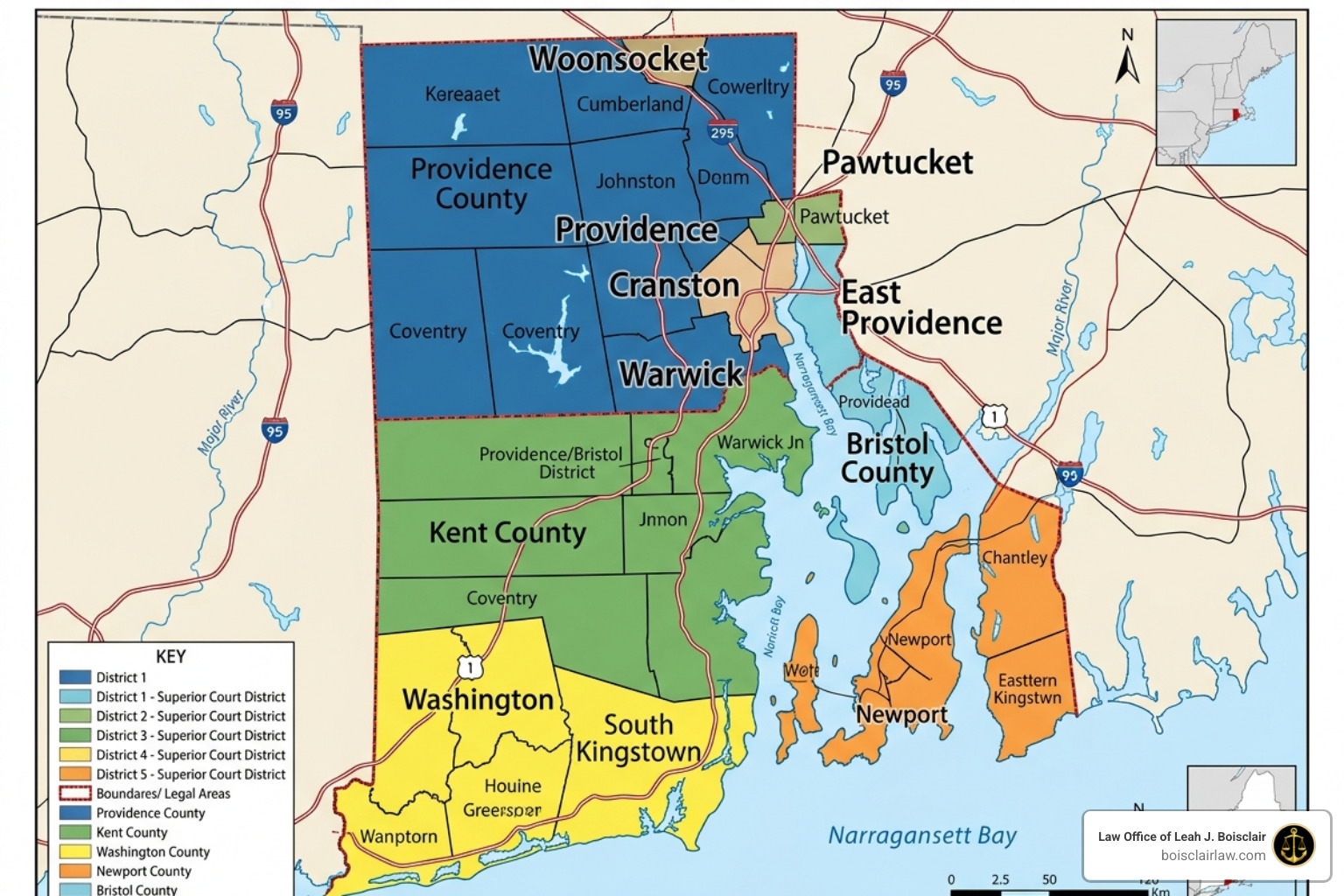
Even international laws, like the Summary Offences Act 1981 in New Zealand, highlight that fighting in a public place is a global concern for law enforcement. In Rhode Island, we often deal with both state law and municipal codes. A city like Cranston might have its own local ordinances that add additional layers to a disorderly conduct offense.
The Role of Intent and Recklessness
You don’t have to plan a riot to be cited for a public order offense fighting and brawling. Most of these cases involve “recklessness.” This means the state argues that even if you didn’t mean to cause a public disturbance, you should have known that your actions (like throwing a chair in a crowded restaurant) would cause alarm.
However, if we can prove there was no intent and no recklessness — perhaps you were having a medical emergency or were an innocent bystander swept up in a crowd — the case for the prosecution falls apart. You can see how these nuances play out in our Case Results.
Penalties and Sentencing for Brawling Offenses
If you are convicted of a brawling-related offense in 2026, the judge has several tools at their disposal for sentencing. Most public fighting offenses are classified as misdemeanors, but don’t let that term fool you into thinking it’s “no big deal.”
Consequences for Misdemeanors and Felonies
In Rhode Island, a standard disorderly conduct offense is typically a misdemeanor. This can lead to:
- Up to 6 months in a house of correction.
- Fines of up to $500.
- A permanent mark on your criminal record that appears during background checks for jobs or housing.
However, if the “brawl” involves a large group (often defined as 4 or 5 or more people) or if it was done with the intent to facilitate another crime, it could be elevated to a felony-level riot offense. We go into more detail about these distinctions on our Felonies and Misdemeanors page.
| Offender Status | Potential Jail Time | Potential Fines | Probation Period |
|---|---|---|---|
| First-Time Offender | 0 – 30 Days | $250 – $500 | 6 Months |
| Repeat Offender | 60 – 180 Days | $500 – $1,000 | 1 Year+ |
| Aggravated (Firearm Offenses) | 1 – 3 Years (Felony) | $1,000+ | 2 Years+ |
Enhanced Penalties for Aggravating Factors
Certain factors will make a prosecutor much less likely to offer a plea deal. These include:
- Firearm Offenses: If a gun is pulled during a fight, you are no longer looking at simple disorderly conduct. You are looking at serious felony time.
- Alcohol/Drugs: Being intoxicated is rarely a defense; in fact, it often makes the defendant look more “reckless” in the eyes of the court.
- Public Gatherings: Fights at schools, carnivals, or political rallies often carry stiffer penalties because the risk to the public is higher.
Understanding these risks is exactly Why Hire a Rhode Island Criminal Defense Attorney? is so critical. We know how to mitigate these aggravating factors to protect your future.
Defending Against Public Order Offense Fighting and Brawling Offenses
Just because you were arrested doesn’t mean you are guilty. Police often arrive at the scene of a fight after the trouble has started. They see two people shouting and grab both of them, regardless of who started it.
As your Public Order Offense Defense Attorney, our first job is to get the full story. We look for surveillance footage, interview witnesses, and examine police reports for inconsistencies.
Common Defenses for Public Order Offense Fighting and Brawling
There are several powerful defenses available under Rhode Island General Laws Title 11. Criminal Offenses § 11-45-1:
- Self-Defense: This is the most common defense. If someone else attacked you and you only used the amount of force necessary to protect yourself, you should not be convicted of brawling.
- Lack of a Public Place: If the incident occurred in a truly private setting where the public had no access and was not disturbed, the offense may not fit the statute.
- The “Fighting Words” Doctrine: The First Amendment protects a lot of speech, even if it’s offensive. For speech to be criminal, it must be “fighting words” — words that by their very utterance inflict injury or tend to incite an immediate breach of the peace.
Challenging Verbal Conduct and Free Speech Allegations
Can you be arrested just for yelling? Sometimes, but it’s hard for the state to make it stick. Courts have ruled that simply being loud, using profanity, or even being rude to a police officer is often protected speech.
Unless your words were a direct threat or were specifically intended to start a physical fight, we can often challenge these offenses on constitutional grounds.
Navigating the Criminal Justice Process in Rhode Island
If you’ve been cited for a public order offense fighting and brawling, the clock is ticking. The process moves fast, and the decisions you make in the first 24 hours can change the outcome of your case.
Immediate Steps After an Arrest
- Remain Silent: Do not try to explain your way out of it to the police. Anything you say about “he hit me first” is an admission that you were fighting.
- Contact Counsel: You need an attorney to represent you at your arraignment, which is where the judge sets bail and you enter a formal plea.
- Complete a Client Intake: When you meet with us, we will use a detailed intake form to gather your personal info (name, DOB, SSN), arrest details (date, location, agency), and legal history (prior convictions, probation status) to build your strategy.
Sentencing Options and Diversion Programs
For many of our clients, especially those with clean records, our goal is a “dismissal” or “file.” In Rhode Island, a “filing” means that if you stay out of trouble for a year, the offenses are dropped and can later be expunged. We also explore pre-trial diversion programs that focus on community service or anger management instead of jail time. You can read more about how we achieve these outcomes in our Case Results.
Frequently Asked Questions about Public Order Offense Fighting and Brawling
Does yelling or using profanity in public count as disorderly conduct?
Generally, no. The First Amendment protects “offensive” speech. To be criminal, the yelling must be accompanied by physical threats or be so disruptive (like screaming in a hospital at 3 AM) that it creates a “hazardous or physically offensive condition.”
Can I be cited for brawling if I was acting in self-defense?
Police often arrest everyone involved in a fight and let the courts sort it out. However, self-defense is a complete legal defense. If we can show you were not the aggressor and were simply protecting yourself, the offenses should be dismissed.
What is the difference between a public brawl and a private fight?
The location and the impact on others. A fight in your backyard that no one sees is a private matter (though it could still lead to assault offenses). A “brawl” implies a public disturbance that alarms bystanders or disrupts the normal flow of society.
Conclusion
An offense for public order offense fighting and brawling is a serious matter that requires a serious defense. At the Law Office of Leah J. Boisclair, we provide personalized, compassionate advocacy for our neighbors in Cranston and throughout Rhode Island.
We understand that good people sometimes find themselves in bad situations. Our goal is to protect your rights, your reputation, and your future. Whether it’s negotiating a dismissal or fighting for you at trial, we have the experience to handle your case with the care it deserves.
If you or a loved one are facing offenses, don’t wait. Contact a Public Order Offense Defense Attorney today for a consultation.