
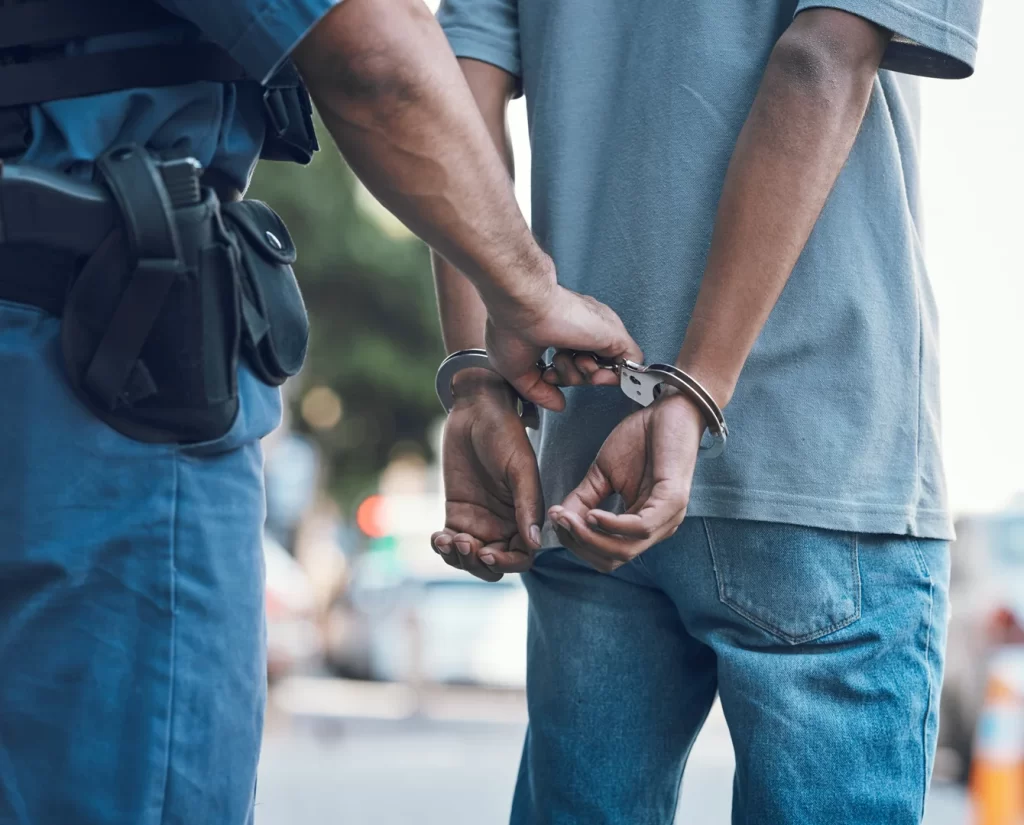
When a Panhandling Charge Becomes a Serious Legal Problem
If you’re looking for an aggressive panhandling charge lawyer, here’s what you need to know right now:
Quick Answer: What Should You Do If Charged?
- Do not ignore the charge — even a first offense is a criminal misdemeanor
- Contact a criminal defense attorney immediately — before your next court date
- Do not make statements to police without legal counsel present
- Gather details about the incident — location, time, witnesses, officer names
- Know your rights — passive solicitation is protected speech under the First Amendment; aggressive conduct is not
Asking someone for money on a street corner is generally protected free speech under the First Amendment. But the moment that request crosses into physical obstruction, unwanted touching, or conduct that makes a reasonable person fear for their safety — it becomes a criminal offense.
In Tennessee, that line is drawn by Tennessee Code §39-17-313, which defines aggressive panhandling as a misdemeanor offense with real consequences: fines, a criminal record, and potentially jail time for repeat offenses.
What makes these charges especially stressful is how easily they can happen by accident. A visitor to a city who inadvertently blocks a pathway while asking for help. Someone whose tone is misread. A situation where one person’s fear — not the defendant’s intent — drives the charge.
That’s exactly why having the right legal representation matters.
Aggressive panhandling charge lawyer further reading:
Understanding Aggressive Panhandling Under the Law
To understand how to defend against these allegations, we must first look at how the law distinguishes between protected free expression and criminal conduct. Public spaces like sidewalks, parks, and plazas are traditional public forums where speech rights are at their strongest. However, state and local governments have long tried to regulate how people ask for money.
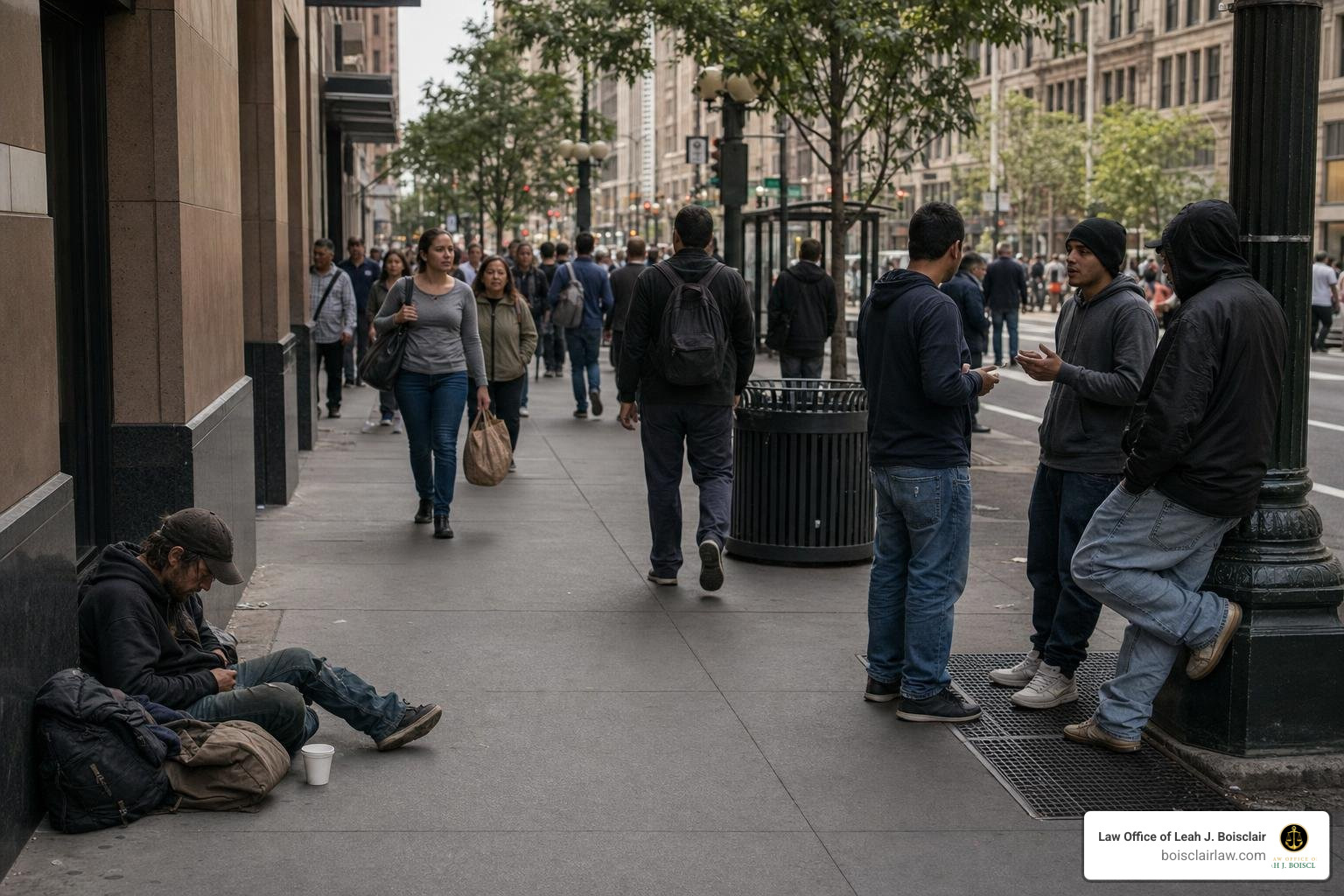
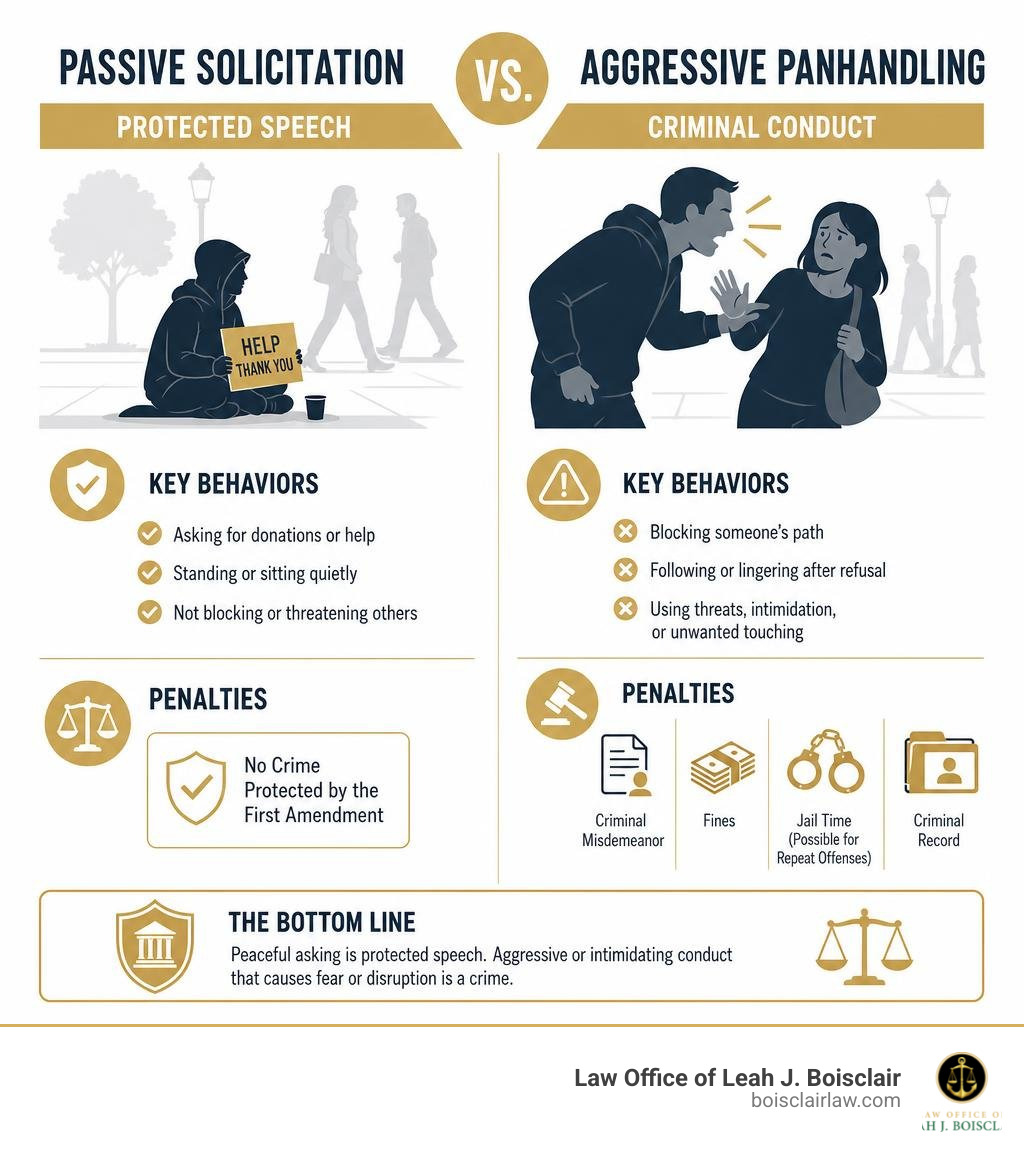
Under the statutory framework of 2024 Tennessee Code §39-17-313, the law targets specific conduct rather than the mere act of asking for charity. Passive solicitation—such as standing quietly with a sign or verbally asking for spare change without being confrontational—remains protected.
An offense under this statute occurs when a person solicits donations in an “aggressive manner.” This is legally defined as:
- Physical Obstruction: Intentionally blocking the path of a pedestrian or a vehicle.
- Unwanted Touching: Intentionally touching the person being solicited without their consent.
- Following: Continuing to follow a person who has walked away after refusing to give money.
- Intimidation: Making statements or gestures that would cause a reasonable person to fear physical harm or criminal acts.
When these behaviors are present, the state classifies the action as a public order offense. If you are facing allegations of this nature, you need a defense strategy tailored to the specific facts of your case. You can find More info about public order offenses on our dedicated resource page.
State Law vs. Local Ordinances in Tennessee
While the state statute sets a baseline, individual cities often establish their own municipal codes that go even further. For example, local ordinances in cities like Nashville and Memphis impose strict geographical and temporal limitations on solicitation.
Under these local rules, panhandling is often completely prohibited:
- Within a specific distance (usually 20 feet) of an Automated Teller Machine (ATM) or bank entrance.
- Near bus stops, public transit facilities, or marked crosswalks.
- In outdoor dining areas or sidewalk cafes.
- During nighttime hours (typically from sunset to sunrise).
These municipal ordinances often use broad definitions of what constitutes “aggressive” behavior, making it easy for a person to be cited for simply standing in the wrong place at the wrong time. To review the exact wording of the state-level rules, you can check the Tennessee Code Title 39. Criminal Offenses § 39-17-313 | FindLaw database.
Comparing Tennessee Law to California Penal Code 647(c)
Panhandling regulations vary widely across the country. In California, for example, the state addresses this issue under California Penal Code 647(c). This law makes it a misdemeanor to intentionally obstruct the free movement of any person in a public place.
Unlike some state laws that focus heavily on the communicative aspect of begging, California’s PC 647(c) focuses almost entirely on the physical act of blocking walkways, streets, or public transit entryways. A conviction under this California statute carries significantly harsher penalties than Tennessee’s first-time offenses, including up to one year in county jail and fines reaching $1,000.
Similarly, municipal rules in other parts of the country, such as the Fort Worth Ordinance, establish strict “straight-line” distance measurements to police where solicitation can occur. Under § 30-16 AGGRESSIVE PANHANDLING OR SOLICITATION, Fort Worth bans solicitation near schools, gas stations, and public restrooms, classifying violations as Class C misdemeanors.
Penalties and Real-World Examples of Public Order Offenses
Public order charges can carry surprisingly heavy consequences. Even if you believe the situation was a simple misunderstanding, a conviction on your record can affect your employment, housing options, and personal reputation.

In Tennessee, the penalties for aggressive panhandling scale based on prior history:
- First Offense: Charged as a Class C misdemeanor. This typically results in a small fine (often around $50) and minimal to no jail time, though some jurisdictions allow for limited detention.
- Second or Subsequent Offense: Escalates to a Class B misdemeanor. This is a much more serious charge that carries a potential sentence of up to 90 days in jail, fines of up to $500, or both.
| Offense Level | Charge Classification | Maximum Jail Time | Maximum Fine |
|---|---|---|---|
| First Violation | Class C Misdemeanor | Limited/None | Approx. $50 |
| Second+ Violation | Class B Misdemeanor | Up to 90 Days | Up to $500 |
To learn more about how public order offenses are prosecuted and defended, read The Legal Lowdown on Public Brawling and Fighting.
Real-World Scenarios: Lawful vs. Criminal Conduct
The line between a lawful request for help and a criminal act is often razor-thin. Examining real court cases helps illustrate how judges evaluate these situations.
In the case of People v Stroman Case Law, a group of individuals formed a horizontal line across a busy public sidewalk, thrusting CDs into the faces of pedestrians and demanding money. If a pedestrian refused, the group blocked their path and snatched the items back aggressively. The court upheld the aggressive begging charges, ruling that physical positioning and repeated blocking tactics went far beyond protected expression and directly interfered with the public’s right to free passage.
In contrast, passive conduct remains constitutionally protected. Sitting quietly on a bench with a cardboard sign asking for assistance is not a crime.
However, law enforcement officers sometimes overreach. In Lawshea v. State Case Law, a defendant was arrested after approaching a couple on a public street and receiving a donation. The appellate court reversed the conviction because the state’s charging documents failed to allege that the defendant had actually violated any specific time, place, or manner restrictions. This case highlights how critical procedural accuracy is in public order prosecutions.
How an Aggressive Panhandling Charge Lawyer Can Build Your Defense
If you have been cited or arrested, you should not simply plead guilty to get the process over with. An experienced aggressive panhandling charge lawyer can evaluate the facts and build a robust defense.
Why You Need an Aggressive Panhandling Charge Lawyer Immediately
When you work with us at the Law Office of Leah J. Boisclair, we guide you through every step of the criminal justice system. From the moment you complete our client intake form, we begin building a personalized case strategy. We will represent you at your arraignment, manage all upcoming court dates, and fight to protect your clean record.
Having professional representation ensures that your side of the story is heard. For a complete look at how we advocate for our clients, read The Ultimate Guide to RI Criminal Attorneys.
Challenging the Sufficiency of the Charging Document
One of the first steps we take is to examine the charging documents for fundamental defects. As demonstrated in Lawshea v. State, if the police or prosecutors fail to allege the specific elements of the offense—such as the exact aggressive behavior or the prohibited zone where the incident occurred—the charges may be dismissed. We also review whether the arresting officer had reasonable suspicion to detain you in the first place. If the stop was unlawful, any evidence gathered afterward must be excluded. Learn more about your options by visiting our page on working with a RI Criminal Attorney.
Constitutional Challenges to Vague Ordinances
Many local panhandling bans are unconstitutionally vague or overbroad. Under the landmark Supreme Court ruling in Reed v. Town of Gilbert, content-based speech regulations—laws that target speech based on its subject matter or message—are subject to strict scrutiny and are almost always unconstitutional.
Constitutional advocates have successfully challenged these laws across the country. In Rhode Island, for instance, the ACLU of Rhode Island: Court Consent Judgment Strikes Cranston’s Anti-Panhandling Law landmark case resulted in a consent judgment that struck Cranston’s anti-panhandling ordinance off the books. The court recognized that the city’s sweeping ban on roadway solicitation violated basic free speech rights. If you are charged under a local ordinance that infringes on your constitutional rights, we can challenge the validity of the law itself. For more details on why local representation is critical, see Why Hire a Rhode Island Criminal Defense Attorney?.
Choosing the Right Legal Representation
When your future and reputation are on the line, you need a defense attorney who brings experience, local courtroom knowledge, and dedicated advocacy to your case.
What to Look for in an Aggressive Panhandling Charge Lawyer
At the Law Office of Leah J. Boisclair, we provide personalized, compassionate advocacy with a proven track record of dismissals. Based in Cranston, RI, we represent clients facing misdemeanor and felony charges in both state and federal courts across Rhode Island—including Providence, Warwick, Johnston, and West Warwick. We take the time to understand your unique goals and build a defense designed to secure the best possible outcome.
Frequently Asked Questions about Public Order Offenses
Is passive panhandling protected by the First Amendment?
Yes. Courts across the United States have consistently ruled that peaceful, passive panhandling—such as holding a sign asking for help or verbally requesting a donation without aggressive behavior—is expressive conduct protected under the First Amendment.
What is the difference between a misdemeanor and a felony charge?
Misdemeanors are less severe offenses that typically carry maximum penalties of up to one year in jail and moderate fines. Felonies are serious crimes that carry substantial prison sentences, high fines, and long-term loss of civil rights. Most public order offenses, including panhandling, are classified as misdemeanors.
Can an aggressive panhandling charge be expunged from my record?
In many cases, yes. If your charge is dismissed, or if you successfully complete a diversion program or probation, you may be eligible to have the record expunged. This process removes the arrest and charge from public databases, helping you maintain a clean criminal history.
Conclusion
A public order charge does not have to ruin your future. If you have been cited or arrested in Rhode Island, the Law Office of Leah J. Boisclair is here to help. We provide compassionate, personalized advocacy in Cranston, Warwick, Providence, and surrounding areas.
Contact a Public Order Offense Defense Attorney today to schedule a confidential evaluation of your case.