
What to Know Before Choosing a Cranston Criminal Defense Firm
If you’re looking for a Cranston criminal defense firm, here are the top local options and what to consider when choosing one:
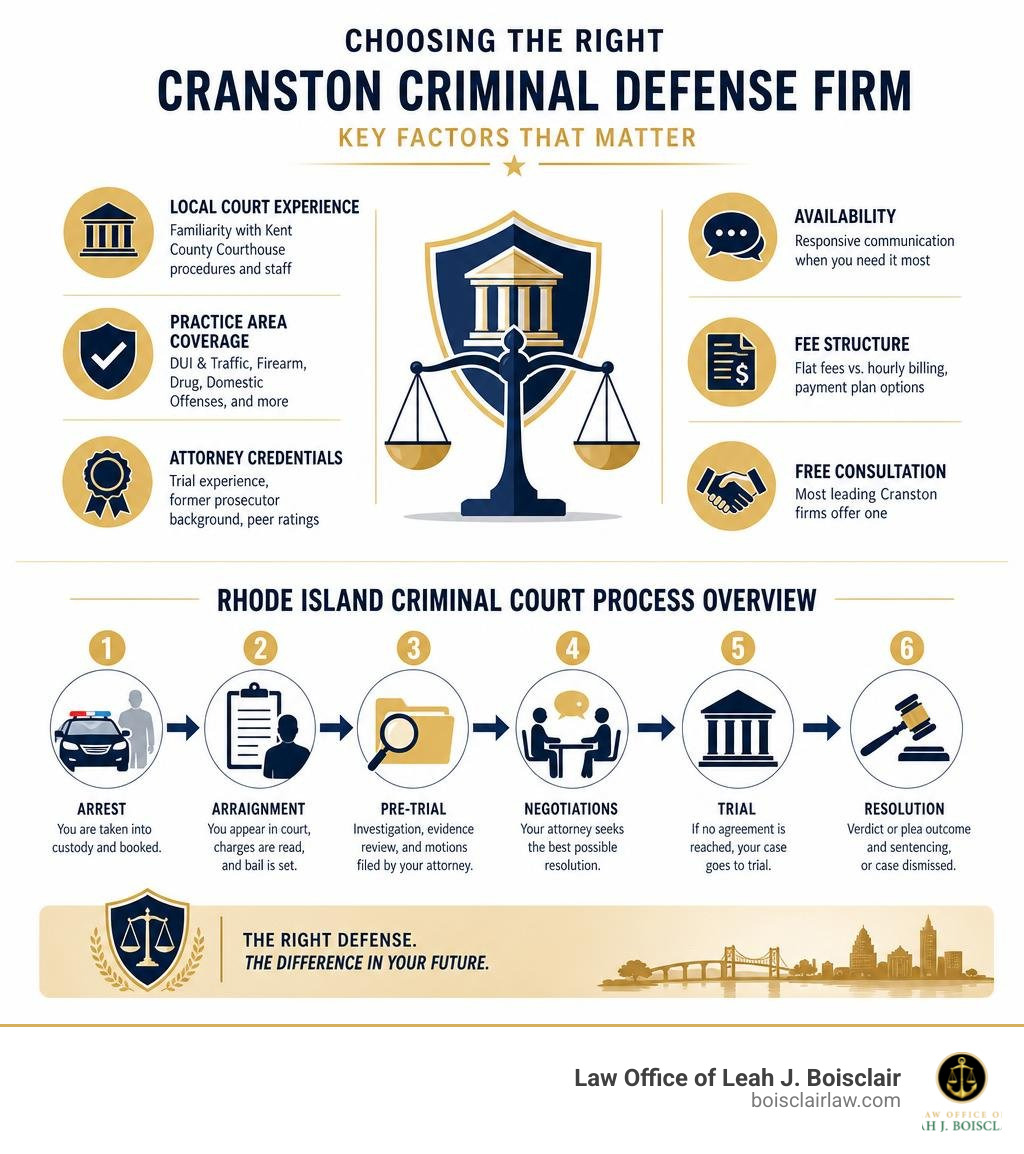
Top factors to look for in a Cranston criminal defense firm:
- Local court experience — familiarity with Kent County Courthouse procedures and staff
- Practice area coverage — DUI and Traffic Offenses, Firearm Offenses, Drug Offenses, Domestic Offenses, and more
- Attorney credentials — trial experience, former prosecutor background, peer ratings
- Availability — responsive communication when you need it most
- Fee structure — flat fees vs. hourly billing, payment plan options
- Free consultation — most leading Cranston firms offer one
Facing criminal charges is one of the most stressful things a person can go through. The consequences are real — jail time, a permanent record, lost employment, and damaged relationships. And Rhode Island’s legal system is not easy to navigate alone.
The right defense firm can mean the difference between a conviction and a dismissal. But not every attorney is the same. Experience, local knowledge, and strategy all matter enormously.
This guide breaks down everything you need to know — from the types of offenses handled in Rhode Island to what happens during your first consultation — so you can make a confident, informed decision.
Essential Cranston criminal defense firm terms:
- Providence misdemeanor defense lawyer
- RI misdemeanor record expungement
- proven misdemeanor dismissals RI
Key Factors to Consider When Choosing a Cranston Criminal Defense Firm
When you or a loved one is facing the Rhode Island criminal justice system, the choice of legal representation is the most critical decision you will make. This is not the time to pick a name out of a hat or hire an attorney who primarily handles real estate or divorce. You need a dedicated Cranston criminal defense firm that understands the stakes and knows how to navigate the specific local courts.
First and foremost, attorney experience is paramount. You want a legal team that has spent years in the courtroom, not just behind a desk. Criminal law is dynamic, and the best defense strategies are born from real-world trial experience.
Second, local court familiarity cannot be overstated. Rhode Island is a small state, but its legal landscape is highly localized. Practicing in the Kent County Courthouse (where Cranston cases are often handled) or the Providence County Courthouse requires an intimate understanding of local rules, specific courtroom procedures, and the expectations of local judges and prosecutors. Knowing how a specific prosecutor approaches plea negotiations or how a judge views certain sentencing alternatives can directly shape our defense strategy.
Furthermore, consider client communication and accessibility. A great attorney is useless if you can never get them on the phone. Look for a firm that prioritizes keeping you informed at every stage of your case, answering your questions promptly, and alleviating the immense stress of the situation.
Finally, examine the fee structures. Many top criminal defense firms utilize fixed flat-rate fees rather than unpredictable hourly billing. This provides you with financial clarity and peace of mind, knowing exactly what your defense will cost from the outset. Understanding these elements is the first step in protecting your future, which is why we recommend reading our guide on Why Hire a Rhode Island Criminal Defense Attorney to learn more about how professional representation shields your rights.
Evaluating Credentials and Courtroom Experience
When evaluating a defense attorney’s credentials, look beyond the basic law degree. Consider whether the legal team includes former prosecutors. Attorneys with prosecutorial backgrounds possess a unique “dual perspective.” Because they once built cases for the state, they know exactly where to look for weaknesses in the prosecution’s evidence, where police officers may have cut corners, and how the state evaluates plea agreements.
Additionally, look for actual trial success. While many criminal matters are resolved through negotiations, your attorney must be a credible threat in the courtroom. If prosecutors know a defense firm is afraid to go to trial, they will offer less favorable plea deals. A proven track record of securing not-guilty verdicts or complete case dismissals gives you immense leverage. To understand what to look for when vetting your legal advocate, check out The Ultimate Guide to RI Criminal Attorneys.
Types of Criminal Offenses Handled in Rhode Island
Rhode Island law categorizes criminal violations into misdemeanors and felonies. Misdemeanors are generally offenses punishable by up to one year in jail and up to $1,000 in fines, while felonies carry much harsher penalties, including multi-year prison sentences, and are prosecuted in the Superior Court.
Regardless of the severity of the allegations, a robust legal defense is required to protect your liberty. Our team handles a comprehensive range of criminal matters, tailoring our approach to the specific facts of each case.

To explore the full scope of our legal services and representation, you can view our complete list of Practice Areas.
Firearm Offenses
Rhode Island maintains strict and complex regulations regarding firearm licensing, carry permits, and possession. Unlawful carrying of a handgun without a proper permit is a severe felony offense that carries mandatory minimum penalties. If you are facing allegations involving carrying a concealed weapon, possessing an altered firearm, or committing an offense while armed, the legal consequences can be life-altering. Navigating these charges requires a deep understanding of constitutional protections, search and seizure laws, and local licensing procedures. For a comprehensive breakdown of your options, read our detailed article on Cranston Gun Charge Attorney Alternatives Everything You Need to Know.
DUI and Traffic Offenses
Driving under the influence (DUI) is one of the most common offenses prosecuted in Cranston, but it carries incredibly severe consequences. A conviction can lead to the automatic suspension of your driver’s license, heavy fines, mandatory enrollment in DUI counseling programs, community service, and even jail time.
Our defense strategies often focus on challenging the reliability of breathalyzer tests, field sobriety testing procedures, and the legality of the initial traffic stop. Even if you failed a breath test, those results can often be deemed unreliable or inadmissible if the police failed to follow strict state protocols. To see how these cases are evaluated locally, take a look at our analysis of the Top 10 DUI Lawyers in Cranston RI Reviews.
Assault and Battery Offenses
Physical altercations, whether arising from a sudden misunderstanding or a long-standing dispute, can lead to serious assault and battery offenses. These range from simple assault (a misdemeanor usually involving minor or no physical injury) to felony assault (which may involve a dangerous weapon or result in serious bodily injury).
A key element in defending against assault offenses is establishing self-defense or demonstrating that the allegations have been exaggerated or fabricated. If you want to understand the dynamics of physical disputes and how they translate to the legal system, read Cranston’s Guide to Not Getting Hit in a Street Fight.
Domestic Offenses
Domestic offenses in Rhode Island are treated with extreme urgency by both law enforcement and the courts. These offenses involve allegations of violence, threats, or disorderly conduct between family or household members. A domestic arrest often triggers immediate restraining orders or no-contact orders, which can legally bar you from your own home and prevent you from seeing your children.
Because prosecutors often pursue these offenses aggressively—even if the complaining witness wishes to drop the charges—having immediate legal representation is vital. For immediate guidance on protecting your rights, read our emergency resource on Why You Need a Criminal Defense Attorney for Domestic Violence Right Now.
Drug Offenses
Rhode Island’s drug laws are highly nuanced. While the state has reformed certain aspects of its drug policies—for instance, making simple possession of 10 grams or less of certain controlled substances a misdemeanor punishable by up to 2 years in jail—charges involving possession with intent to distribute, drug manufacturing, or trafficking remain severe felonies.
Our defense approach to drug offenses heavily relies on analyzing constitutional violations. If law enforcement conducted an unlawful search of your vehicle, home, or person, we can file motions to suppress the seized evidence, which often leads to a complete dismissal of the offenses.
Public Order Offenses
Public order offenses are designed to maintain social peace but are frequently used by law enforcement as “catch-all” charges during tense interactions. These include public disturbance, disorderly conduct, noise violations, and obstruction of justice. While often classified as misdemeanors, a conviction still leaves you with a permanent criminal record. We work to show that your actions did not rise to the level of criminal conduct or were protected under constitutional free speech rights.
Property Offenses
Property offenses cover a wide range of conduct involving the unlawful interference with another person’s property. This includes theft (larceny), burglary, vandalism, and trespass. The penalties for these offenses are highly dependent on the monetary value of the property involved. We focus on challenging the state’s evidence regarding intent, identification, and the valuation of the property to seek reduced offenses or complete dismissals.
White Collar Offenses
White collar offenses typically involve non-violent, financially motivated crimes such as fraud, embezzlement, identity theft, and corporate compliance violations. These cases are highly document-intensive and require meticulous forensic analysis. We work closely with financial experts to dissect complex transactions, challenge the prosecution’s paper trail, and demonstrate a lack of criminal intent.
Sex Offenses
Allegations of sex offenses carry an immense social stigma and devastating legal penalties, including long-term prison sentences and mandatory, lifelong sex offender registration requirements. Defending against these offenses requires absolute discretion, exhaustive independent investigation, and an aggressive challenge to the credibility of the state’s witnesses and physical evidence.
Violent Offenses
Violent offenses, including homicide, robbery, and kidnapping, represent the most severe felony offenses in the Rhode Island criminal justice system. These cases demand a highly sophisticated, trial-ready defense strategy. We leave no stone unturned, utilizing independent investigators, forensic specialists, and expert witnesses to challenge the state’s case at every stage.
Computer Offenses
As technology has evolved, so have computer offenses. These charges include cybercrime, unauthorized hacking, online harassment, and digital identity theft. Defending against digital offenses requires a deep technical understanding of network logs, IP tracking, and digital forensics, as computer evidence is easily corrupted or misinterpreted by law enforcement.
Understanding the Rhode Island Criminal Case Process and Court Jurisdiction
The Rhode Island judicial system is structured into different courts based on the geography of the offense and the severity of the offenses. Understanding where your case will be heard and what to expect is crucial for reducing anxiety.
| Court System | Jurisdiction | Types of Cases Handled | Typical Case Timeline |
|---|---|---|---|
| District Court (e.g., Kent County, Providence County) | Misdemeanors and initial felony filings | Misdemeanors, violations, arraignments, and bail hearings | Several weeks to a few months |
| Superior Court | Felony trials and misdemeanor appeals | Serious felonies, jury trials, and complex criminal litigation | Six months to over a year |
Navigating the Court System with a Cranston Criminal Defense Firm
The criminal process begins immediately after an arrest. Navigating this timeline requires an experienced advocate by your side at every single hearing:
- Arraignment: This is your first formal court appearance. The judge will read the offenses against you, and you will enter a plea (typically “not guilty” at this stage).
- Bail Hearings: The court determines the conditions of your release. We fight to secure release on personal recognizance or argue for a reasonable, affordable bail amount rather than cash-only hold orders.
- Pre-Trial Conferences: This is where the defense and prosecution exchange evidence (discovery). We use this time to identify flaws in the state’s case and negotiate for reduced offenses or dismissals.
To learn more about how an experienced attorney guides you through this multi-step journey, explore our guide on finding a qualified RI Criminal Attorney.
How a Cranston Criminal Defense Firm Prepares Your Case Strategy
A winning defense strategy does not happen by accident. We prepare every case as if it is heading to trial. This begins with a comprehensive defense investigation: obtaining all police reports, reviewing body camera footage, interviewing potential witnesses, and analyzing physical evidence.
We then use this information to challenge the prosecution during plea negotiations or, if necessary, present a powerful, persuasive case to a jury. To see how this dedicated preparation translates into real-world success, browse our historical Case Results.
Misdemeanors vs. Felonies and Sentencing Alternatives
While the threat of jail time is always a primary concern, a skilled defense firm will actively pursue sentencing alternatives. For first-time or non-violent offenders, we can often negotiate for probation, community service, drug treatment programs, or deferred sentences. A deferred sentence is particularly valuable because, upon successful completion of the deferment period, the offenses can be completely dismissed and eligible for immediate expungement, protecting your clean record. To learn more about how we protect your future through these alternative avenues, visit our Practice Areas page.
What to Expect During Your Initial Legal Consultation
Your first meeting with a defense firm should be structured, professional, and entirely confidential. It is your opportunity to share your side of the story and learn about your legal options without judgment.

During this meeting, we will walk you through our Client Intake Form to gather the essential facts of your case. This includes:
- Personal Information: Full legal name, contact details, and emergency contacts.
- Case History: The date of the arrest, the specific arresting agency (such as the Cranston Police Department or Rhode Island State Police), and the location of the incident.
- Prior Legal History: Any past convictions or current probation status, which can heavily influence bail and sentencing strategies.
- Employment Information: Your current job, as keeping you employed and out of jail is always a primary objective.
- Establishing Case Strategy and Goals: Whether our primary target is a complete dismissal of offenses, negotiating a plea deal with no loss of driver’s license, or preparing for an aggressive trial.
Frequently Asked Questions About Rhode Island Criminal Defense
What is the difference between a felony and a misdemeanor in Rhode Island?
In Rhode Island, a misdemeanor is a crime that carries a maximum penalty of up to one year in jail and a fine of up to $1,000. These cases are generally handled in the District Court. A felony is a much more serious offense that carries penalties exceeding one year in prison, up to life imprisonment, and is prosecuted in the Superior Court.
How long does a typical criminal case take to resolve?
The timeline varies significantly based on the complexity of the case. Misdemeanor offenses are often resolved within a few weeks to several months. Felony offenses are much more complex and typically take anywhere from six months to over a year to reach a resolution, especially if the case proceeds to a jury trial.
Can a criminal record be expunged in Rhode Island?
Yes, Rhode Island has specific expungement laws that allow individuals to clear their records under certain conditions. Generally, first-time misdemeanor offenders can apply for expungement five years after completing their sentence, while first-time felony offenders must wait ten years. Certain non-violent offenses and dismissed cases may be eligible for immediate expungement.
Conclusion
Facing criminal charges in Cranston, Rhode Island, can feel overwhelming, but you do not have to stand alone. At the Law Office of Leah J. Boisclair, we provide personalized, compassionate, and aggressive defense representation designed to protect your rights, your freedom, and your future. We understand the local court systems and work tirelessly to secure the best possible outcomes for our clients, from complete dismissals to favorable sentencing alternatives.
If you or a loved one is facing misdemeanor, felony, or DUI charges, take control of your situation today. Contact Us to schedule your confidential consultation, or read More info about driving offense defense services to see how we defend your driving privileges.