
When You’re Facing a Stolen Property Charge, Here’s What You Need to Know
If you’re looking for a lawyer for stolen property, here’s the short answer:
You need an experienced criminal defense attorney as soon as possible — before you speak to police, before your arraignment, and before you make any decisions about your case.
Here’s why it matters immediately:
- Stolen property charges can range from a minor misdemeanor to a serious felony, depending on the value of the property and your state’s laws
- Prosecutors must prove you knowingly possessed stolen goods — that element of knowledge is often the key to your defense
- The sooner an attorney reviews your case, the more options you have: dismissal, reduced charges, plea deals, or diversion programs
- A conviction can affect your job, your housing, your immigration status, and your future
Being caught with stolen property — even if you didn’t steal it yourself — can land you in serious legal trouble. You might have bought something without knowing it was stolen. You might have been holding it for a friend. You might have simply been in the wrong place at the wrong time.
None of that makes you automatically guilty. But it does mean you’re facing a legal system that moves fast and doesn’t wait for you to figure things out.
Property offenses are taken seriously by prosecutors across Rhode Island, Massachusetts, and Connecticut. Charges can escalate quickly based on the value of the property involved or any prior criminal history. And the consequences — fines, incarceration, a permanent record — can follow you for years.
The good news? These charges are also very defensible with the right legal strategy.
Understanding Stolen Property Offenses and Legal Definitions

In the eyes of the law, you don’t have to be the one who broke into a house or shoplifted from a store to be charged with a crime. Simply “possessing,” “receiving,” or “controlling” property that belongs to someone else can lead to a knock on your door from law enforcement.
In Rhode Island, the charge is often officially referred to as “Receiving Stolen Goods.” Under Rhode Island General Laws § 11-41-2, this offense occurs when someone receives, possesses, or conceals any stolen money or property, knowing it to have been stolen.
But what does that actually mean in plain English? To get a conviction, the prosecution generally has to prove three main things:
- The Property Was Stolen: This sounds obvious, but the state must prove the items were actually the subject of a theft, robbery, or embezzlement.
- Knowledge: This is the big one. You must have known—or had a very good reason to know—that the property was stolen. If you bought a brand-new MacBook for $50 in a dark alley, a jury might decide you “had reason to know” something was fishy.
- Intent to Deprive: You must have possessed the property with the intent to deprive the rightful owner of it. If you found a stolen wallet and were walking into a police station to hand it over, you lack the criminal intent required for the charge.
For more detailed information, you can explore our Property Crimes Defense Attorney page.
How a Lawyer for Stolen Property Challenges Evidence
When we take on a case, we don’t just wait for the prosecutor to tell their story. We look for the holes in their evidence. The burden of proof is entirely on the government; they have to prove every single element “beyond a reasonable doubt.”
A skilled lawyer for stolen property focuses heavily on your “mental state.” Since the police can’t read your mind, they rely on “circumstantial evidence” to prove you knew the items were stolen. We challenge that evidence by showing:
- You paid a fair market price for the item.
- The transaction happened in a normal, public business setting.
- There were no “red flags” (like scratched-off serial numbers) that would have alerted a reasonable person to a crime.
As your RI Criminal Attorney, we dig into the police reports to see if they actually have proof of knowledge or if they are just making assumptions based on where you were standing.
State-Specific Classifications and Penalties for Property Offenses
While our firm focuses on defending clients in Rhode Island, it is helpful to see how these offenses are handled across the country. Many of our clients have lives that cross state lines, and understanding the national landscape can put your local charges into perspective.
Comparison of Stolen Property Penalties (April 2026)
| State | Misdemeanor Threshold | Felony Threshold | Potential Penalties |
|---|---|---|---|
| Arizona | Under $1,000 | Over $1,000 | ARS § 13-1802: Class 2 Felony for $25k+ |
| California | $950 or less | Over $950 | Proposition 47 “wobbler” status |
| New York | Under $1,000 | Over $1,000 | Penal Law Section 165: Up to 25 years |
| New Jersey | Under $200 | Over $200 | N.J.S.A. 2C:20-7: 2nd Degree (5-10 years) |
| Nevada | Under $650 | Over $3,500 | NRS 205.272: Up to 10 years |
In Rhode Island, the dividing line between a misdemeanor and a felony is typically $1,500. If the value of the property is under $1,500, it is usually a misdemeanor. If it exceeds that amount, you are looking at a felony charge that could result in significant prison time. You can learn more about these distinctions on our Felonies and Misdemeanors page.
Why You Need a Specialized Lawyer for Stolen Property
The “value” of the property isn’t always as clear-cut as it seems. Prosecutors often use the “replacement value” or the highest possible retail price to push a charge from a misdemeanor into felony territory. An experienced lawyer for stolen property will hire independent appraisers to challenge those valuations.
Furthermore, court jurisdiction matters. Depending on where the arrest happened and the value involved, your case might be heard in District Court or Superior Court. Navigating these different rules requires a Rhode Island Criminal Defense Attorney who knows the local judges and prosecutors.
Aggravating factors—like having a prior record or being accused of “trafficking” (selling) the stolen goods—can drastically increase the recommended sentence. We work to mitigate these factors from day one.
Common Defenses and the Role of a Lawyer for Stolen Property
Just because the police found an item in your car doesn’t mean you’re headed to jail. There are several powerful legal defenses we can use to protect your future.
Lack of Knowledge
As mentioned, if you genuinely did not know the item was stolen, you haven’t committed the crime of receiving stolen goods. Maybe you bought a used lawnmower on Facebook Marketplace from someone who seemed legitimate. If there was no reason for you to suspect a crime, that is a strong defense.
Claim of Ownership or Right
If you believed the property actually belonged to you, or that you had a legal right to possess it (perhaps through a dispute over a debt), we can argue a “claim of right.” You can’t “steal” what you reasonably believe is yours.
Intent to Return
If you took possession of the property specifically to return it to the owner or the police, you lack the “intent to deprive” required for a conviction.
Constitutional Violations
Sometimes, the best defense has nothing to do with the property itself and everything to do with how the police behaved.
- Illegal Search and Seizure: Did the police search your trunk without a warrant or probable cause? If so, the stolen property they found might be suppressed (thrown out), meaning it can’t be used against you.
- Miranda Warnings: If you were interrogated while in custody without being read your rights, any “confession” you made about knowing the property was stolen might be inadmissible.
Our goal is always the best possible outcome: a full dismissal. If that isn’t an option, we use our experience across various Practice Areas to negotiate plea deals that reduce felonies to misdemeanors or secure sentences that avoid jail time.
Immediate Steps: What to Do After an Arrest
The hours following an arrest are critical. What you do (and don’t do) can change the entire trajectory of your case. If you find yourself in handcuffs, follow these steps:
- Remain Silent: We cannot stress this enough. Do not try to “explain” your way out of it. Anything you say—even things you think are helpful—will be twisted by the prosecution. Simply say, “I want to speak to my lawyer,” and then stop talking.
- Do Not Consent to Searches: If the police ask to look through your phone, your car, or your home, say “No.” If they have a warrant, they will do it anyway, but never give them permission freely.
- Contact Counsel Immediately: The sooner we get involved, the sooner we can start preserving evidence, like surveillance footage that might prove you weren’t where the police say you were.
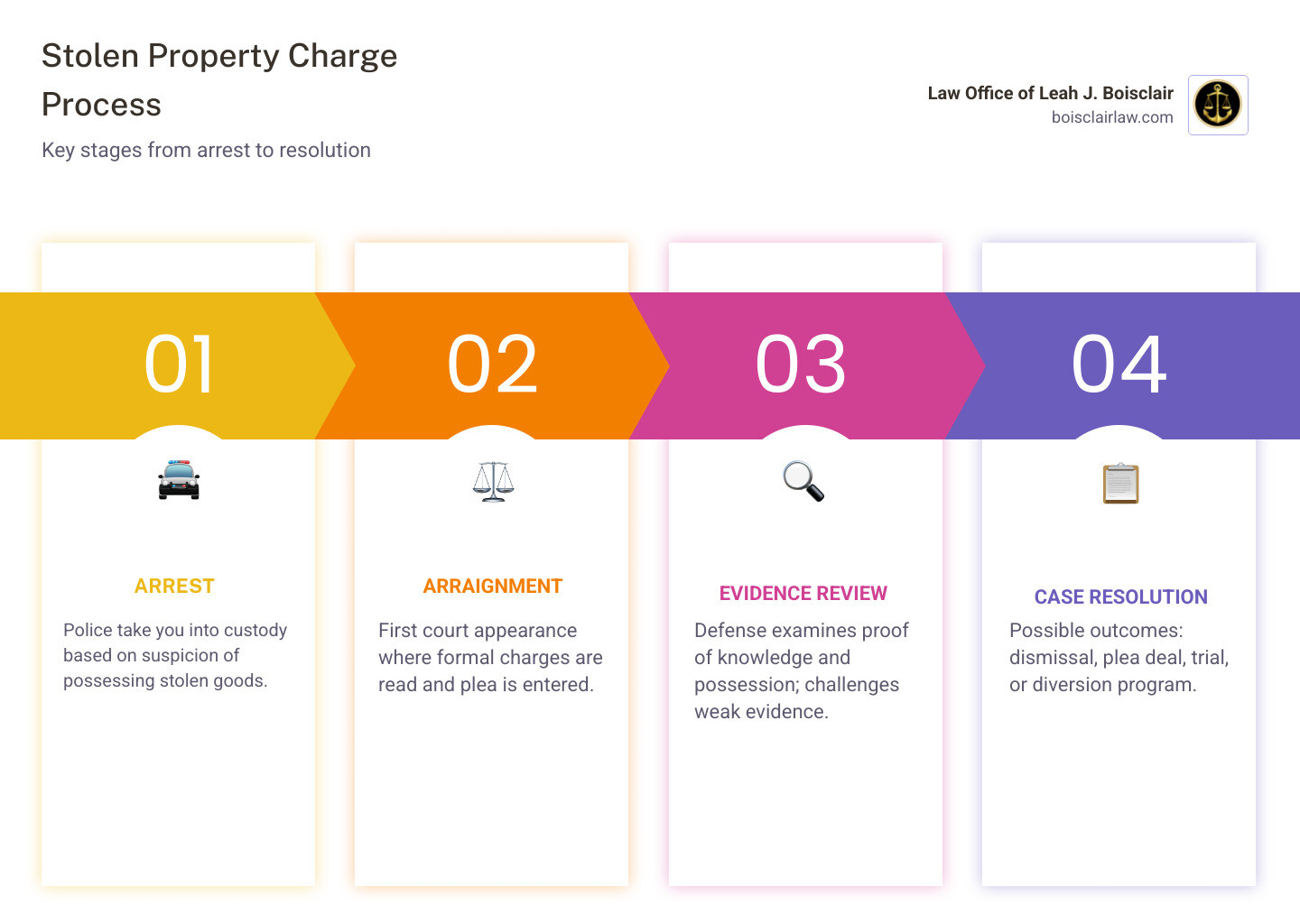
- Prepare for Arraignment: This is your first official court appearance where the charges are read. We will represent you here to argue for low or no bail so you can go home while we work on your case.
When you call us, we will need to know your arrest date, the specific charges filed, and your legal history. We also look at your employment information, as maintaining a job is often a key factor in negotiating favorable outcomes with the court. For more guidance, see What to Do if You’ve Been Arrested in RI.
Long-Term Consequences and Recovery Options
A conviction for a property offense carries “collateral consequences” that last long after you’ve paid your fine or finished probation.
Employment and Professional Licenses
Many employers view theft or “dishonesty” crimes as a major red flag. A conviction can prevent you from getting a job in healthcare, finance, or any position that requires handling money.
Immigration Status
For non-citizens, receiving stolen property can be classified as a “crime of moral turpitude.” This can lead to the denial of a green card, visa revocation, or even deportation. If you are not a U.S. citizen, hiring a lawyer for stolen property who understands the immigration consequences is mandatory. You can find more information on how these offenses affect status via USCIS.
The Path to a Clean Record
The Law Office of Leah J. Boisclair believes in second chances.
- Diversion Programs: For first-time offenders, we can often negotiate “diversion.” This usually involves community service or restitution. If you complete the program, the charges are dismissed.
- Expungement: In Rhode Island, many property offenses can eventually be expunged (erased) from your record. This allows you to legally state on job applications that you have never been convicted of a crime.
We can help you navigate the process of record sealing and expungement to ensure your past doesn’t dictate your future. Talk to a RI Criminal Attorney to see if you are eligible.
Frequently Asked Questions about Property Offenses
What is the difference between receiving stolen property and theft?
Theft (or larceny) involves the actual act of taking the property from the owner. Receiving stolen property involves taking control of the items after they have already been stolen by someone else. However, in Rhode Island, the law often treats “receiving” the same as “stealing” for sentencing purposes.
Can I be charged if I unknowingly bought stolen goods?
Technically, you can be charged, but you shouldn’t be convicted. The state must prove you had knowledge or “reason to know” the goods were stolen. If you bought a TV at a retail store that turned out to be selling stolen inventory, you wouldn’t be held criminally liable. If you bought it from a guy in a van for 90% off the retail price, the state will argue you had “reason to know.”
How does property value determine if an offense is a felony?
Every state has a “threshold” amount. In Rhode Island, if the property is valued at over $1,500, it is a felony. This value is based on the fair market value at the time of the theft. We often challenge the prosecution’s valuation to try and get felony charges dropped down to misdemeanors.
Conclusion
Facing a property charge can feel overwhelming, but you don’t have to face the Rhode Island court system alone. At the Law Office of Leah J. Boisclair, we provide personalized, compassionate advocacy for every client. Whether you are dealing with a first-time misdemeanor or a complex felony, we are here to protect your rights and your reputation.
Our firm handles a wide range of cases in Cranston and throughout Rhode Island, including:
- Firearm Offenses
- DUI and Traffic Offenses
- Assault and Battery
- Domestic Offenses
- Drugs
- Quality of Life Offenses
- Property Crimes
- White Collar Crimes
- Sex Offenses
- Violent Crimes
- Computer Crimes
Don’t let a mistake or a misunderstanding define the rest of your life. If you need a lawyer for stolen property, contact us today to begin building your defense.