

What to Do When You Need a Misdemeanor Lawyer Near You
If you’re looking for a misdemeanor lawyer near me, here’s what you need to know right now:
Quick Answer: How to Find a Misdemeanor Lawyer Near You
- Search local directories like Justia to compare rated attorneys in your area
- Look for free consultations so you can talk to a lawyer before committing
- Ask about flat fees or payment plans to keep costs manageable
- Choose someone with local court experience — they’ll know the judges and prosecutors
- Act fast — the sooner you hire an attorney, the better your options
Being charged with a misdemeanor offense is stressful. Even if it sounds minor, the consequences can follow you for years — showing up on background checks, affecting jobs, and limiting housing options.
A misdemeanor conviction can permanently appear on your record. That’s true whether you’re facing a first-time charge or something more serious.
The good news? With the right local defense attorney on your side, many misdemeanor charges can be reduced, dismissed, or resolved in ways that protect your future.
This guide walks you through everything — from understanding your charges, to finding affordable local representation, to knowing exactly what to do after an arrest.
Easy misdemeanor lawyer near me glossary:
- Providence misdemeanor defense lawyer
- RI misdemeanor record expungement
- proven misdemeanor dismissals RI
Understanding Misdemeanor Offenses and Classifications
To build a strong defense, we first need to look at what exactly a misdemeanor is and how different states classify these offenses. While our primary focus is helping clients navigate Rhode Island’s legal waters, understanding how other states structure their systems can help demystify the process if you are comparing local rules or have out-of-state records.
The table below provides a quick comparison of misdemeanor classifications across Rhode Island, Virginia, and Texas:
| Jurisdiction | Classification / Level | Maximum Jail Time | Maximum Fine |
|---|---|---|---|
| Rhode Island | Standard Misdemeanor | Up to 1 Year | Up to $1,000 |
| Petty Misdemeanor | Up to 6 Months | Up to $500 | |
| Virginia | Class 1 Misdemeanor | Up to 12 Months | Up to $2,500 |
| Class 2 Misdemeanor | Up to 6 Months | Up to $1,000 | |
| Class 3 Misdemeanor | None (Fine Only) | Up to $500 | |
| Class 4 Misdemeanor | None (Fine Only) | Up to $250 | |
| Texas | Class A Misdemeanor | Up to 1 Year | Up to $4,000 |
| Class B Misdemeanor | Up to 180 Days | Up to $2,000 | |
| Class C Misdemeanor | None (Fine Only) | Up to $500 |
As you can see, a misdemeanor is generally defined as an offense that carries a maximum penalty of up to one year in jail. Anything more severe typically crosses into felony territory. To learn more about how these boundaries are drawn, read our guide on Felonies and Misdemeanors.
If you are facing charges in Rhode Island, finding a highly rated local professional is key. You can browse the Best Criminal Lawyers in Rhode Island – Justia to see how local advocates compare.
Let’s break down the most common types of misdemeanor offenses we handle:
Firearm Offenses
Rhode Island has strict regulations regarding carrying and possessing firearms. Misdemeanor firearm offenses can include carrying a weapon without a proper license, transport violations, or possessing firearms in prohibited areas. A conviction can permanently strip you of your second amendment rights, making immediate legal defense crucial.
DUI and Traffic Offenses
A simple mistake on the road can quickly escalate into a criminal charge. DUI and traffic offenses range from first-offense chemical test refusals and driving under the influence of alcohol or drugs, to driving with a suspended license or reckless driving. These offenses carry mandatory license suspensions, heavy fines, and potential jail time.
Assault and Battery Offenses
An argument that gets out of hand can lead to simple assault or battery charges. In Rhode Island, simple assault is a misdemeanor but still carries up to a year in jail. We work to show the full context of the interaction, often aiming for dismissals or community service alternatives.
Domestic Offenses
When an assault, disorderly conduct, or trespass charge involves a family member, household member, or intimate partner, it is classified as a domestic offense. Domestic charges carry mandatory domestic violence counseling, strict no-contact orders, and can result in immediate loss of firearm ownership rights.
Drug Offenses
Misdemeanor drug offenses typically involve the possession of small amounts of controlled substances or drug paraphernalia. While Rhode Island has decriminalized certain personal possession quantities, other offenses still carry criminal penalties that can jeopardize your financial aid, employment, or housing.
Disorderly Conduct and Public Peace Offenses
Disorderly conduct is a broad category often used by law enforcement during public disputes, protests, or late-night misunderstandings. It involves behaviors like fighting, making unreasonable noise, or obstructing street traffic. Because the law is subjective here, an experienced lawyer can often challenge the officer’s interpretation of the event.
Property Offenses
Property offenses include shoplifting, vandalism, petty larceny, and trespassing. The severity of the charge often depends on the monetary value of the property involved. If the value is under the state’s felony threshold, it remains a misdemeanor, but a conviction for theft can label you as “untrustworthy” to future employers.
White Collar Offenses
Even minor financial misconduct can lead to misdemeanor white collar offenses. This includes writing bad checks, minor insurance fraud, or unauthorized use of personal identifying information. These offenses require careful analysis of financial records to prove a lack of criminal intent.
Sex Offenses
Misdemeanor sex offenses can include public indecency, prostitution, or minor instances of non-consensual contact. These charges carry an immense social stigma and can sometimes trigger sex offender registration requirements, making a proactive defense strategy absolutely vital. (Note: We do not handle or discuss anal sex cases).
Violent Offenses
While most violent offenses are classified as felonies, certain minor physical altercations or threats (like simple assault or disorderly threats) are prosecuted as misdemeanors. We focus on de-escalating these charges and highlighting mitigating factors to protect your freedom.
Computer Offenses
Misdemeanor computer offenses involve unauthorized access to a computer system, minor online harassment, or accessing private networks without permission. As technology evolves, local prosecutors are cracking down on digital offenses, making tech-focused defense strategies necessary.
How a Misdemeanor Conviction Impacts Your Future

Many people make the mistake of pleading guilty to a misdemeanor offense just to “get it over with.” They assume that because there is no long-term prison sentence, the case won’t affect their day-to-day life.
This is a dangerous misconception. The collateral consequences of a misdemeanor conviction can be lifelong:
- Employment Background Checks: Most employers run criminal background checks. A misdemeanor conviction for theft, assault, or drugs can make you look like a liability, causing hiring managers to toss your resume aside.
- Security Clearances: If you work in defense, government contracting, or technology, a criminal record can result in the immediate revocation of your security clearance.
- Professional Licensing: Nurses, teachers, real estate agents, and tradespeople must answer to state licensing boards. A misdemeanor conviction can lead to a suspended or revoked license.
Fortunately, there are avenues to clear your record. The expungement process allows qualifying individuals to wipe their records clean.
In Virginia, expungement laws have historically been highly restrictive, generally only allowing records to be sealed if the case was dismissed, acquitted, or if the individual received a full pardon.
In contrast, the Rhode Island expungement process is much more accessible for individuals who have completed their sentences. Under Rhode Island law, a first-time offender can petition to expunge a misdemeanor five years after successfully completing their sentence (including probation and payment of fines). Recent legislative updates have also introduced automatic sealing for certain dismissed cases and expanded relief for individuals with multiple minor offenses.
To understand how to protect your rights and navigate these long-term hurdles, consult The Providence Misdemeanor Defense Guide: Your Rights and Your Future.
How to Find and Choose a Misdemeanor Lawyer Near Me
When searching for a misdemeanor lawyer near me, proximity and local familiarity are your greatest assets.
While online legal directories can point you toward regional options — such as comparing the 164 top-rated criminal lawyers serving the Portsmouth, VA area (including nearby Norfolk, Chesapeake, and Virginia Beach) — you must ensure your attorney is deeply familiar with the exact courthouse where your case will be heard.
If your case is in Rhode Island, an attorney who regularly practices in the Kent County, Providence County, or Washington County courthouses will know the specific preferences of local judges and the negotiating styles of local prosecutors. This “home court advantage” can be the difference between a dismissed charge and a permanent criminal record. For a deeper look at why local representation matters, read Why Hire a Rhode Island Criminal Defense Attorney? and browse the Best Criminal Lawyers in Warwick, RI – Justia.
Key Qualities to Look For in a Misdemeanor Lawyer Near Me
When evaluating local attorneys, look for these key qualities to ensure you get high-quality representation without breaking the bank:
- Free Consultations: A reputable defense attorney should offer a free initial consultation to review your charges and outline your options.
- Flat Fee Structures: Avoid attorneys who bill by the hour for simple misdemeanors. Look for flat-fee pricing so you know exactly what the representation will cost upfront.
- Flexible Payment Plans: Legal emergencies are rarely planned. Top-rated firms offer payment plans to help keep your defense affordable.
- Modern Support Services: Look for firms that offer video conferencing, online document signing, and text communication to make managing your case as stress-free as possible.
For a comprehensive checklist on choosing the right advocate, read The Ultimate Guide to RI Criminal Attorneys.
Comparing Local Defense Options When Searching for a Misdemeanor Lawyer Near Me
Directories like Justia are excellent starting points to compare local defense options. Look closely at client reviews to see how communicative and compassionate the attorney is. Furthermore, attorneys with former prosecutor experience often bring invaluable insights, as they understand exactly how the state builds its cases and where the procedural weaknesses lie.
When you need dedicated representation in Rhode Island, finding a trusted RI Criminal Attorney who will prioritize your future is the most important step you can take.
What to Do Immediately After Being Charged with an Offense

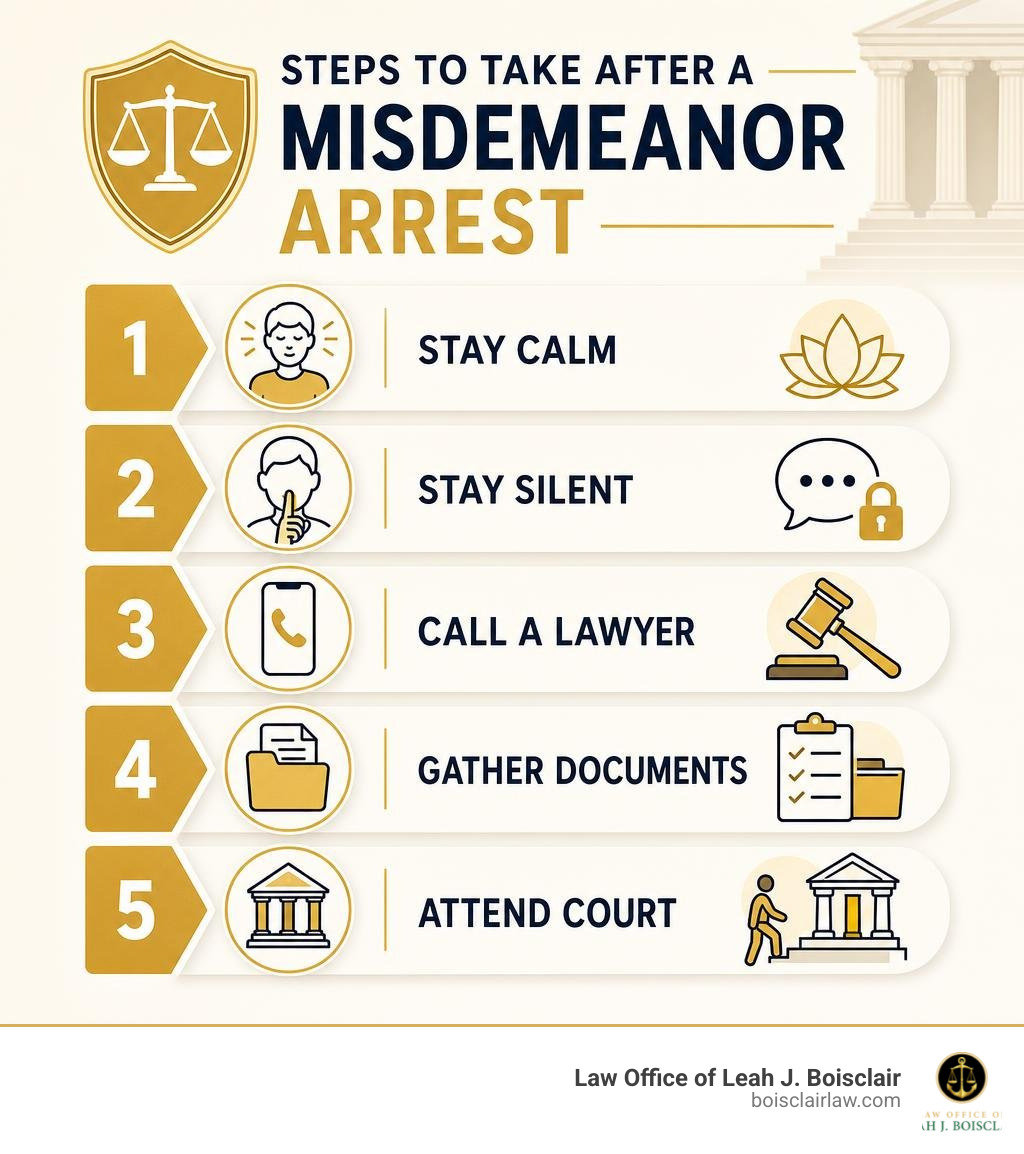
If you have been arrested or issued a summons for a misdemeanor offense, the steps you take in the first 48 hours can heavily influence the outcome of your case:
- Exercise Your Right to Remain Silent: Do not try to explain your way out of the situation to the police. Anything you say can and will be used against you.
- Do Not Discuss the Case on Social Media: Prosecutors regularly search social media platforms for admissions of guilt or statements that contradict your defense.
- Preserve Evidence: Save text messages, photos, receipts, or GPS data that could support your version of events.
- Contact a Defense Lawyer: Do not wait until your arraignment to speak with an attorney. Early intervention can lead to charges being rejected before they are formally filed.
When you meet with us, we will have you fill out a client intake form to gather all the necessary details to build your defense. To help you prepare, here is the key information we will collect during your initial consultation:
1. Personal Information
- Full Name: Your first, middle, and last name.
- Date of Birth & Social Security Number: Required for official court records and background verification.
- Contact Details: Your mobile, home, and work phone numbers, along with your email and residential address.
- Emergency Contact: The name, relationship, and phone number of someone we can reach in an emergency.
2. Case Information
- Arrest & Incident Details: The date of the arrest, the specific location of the incident, and the arresting agency.
- Charges Filed: Any specific offenses or charges you are accused of committing.
- Case/Incident Number: Found on your paperwork or citation.
- Court Dates: Whether you have been arraigned and the date of your next scheduled court appearance.
3. Legal History
- Prior Record: Any past arrests or convictions, including dates, charges, and outcomes.
- Supervision Status: Whether you are currently on probation, parole, or have any active warrants.
- Incarceration History: Any prior periods of incarceration, including dates and locations.
4. Employment Information
- Current Employment: Your employer’s name, address, phone number, and your job title.
- Employment History: Whether you have been employed within the past 12 months.
5. Case Strategy & Goals
- Your Objectives: What you hope to achieve (e.g., dismissal of charges, reduced charges, avoiding a license suspension, negotiating a plea deal, or taking the case to trial).
- Additional Context: Any other critical details or mitigating factors that could help us build a strong defense.
By preparing these details early, we can immediately begin crafting a strategy aimed at getting your charges reduced or dismissed. Learn more about our approach at Getting to Not Guilty with Proven RI Misdemeanor Defense.
Frequently Asked Questions About Misdemeanor Offenses
Can a misdemeanor offense be expunged from my record?
Yes, in many cases. In Rhode Island, if you are a first-time offender, you can generally petition to expunge a misdemeanor offense five years after the successful completion of your sentence or probation. If your case was dismissed, resolved with a “no true bill,” or you were found not guilty, you may be eligible for immediate sealing.
What is the difference between a misdemeanor and a felony offense?
The primary difference lies in the severity of the penalties. Misdemeanors are less severe offenses that carry a maximum of one year in jail and smaller fines. Felonies are serious offenses that carry state prison sentences of more than one year, much larger fines, and severe collateral consequences, such as the permanent loss of voting and firearm rights.
How much does it cost to hire a local defense attorney?
The cost varies based on the complexity of the case and the attorney’s experience. Many misdemeanor defense cases start around $1,000 to $1,500 for flat-fee representation. At our firm, we believe in transparent, upfront pricing with no hidden fees, and we offer flexible payment plans to ensure everyone has access to a high-quality defense.
Conclusion
Facing a misdemeanor charge can feel overwhelming, but you do not have to navigate the legal system alone. At the Law Office of Leah J. Boisclair, we provide personalized, compassionate advocacy designed to protect your rights, your record, and your future. Serving Cranston, Providence, Warwick, and communities throughout Rhode Island, we focus on securing proven dismissals and favorable resolutions for our clients.
Whether you are dealing with a domestic allegation, a property dispute, or need a skilled driving offense defense attorney to protect your license, we are here to help. Contact us today to schedule your free consultation.