
When You Need a Spousal Abuse Attorney: What to Do First
If you are looking for a spousal abuse attorney, here is what you need to know right away:
Quick answers for victims seeking legal help:
- Call 911 if you are in immediate danger.
- Contact the National Domestic Violence Hotline at 1-800-799-SAFE (7233) for 24/7 support.
- Request an emergency protective order — a spousal abuse attorney can help you get one quickly.
- Document the abuse — photos, texts, medical records, and dates all matter in court.
- Consult a spousal abuse attorney as soon as it is safe to do so — your first consultation is often confidential and free.
Spousal abuse is one of the most serious and underreported offenses in the United States. According to national data, roughly 1 in 4 women and 1 in 9 men experience severe intimate partner violence during their lifetime. In 2023, domestic violence made up 21% of all violent offenses in the country.
The legal system can feel overwhelming when you are already in crisis. Many victims do not know what protections exist, what steps to take first, or how an attorney can help them stay safe while their case moves through the courts.
This guide is written to change that.
Whether you are in Rhode Island, Massachusetts, or Connecticut, this guide walks you through exactly what a spousal abuse attorney does, what legal protections are available to you, and how to find the right legal representation for your situation.
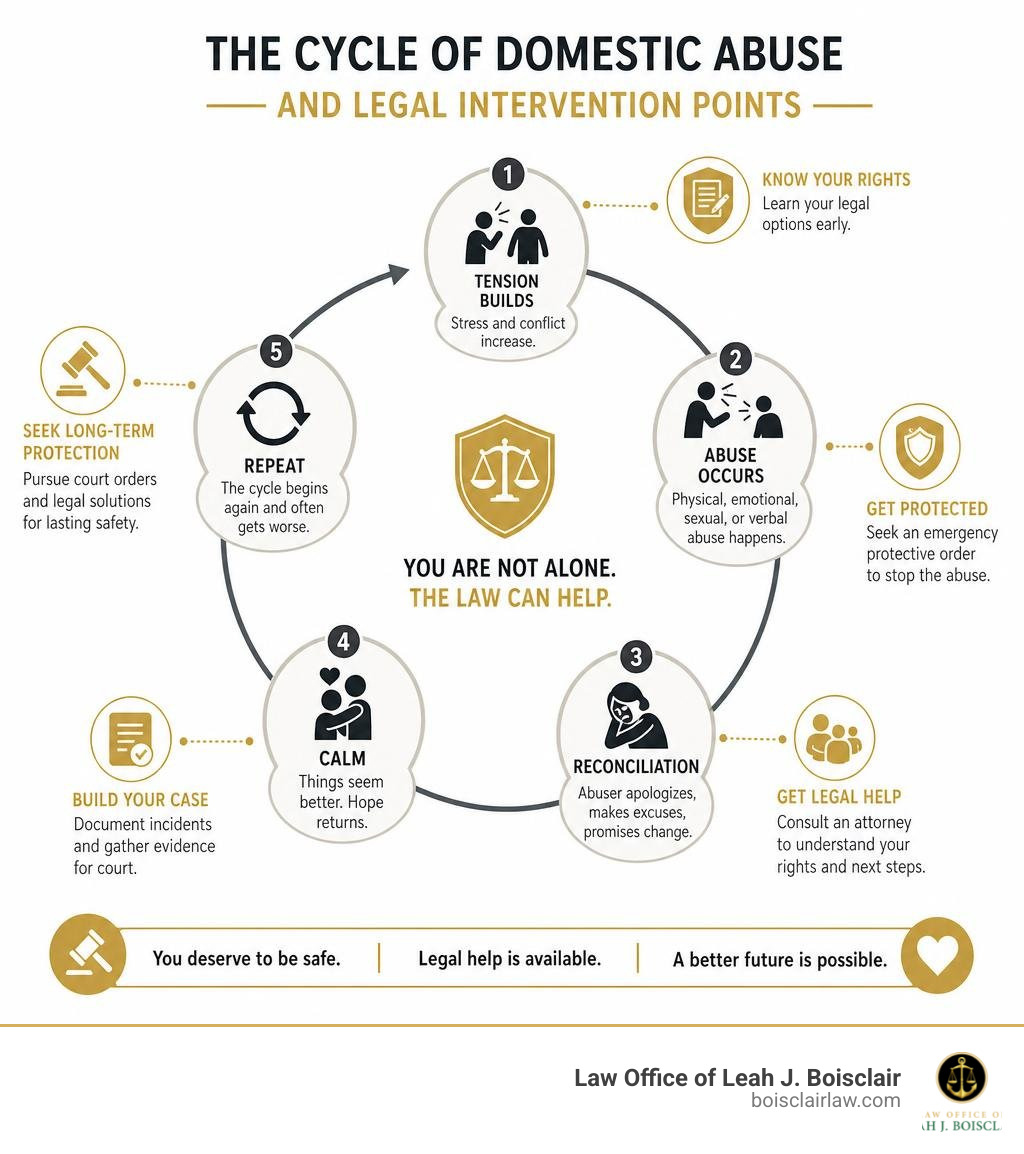
Common spousal abuse attorney vocab:
Understanding Spousal Abuse and Its Legal Definitions

When we talk about spousal abuse, many people immediately picture physical violence. While physical assault is a major component, the legal definition under Rhode Island law is much broader. In our state, domestic abuse includes a wide range of controlling, harmful, and threatening behaviors occurring between spouses, former spouses, co-parents, or individuals who reside or formerly resided together.
According to Rhode Island General Laws, domestic offenses are not limited to a single specific offense. Instead, “domestic” is an enhancer added to other underlying offenses—such as simple assault, felony assault, stalking, kidnapping, or cyberstalking. If the offense is committed against a household or family member, it is legally classified under Domestic and Family Related Offenses.
To fully understand how the law protects you, it helps to break down the different ways spousal abuse manifests:
- Physical Abuse: This includes hitting, kicking, choking, pushing, restraining, or any other unwanted physical contact. Under Rhode Island law, even an attempt to cause physical harm—like throwing an object and missing—can lead to criminal domestic offenses.
- Emotional and Psychological Abuse: This involves a systematic pattern of humiliation, verbal threats, isolation, and gaslighting. While emotional abuse can be harder to prove in a criminal court than physical injuries, it is highly relevant in family court proceedings, custody disputes, and when seeking civil protective orders.
- Financial Control: Abusers often restrict access to bank accounts, forbid their partners from working, or run up massive debts in the victim’s name. This financial stranglehold makes it incredibly difficult for victims to leave, as they may lack the funds to secure safe housing or hire legal help.
- Stalking and Cyberstalking: Repeatedly following, harassing, or monitoring a spouse via GPS trackers, spyware, or constant unwanted phone calls.
No matter how the abuse presents itself, it is never acceptable. Recognizing these behaviors as legally actionable offenses is the first step toward reclaiming your safety and independence.
How a Spousal Abuse Attorney Protects Your Rights and Safety
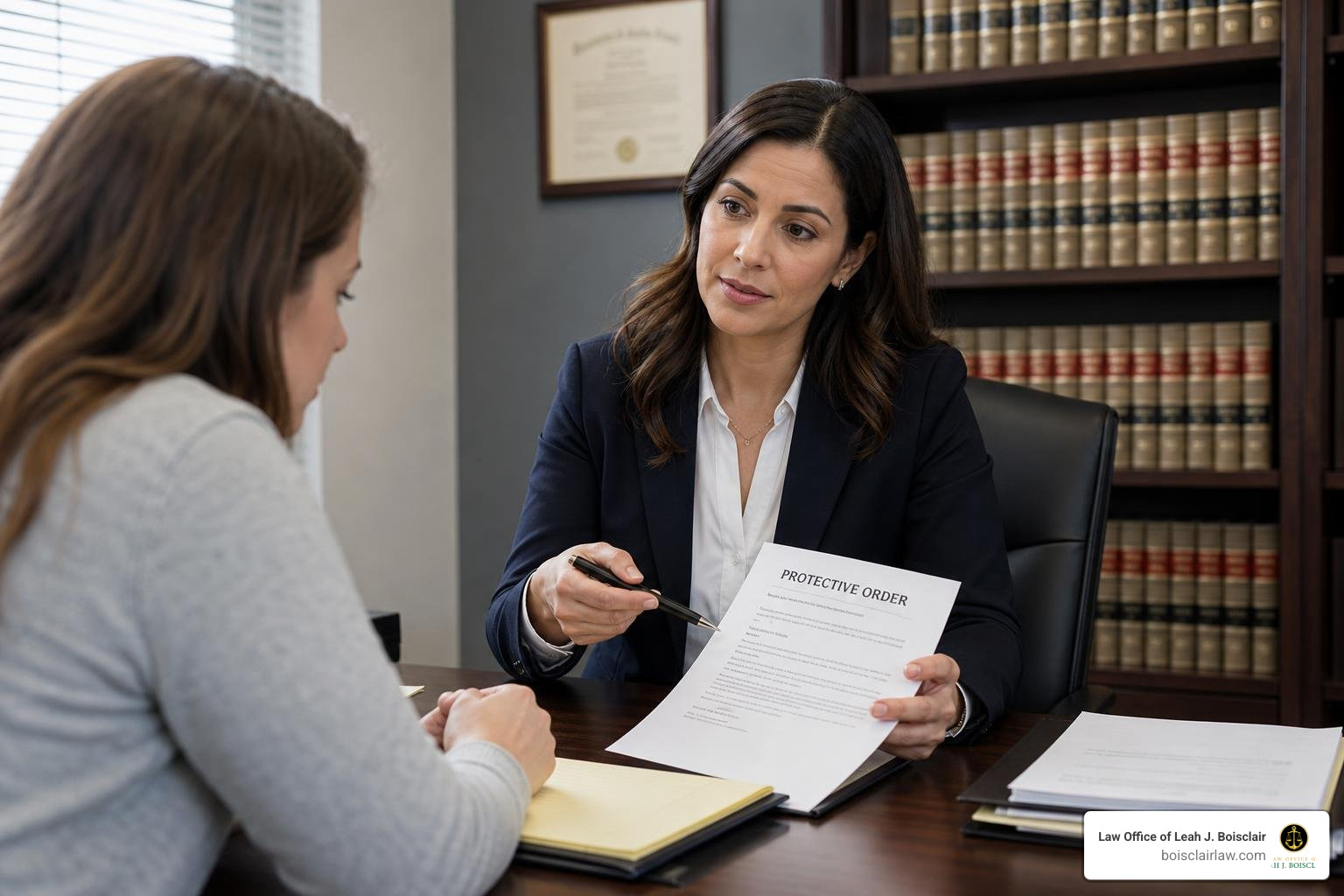
When you are dealing with an abusive partner, your safety is the absolute priority. Navigating court systems, filing legal paperwork, and facing your abuser in a courtroom can be terrifying. This is where a dedicated spousal abuse attorney becomes your shield and your advocate.
An attorney’s role is not just to file paperwork; it is to build a comprehensive legal strategy that prioritizes your physical, emotional, and financial security. From the moment you partner with us, we take the legal burden off your shoulders so you can focus on healing.
Having experienced representation is critical because domestic cases move fast and carry lifelong implications. Understanding Why You Need a Criminal Defense Attorney for Domestic Violence Right Now helps highlight how legal professionals analyze evidence, manage protective orders, and ensure that your rights are aggressively defended in both civil and criminal courtrooms.
Navigating Restraining Orders with a Spousal Abuse Attorney
One of the most immediate tools we use to protect victims is a restraining order or protective order. In Rhode Island, there are multiple avenues to secure these orders, depending on your relationship with the abuser and whether there are active criminal offenses.
The process typically begins with a Temporary Restraining Order (TRO). This is often granted ex parte, meaning the judge can issue the order immediately based on your sworn statement without the abuser being present. A TRO provides instant, enforceable protection, ordering the abuser to stay away from your home, school, and workplace.
But a TRO is only temporary—usually lasting around 21 days. To secure a long-term Restraining Order, you must attend a formal court hearing where both sides present evidence. This hearing can be incredibly stressful. The abuser may hire counsel to dispute your claims or make false allegations against you.
We assist you by:
- Gathering and Organizing Evidence: We compile police reports, medical records, text messages, voicemail recordings, and witness statements to build an airtight case.
- Representing You in Court: We handle all cross-examinations and present your case clearly to the judge, ensuring you do not have to speak directly to your abuser.
- Enforcing the Orders: We ensure the final order is properly drafted, filed, and served to law enforcement so that any violation results in immediate arrest.
When facing these intense court hearings, you should Don’t Go It Alone When Facing a Domestic Violence Case. Having an attorney by your side ensures that procedural mistakes do not jeopardize your safety.
How a Spousal Abuse Attorney Impacts Divorce and Child Custody
If you are married to your abuser or share children with them, the legal complexities multiply. Spousal abuse dramatically changes the landscape of family law matters, including divorce, child custody, and spousal support.
- Child Custody and Visitation: Rhode Island courts make all custody decisions based on the “best interests of the child.” Under state guidelines, a documented history of domestic violence creates a strong presumption that awarding custody to the abusive parent is detrimental to the child. We work to secure sole legal and physical custody, and where necessary, demand supervised visitation or complete suspension of visitation rights to keep your children safe.
- Spousal Support (Alimony): If your spouse was the primary earner but also your abuser, the court can take the history of domestic offenses into account when determining alimony. A history of abuse can justify a higher support award or prevent an abusive spouse from claiming support from you.
- Division of Assets: Financial abuse and the destruction of marital property during the marriage can influence how assets are divided. We fight to ensure you receive a fair share of the marital estate, taking into account any financial misconduct.
Navigating a split from an abuser requires a highly specialized approach. For a deeper look into this process, read our comprehensive resource: A Legal Guide to Divorcing an Emotionally Abusive Partner.
Criminal and Civil Consequences for Domestic Offenses
Perpetrators of spousal abuse face severe consequences under both civil and criminal law in Rhode Island. The state takes domestic offenses incredibly seriously, and convictions carry penalties that can alter an offender’s life permanently, including jail time, heavy fines, loss of firearm privileges, and mandatory counseling.
In Rhode Island, domestic offenses are classified as either misdemeanors or felonies, depending on the severity of the act, whether a weapon was used, and the defendant’s prior record of offenses.
| Offense Type | Common Examples | Potential Penalties (Rhode Island) |
|---|---|---|
| Misdemeanor Domestic Offense | Simple assault, domestic disorderly conduct, first-offense domestic vandalism. | Up to 1 year in jail, fines up to $1,000, mandatory attendance in a batterer’s intervention program (minimum 1 year). |
| Felony Domestic Offense | Domestic assault with a dangerous weapon, domestic strangulation, third-strike domestic offense. | Up to 10+ years in prison, substantial fines, permanent loss of firearm rights, felony record. |
| Violation of a Protective Order | Contacting the victim via text, phone, or third party while an active restraining order is in place. | Mandatory misdemeanor arrest, up to 1 year in jail for a first offense; subsequent violations can be prosecuted as felonies. |
Beyond jail time and fines, a domestic conviction carries devastating collateral consequences. Convicted individuals are federally prohibited from owning or possessing firearms. Furthermore, a domestic violence conviction on a record of offenses can make it nearly impossible to secure employment, obtain housing, or pass basic background checks.
Key Steps to Take Immediately After Experiencing Abuse
If you have just experienced an episode of spousal abuse, the steps you take in the immediate aftermath are vital for both your physical safety and your future legal case. We understand that you may be in shock, but following these steps can help protect you:
- Get to Safety: Your immediate physical safety is paramount. Leave the home if possible and go to a police station, a hospital, a trusted friend’s house, or a local domestic violence shelter.
- Call the Police: Report the incident immediately. When officers arrive, state the facts clearly. Ensure they write a detailed police report and obtain the officer’s name and badge number.
- Seek Medical Attention: Even if your injuries seem minor, go to an urgent care clinic or emergency room. Internal injuries, bruising, and strangulation marks may take hours to fully appear. Medical records serve as objective, powerful evidence in court.
- Document Everything: Take high-quality photographs of any physical injuries, torn clothing, or broken household items. Keep a private, secure journal detailing the date, time, and location of the abuse. Save all threatening text messages, emails, and call logs.
- Contact a Spousal Abuse Attorney: Before you make any major decisions regarding your living situation, divorce, or child custody, consult an attorney. We can help you file for emergency protective orders and build a safety plan.
You do not have to navigate this terrifying process alone. For guidance on how to move forward safely, read our guide: Don’t Go It Alone When Facing a Domestic Violence Case.
How to Choose the Best Legal Representation for Your Case
Choosing the right attorney to handle your domestic abuse case is a deeply personal decision. You need someone who is not only a skilled litigator but also compassionate, understanding, and deeply committed to your safety.
Here are the key factors to consider when selecting representation:
- Experience in Both Criminal and Family Law: Domestic violence cases sit at the intersection of criminal law and family law. Your attorney should understand how a criminal domestic offense impacts family court custody disputes and vice versa.
- Uncompromising Confidentiality: Your safety depends on discretion. Your attorney must have strict protocols to ensure your current location, contact information, and legal strategies remain completely confidential.
- Clear, Transparent Fee Structure: Legal fees should be explained clearly upfront. Ask about retainers, hourly rates, and payment plans so there are no surprises during an already stressful time.
- Personalized, Supportive Advocacy: You are not just another case number. Choose a firm that listens to your goals, answers your questions promptly, and treats you with the respect and empathy you deserve.
For a detailed roadmap on selecting the right representative, check out our guide on How to Choose the Best Domestic Abuse Lawyer for Your Case.
Frequently Asked Questions about Domestic Offenses
Can domestic abuse offenses be dropped by the victim?
No. In Rhode Island, once a domestic offense is reported and offenses are filed, the state (the prosecutor) takes control of the case. The victim does not have the authority to “drop” the offenses. Even if the victim signs an affidavit expressing a desire to dismiss the case, the prosecutor can—and often will—proceed with the prosecution using police reports, medical records, 911 call recordings, and other physical evidence.
What is the difference between a misdemeanor and a felony domestic offense?
The primary difference lies in the severity of the act, the presence of aggravating factors, and the defendant’s prior record. A misdemeanor domestic offense (like simple assault or disorderly conduct) carries a maximum penalty of one year in jail. A felony domestic offense involves serious bodily injury, the use of a weapon (such as a firearm or knife), strangulation, or is prosecuted when the defendant has multiple prior domestic convictions. Felonies carry multi-year prison sentences and permanent loss of certain civil rights.
How do courts handle child custody when spousal abuse is documented?
Rhode Island Family Courts prioritize the safety and well-being of children above all else. If there is documented evidence of spousal abuse, the court operates under the presumption that giving custody to the abusive parent is not in the child’s best interests. The court may award sole custody to the protective parent and order that any visitation with the abusive parent be strictly supervised by a professional or a mutually agreed-upon third party.
Conclusion
Living in fear of spousal abuse is a reality no one should have to face. If you are ready to take the next step toward safety and independence, we are here to walk beside you.
At the Law Office of Leah J. Boisclair, located in Cranston, Rhode Island, we provide personalized, compassionate advocacy. We understand the complex intersections of family law and criminal domestic offenses, and we are dedicated to helping victims secure the protective orders, custody arrangements, and legal peace of mind they deserve.
You do not have to face this alone. Contact us today to learn more about how we can support you, or read more about our services regarding Domestic and Family Related Offenses.