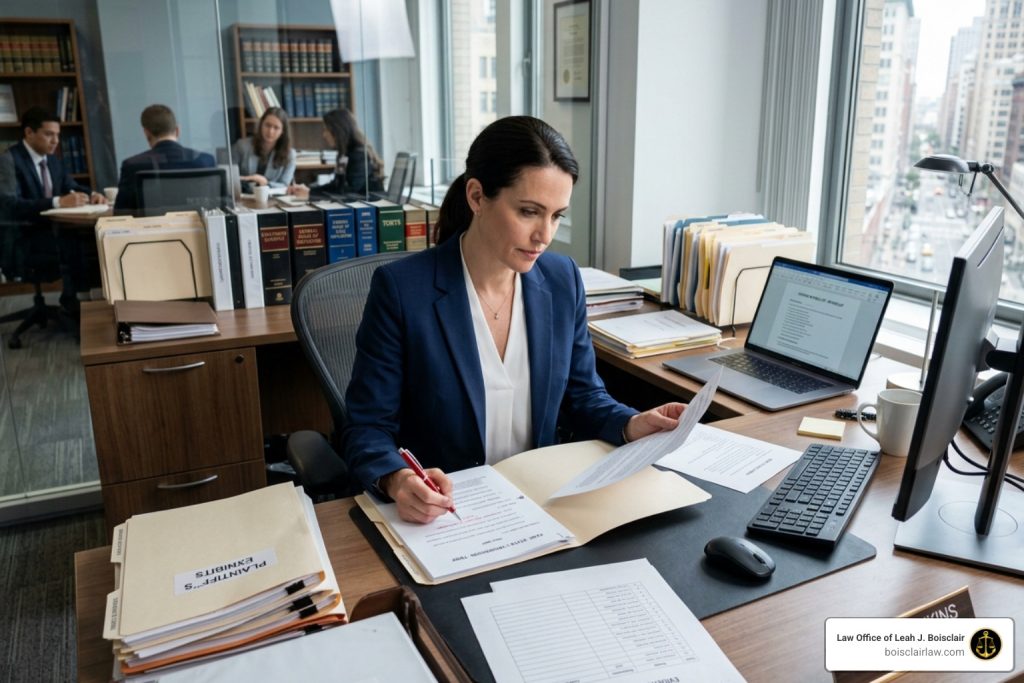
What a Trial Preparation Attorney Actually Does for Your Case
A trial preparation attorney is a criminal defense lawyer who builds your entire case strategy before you ever set foot in a courtroom — from organizing evidence and preparing witnesses to crafting a compelling narrative that speaks directly to a judge or jury.
If you’re facing Offenses in Rhode Island, Massachusetts, or Connecticut, here’s what a trial preparation attorney does for you:
- Reviews all evidence and discovery to find weaknesses in the prosecution’s case
- Develops a clear case theme that tells your story in a way that resonates with a jury
- Prepares witnesses so they testify confidently and credibly under pressure
- Files pretrial motions to suppress evidence or dismiss Offenses where possible
- Organizes exhibits and manages courtroom logistics so nothing falls through the cracks
- Runs mock trials and focus groups to stress-test arguments before the real thing
Being charged with an Offense is one of the most stressful experiences a person can go through. The stakes are high — your freedom, your record, and your future are all on the line.
Here’s the hard truth: most cases are won or lost long before the first objection is raised in court. Thorough preparation is what separates a defense that holds up under pressure from one that falls apart.
That’s exactly why having an experienced attorney who treats trial prep as a core discipline — not an afterthought — can make all the difference in your outcome.
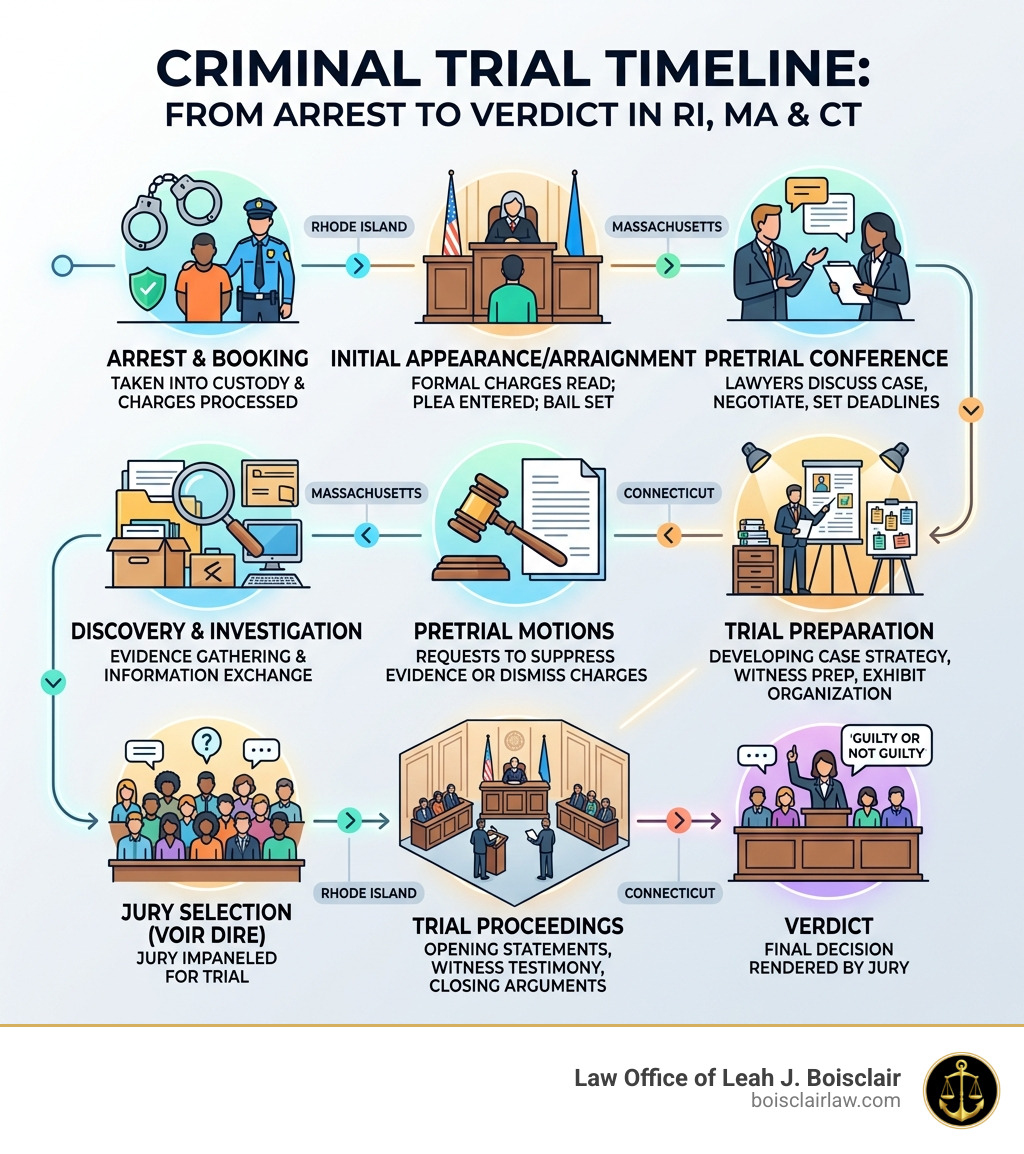
The Strategic Value of a Trial Preparation Attorney
When we talk about trial preparation, we aren’t just talking about showing up to court with a briefcase. We are talking about a relentless, deep-dive process that begins the very day you retain us. In the legal world, approximately 94–97% of matters are resolved before they ever reach a jury—concluding instead with a settlement or a plea bargain. However, the best way to secure a favorable plea or a dismissal is to prepare as if a trial is inevitable.
An effective trial preparation attorney uses the pretrial phase to build massive leverage. When the prosecution sees that we have meticulously organized our evidence, vetted our witnesses, and identified every constitutional hole in their case, they are far more likely to offer a deal that favors you.
Furthermore, the legal profession is demanding; statistics show that 4 in 5 legal professionals are burned out. By specializing in intensive trial prep, we ensure that your case receives the focused, high-energy attention it deserves, rather than being rushed at the last minute. Our Rhode Island criminal defense services focus on early investigation and rigorous risk assessment to ensure we are never caught off guard.
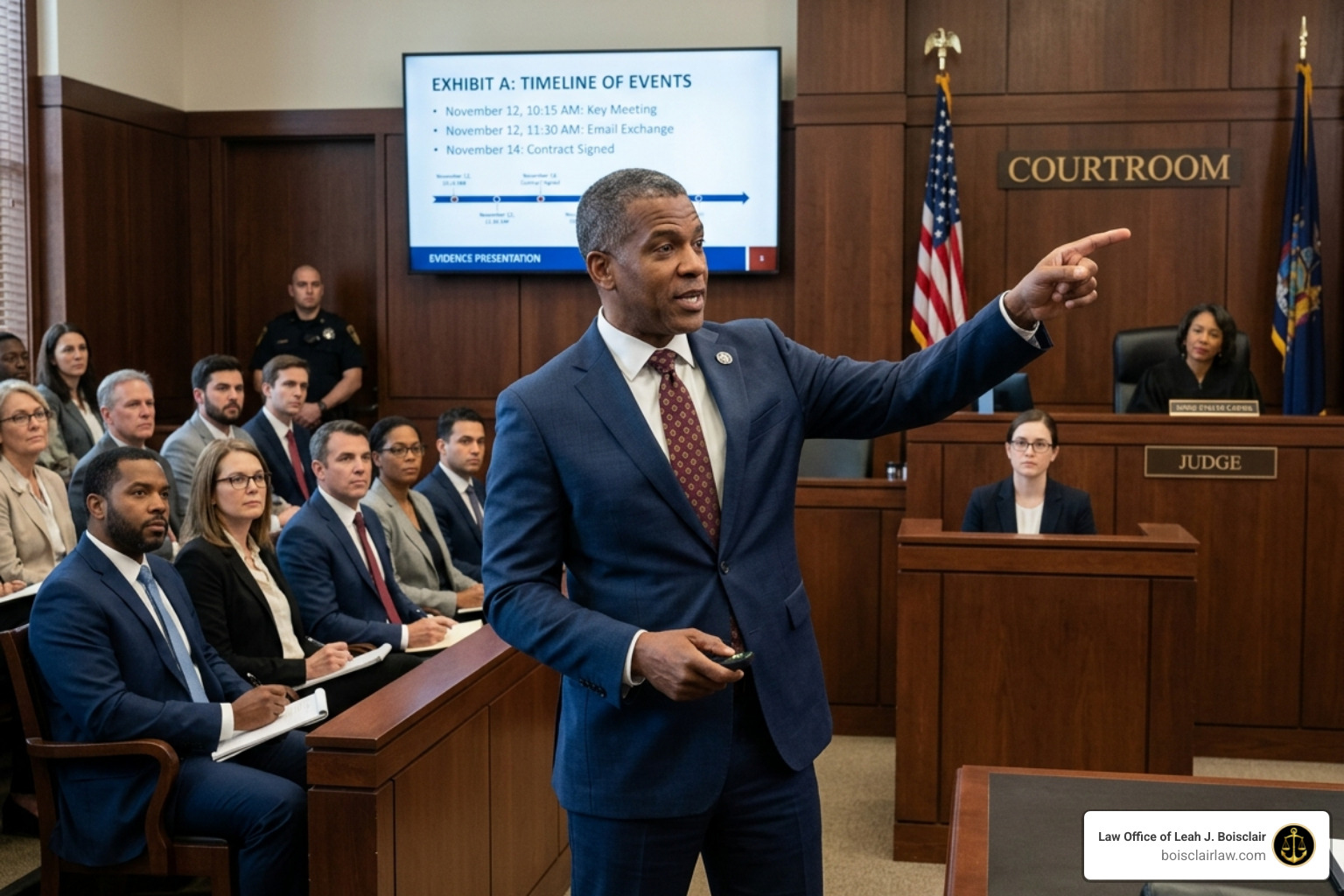
How a Trial Preparation Attorney Develops a Case Narrative
Facts alone rarely win trials; stories do. Research indicates that storytelling helps listeners absorb and retain information as much as 22 times better than facts presented outside of a narrative context. We don’t just list evidence; we develop a compelling case theme.
Whether the theme is one of “mistaken identity,” “procedural failure,” or a “betrayal” of the public trust by overzealous investigators, we anchor every piece of evidence to this narrative. Humanizing the defendant is a critical part of this process. We want the jury to see you as a person with a life, a family, and a future—not just a case number on a docket.
Why Every Trial Preparation Attorney Uses Mock Trials
We don’t like surprises in the courtroom. That’s why we utilize focus groups and mock trials. These sessions allow us to present our arguments to a “shadow jury”—neutral individuals who provide unbiased feedback.
This process helps us identify hidden biases and test which arguments actually resonate. If a mock jury finds a specific piece of evidence confusing, we refine our presentation before the real trial begins. It’s about understanding jury psychology and ensuring our “Plan A” is backed up by a “Plan B” and “Plan C.”
Key Steps in the Trial Preparation Process
Trial preparation is a marathon, not a sprint. It involves a “trial bible”—a comprehensive organizational system that keeps every document at our fingertips. If you are wondering what to do if you’ve been arrested in RI, your first step should be securing an attorney who follows a strict 60-90 day checklist.
Our process includes:
- Discovery Review: Analyzing every police report, witness affidavit, and forensic result.
- Motion Practice: Filing motions in limine to keep prejudicial or illegally obtained evidence out of the jury’s sight.
- Deposition Summaries: Boiling down hours of testimony into searchable, actionable insights.
- Exhibit Numbering: Ensuring that every photo, video, and document is tagged and ready for instant display.
Organizing Evidence and Exhibits for the Courtroom
In April 2026, the courtroom is more digital than ever. We use digital trial binders with keyword tagging to navigate thousands of pages of discovery in seconds. This organization is vital for maintaining the “chain of custody” and ensuring all exhibits meet strict admissibility rules. We also create demonstrative guides—graphics that simplify complex forensic reports so the jury can easily follow our logic.
Preparing for Firearm Offenses and DUI and Traffic Offenses
Specific offenses require specialized preparation. For Firearm Offenses, we dive deep into ballistics reports and ownership records. For DUI and Traffic Offenses, we scrutinize breathalyzer calibration logs and the officer’s training records regarding field sobriety tests.
We often employ expert toxicologists to challenge blood-alcohol content results or scene reconstruction experts to show that a traffic stop was unjustified. You can see the impact of this level of detail in our Case Results.
Witness Preparation and Courtroom Logistics
A witness who is nervous or unprepared can inadvertently damage a case. We use the R.I.S.E. Method (Refine, Inform, Strategize, Evaluate) to prepare our clients and witnesses. We conduct rigorous cross-examination drills so you know exactly what to expect from the prosecutor.
Logistics also matter. We scout the courtroom in advance to check the seating, the size of the counsel table, and the AV equipment. We even manage subpoena schedules to ensure our experts are ready to testify exactly when we need them. During voir dire (jury selection), we use behavioral science and demographic data to help seat a jury that is fair and open-minded.
Leveraging Technology to Streamline Your Defense
Modern technology has revolutionized how we prepare for trial. By using advanced transcription software and AI-powered tools, we can cut evidence review time by as much as 94%. These tools allow us to generate AI summaries with 100% page-line accuracy, ensuring we never miss a detail in a deposition.
We utilize:
- eDiscovery Platforms: To search through massive amounts of digital data.
- Predictive Coding: To identify the most relevant documents quickly.
- Courtroom Graphics: To turn dry facts into engaging visual stories.
- Real-time Trial Logs: To track which exhibits have been admitted and what testimony was given each day.
For more on how we use these tools, check out The Ultimate Guide to RI Criminal Attorneys.
Navigating Civil vs. Criminal Trial Preparation
While the mechanics of preparation are similar, the stakes and standards in criminal law are unique. In a criminal case, the burden of proof is “beyond a reasonable doubt”—the highest standard in our legal system. We also must remain hyper-vigilant about your Fifth Amendment rights and other constitutional protections.
| Feature | Criminal Trial | Civil Trial |
|---|---|---|
| Burden of Proof | Beyond a Reasonable Doubt | Preponderance of Evidence |
| Primary Goal | Liberty and Record Protection | Monetary Damages/Liability |
| Constitutional Protections | High (4th, 5th, 6th Amendments) | Standard Procedural Rules |
| Jury Verdict | Usually must be unanimous | Often a majority suffices |
Whether we are defending against Public Order Offenses, Assault and Battery, or complex White Collar Offenses, our preparation remains exhaustive. After every trial, we conduct a post-trial reflection to analyze what worked, ensuring our strategies only get sharper over time.
Frequently Asked Questions about Trial Preparation
When should I hire a trial preparation attorney?
You should hire an attorney the moment you are arrested or become aware you are under investigation. Effective trial preparation starts on Day One. The earlier we get involved, the more time we have to preserve evidence like 911 tapes or surveillance footage, which are often deleted after 30 days.
What is the difference between a felony and a misdemeanor trial?
A felony trial involves more serious Offenses that carry a potential sentence of more than one year in prison. These cases often involve more complex discovery and longer jury selections. A misdemeanor trial is for less serious Offenses, but the preparation is no less important, as a conviction still results in a permanent criminal record.
How long does the trial preparation process typically take?
It varies by case complexity. A straightforward DUI might take a few months of preparation, while a complex white-collar or violent Offense case could take a year or more. We build a timeline backward from your trial date to ensure every deadline is met.
Conclusion
At the Law Office of Leah J. Boisclair, we believe that your defense is only as strong as the preparation behind it. Based in Cranston, RI, we provide personalized and compassionate advocacy for those facing life-altering Offenses. We don’t just “show up” for trial; we master the facts, the law, and the narrative to give you the best possible chance at a dismissal or acquittal.
If you are facing a legal challenge, don’t wait until the last minute. Contact a Public Order Offense Defense Attorney today to start building your defense.