
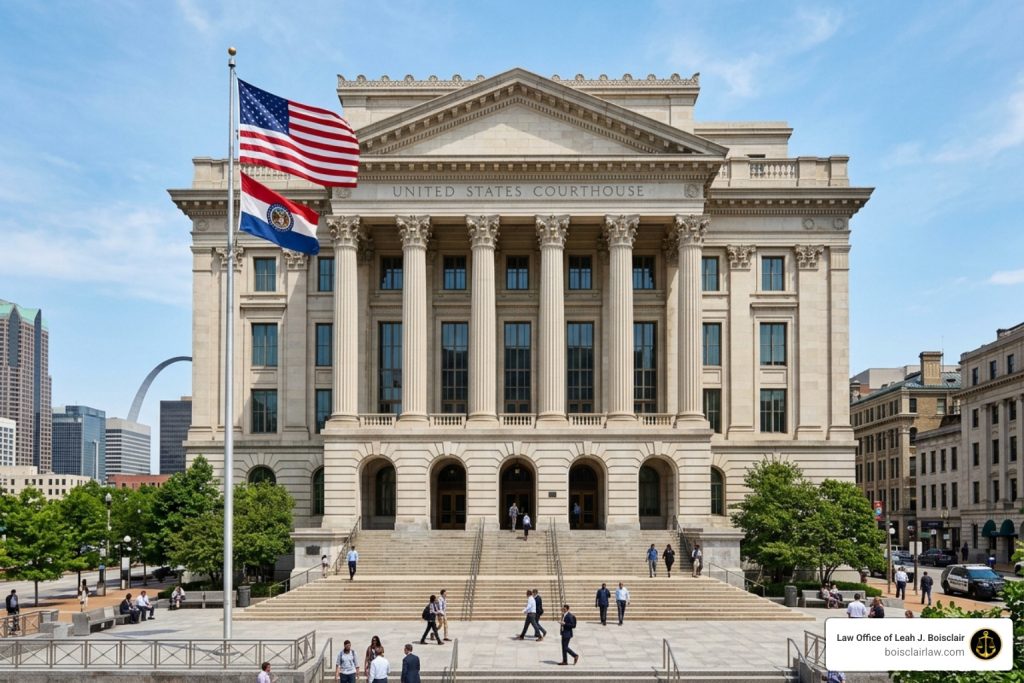
When the Federal Government Comes After You, the Stakes Could Not Be Higher
Federal criminal defense is the practice of protecting individuals and businesses charged with — or investigated for — crimes under federal law. If you’re facing federal charges right now, here’s what you need to know fast:
Quick answers:
- What it is: Legal representation in the federal court system, which is separate from state courts
- Who prosecutes: United States Attorneys (not local district attorneys)
- Who defends you: A private federal defense attorney, a Federal Public Defender, or a CJA panel attorney
- Why it matters: Federal convictions carry harsher sentences, mandatory minimums, and fewer chances for record sealing than state convictions
- What to do first: Do not speak to federal agents without an attorney present — invoke your right to remain silent immediately
Federal cases are fundamentally different from state cases. The government may have been quietly investigating you for months or even years before you ever know about it. Federal agencies like the FBI, DEA, and IRS have enormous resources. And federal prosecutors have a conviction rate that far exceeds what you’d see in most state courts.
Whether you’ve received a target letter, been served with a subpoena, or are already facing an indictment, the decisions you make right now can shape everything that follows.
This guide walks you through everything you need to know — from how federal cases work to what defenses exist and why getting the right lawyer early can make all the difference.
Navigating the Complexities of Federal Criminal Defense
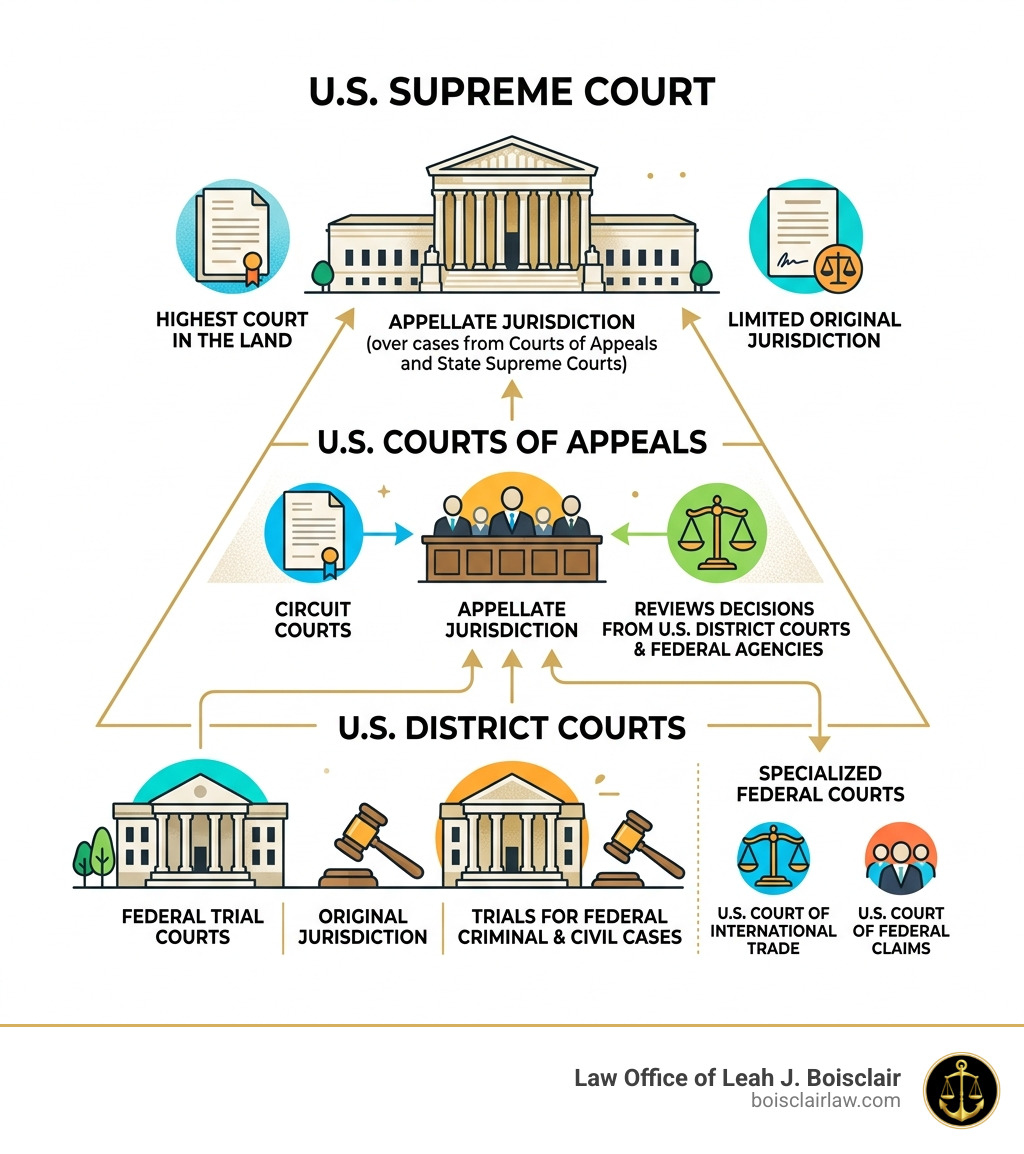
Entering the federal legal arena is often a culture shock for those used to local municipal or state courts. Federal law is governed by specific federal legislation and the U.S. Constitution, focusing on matters of national interest, interstate commerce, or crimes committed on federal property.
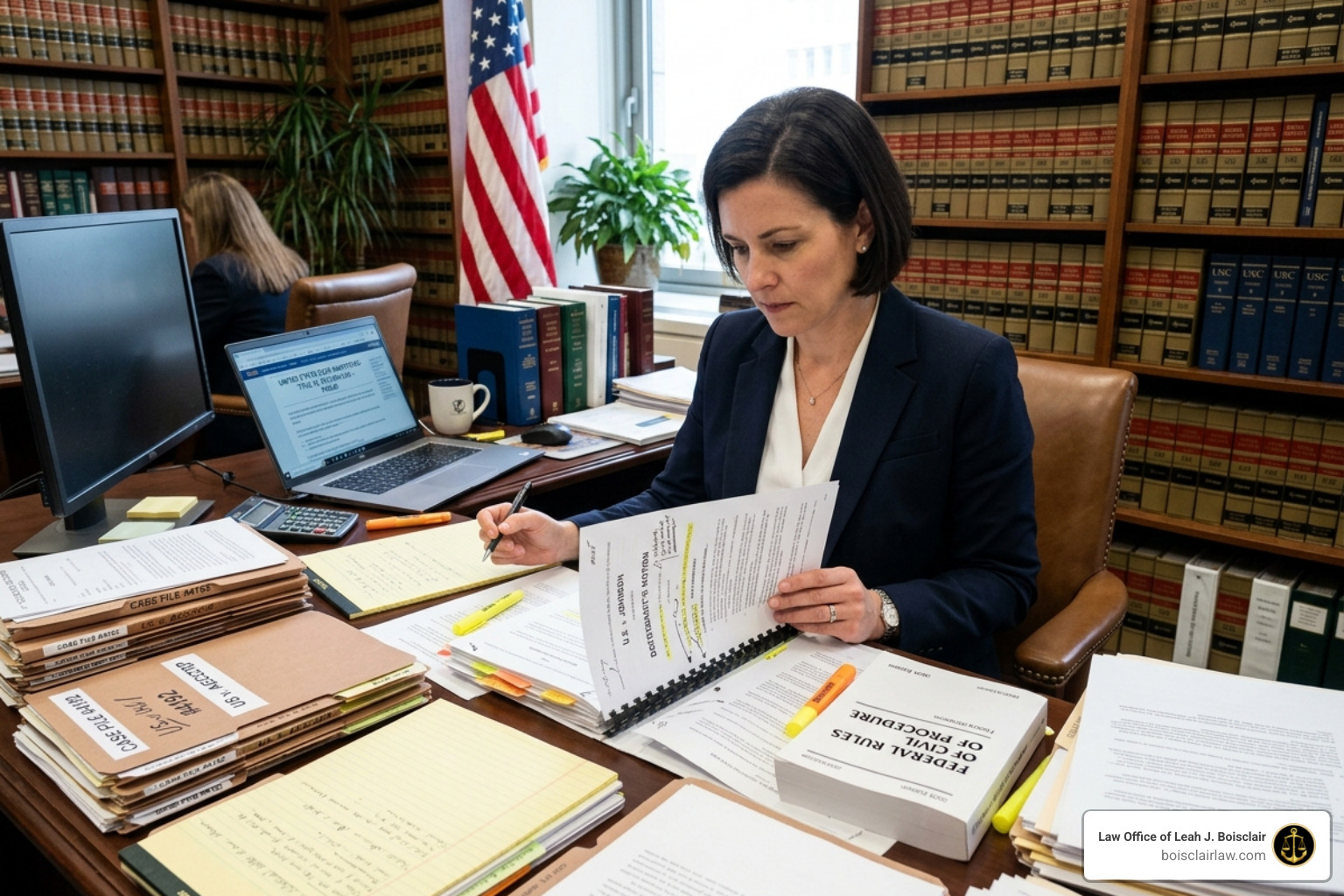
When you are targeted by the federal government, you aren’t just fighting a local prosecutor; you are fighting the United States of America. This requires a RI Criminal Attorney who understands the specific “Rules of Federal Criminal Procedure” and the intense pressure the Department of Justice (DOJ) places on defendants.
The Role of a Federal Criminal Defense Lawyer
A federal criminal defense lawyer provides specialized advocacy that differs significantly from state-level defense. We don’t just argue facts; we navigate a system where the “Federal Sentencing Guidelines” dictate potential outcomes with mathematical precision.
In the District of Rhode Island, defendants who cannot afford private counsel may be represented by the Federal Public Defender Office Districts of Massachusetts, New Hampshire, and Rhode Island. These offices employ approximately 4,200 professionals nationwide. If the Public Defender has a conflict of interest, the court appoints a “CJA panel attorney”—a private lawyer vetted by the court to handle federal cases. As of January 1, 2026, these panel attorneys are compensated at an hourly rate of $177 for non-capital cases.
At the Law Office of Leah J. Boisclair, we provide that same high-level federal expertise with a personalized, compassionate touch that ensures you never feel like just another case number in a massive system.
Why Early Intervention Matters in May 2026
In the federal system, the “pre-charge” phase is arguably the most critical time for your defense. By May 2026, federal agencies have become even more adept at using digital footprints and AI-driven data to build cases before an arrest ever occurs.
Hiring a lawyer during the investigation phase—rather than waiting for an indictment—can lead to “pre-charge advocacy.” This involves our team intervening with federal agents to:
- Clarify misunderstandings before they become criminal charges.
- Negotiate for a civil resolution instead of a criminal one.
- Prevent the reputational damage of a public arrest.
- Secure “immunity agreements” in exchange for information.
Understanding why hire a Rhode Island criminal defense attorney early is the best way to protect your future before the government’s momentum becomes unstoppable.
State vs. Federal Offenses: Key Jurisdictional Differences
One of the most common questions we hear is: “Why is this a federal case and not a state case?” The answer usually lies in “jurisdiction.”
| Feature | State Criminal System | Federal Criminal System |
|---|---|---|
| Prosecutor | District Attorney (DA) | United States Attorney |
| Investigative Agency | Local Police / State Police | FBI, DEA, ATF, IRS, HSI |
| Judges | State Court Judges | Federal District Judges (Life Appointees) |
| Grand Jury | Not always required for charges | Required for all felony indictments |
| Sentencing | More flexible; parole often available | Rigid guidelines; no parole |
Federal jurisdiction is triggered if an offense crosses state lines, involves a federal agency (like the Post Office), occurs on federal land (like a VA hospital or national park), or affects “interstate commerce.” In some instances, “dual jurisdiction” applies, meaning you could technically be prosecuted by both the state and the federal government for the same act. This is why having the ultimate guide to RI criminal attorneys is helpful to understand where your case sits.
Felony vs. Misdemeanor Offenses
Federal offenses are classified based on their maximum term of imprisonment.
- Felonies: Crimes carrying more than one year in prison. Most federal criminal defense cases involve felonies.
- Misdemeanors: Crimes carrying one year or less. These are often handled by Federal Magistrate Judges.
A federal felony conviction carries heavy “collateral consequences,” including the loss of the right to vote, the loss of firearm rights, and significant hurdles to future employment. Unlike many state systems, the federal system has extremely limited options for record sealing or expungement, making it vital to avoid a conviction in the first place.
Federal Grand Juries and Indictments
In the federal system, a felony charge must typically come through a Grand Jury. This is a group of 16 to 23 citizens who meet in secret to hear evidence presented by the prosecutor.
The standard is merely “probable cause”—a much lower bar than the “beyond a reasonable doubt” standard required at trial. Because the defense is not allowed to be present or present evidence during these proceedings, indictments are very easy for prosecutors to obtain. If the Grand Jury finds probable cause, they issue a “True Bill,” resulting in an indictment.
Common Federal Offenses and Investigative Agencies
Federal agencies are highly specialized. If you are being visited by the FBI, they are likely looking for fraud or organized crime. If it’s the DEA, it’s drugs. If it’s the IRS, it’s money.

Firearm Offenses
Federal firearm offenses are prosecuted aggressively. Common charges include:
- Felon in Possession: It is a federal crime for a prohibited person to possess a firearm or ammunition.
- Straw Purchases: Buying a gun for someone who isn’t legally allowed to own one.
- Possession in Furtherance of a Crime: Having a gun while committing a drug offense often triggers a mandatory consecutive five-year prison sentence.
DUI and Traffic Offenses
While most DUIs are state matters, you can face federal DUI and traffic offenses if the incident occurs on federal property. This includes National Parks, military bases, or federal parkways. These cases are governed by the “Assimilative Crimes Act,” which allows federal courts to adopt the traffic laws of the state where the federal land is located.
Assault and Battery Offenses
Federal assault and battery offenses usually involve incidents on federal land, aircraft, or high-seas maritime jurisdiction. Assaulting a federal officer (such as a TSA agent or a postal worker) is also a serious federal crime that carries enhanced penalties.
Domestic Offenses
Federal domestic offenses often involve the “Violence Against Women Act” (VAWA). This includes crossing state lines to commit domestic violence or violating a protective order by traveling across state borders.
Drug Offenses
Drug charges remain the most frequent federal crime, making up over 31% of all cases in recent fiscal years. Federal drug cases focus on trafficking, manufacturing, and distribution rather than simple possession. These offenses often carry “mandatory minimum” sentences of 5, 10, or 20 years depending on the weight of the drugs involved.
Public Order and Government Offenses
These crimes against public administration target the integrity of the government. They include:
- Perjury: Lying under oath.
- Obstruction of Justice: Interfering with a federal investigation.
- Bribery: Offering money to a public official.
Property Offenses
Federal property offenses include arson on federal property or the theft of government equipment. Because the victim is the U.S. government, these cases are prioritized by federal prosecutors.
White Collar Offenses
As a white collar offenses defense attorney, we frequently handle complex financial cases.
- Bank Fraud: Defrauding a financial institution.
- Tax Evasion: Intentionally underreporting income to the IRS.
- Healthcare Fraud: Overbilling Medicare or Medicaid.
- Money Laundering: We can help you how to find a money laundering defense attorney to challenge the government’s evidence regarding the “source of funds.”
Sex Offenses
Federal sex offenses often involve the internet or interstate travel. This includes the possession or distribution of prohibited materials and “travel with intent” to engage in illicit acts. These convictions almost always require lifetime registration on the federal sex offender registry.
Violent Offenses
While most violent crime is state-based, federal violent offenses include bank robbery, carjacking, and kidnapping where the victim is taken across state lines.
Computer Offenses
With the help of a computer offenses defense attorney, you can defend against charges like hacking, identity theft, and internet fraud. Federal agencies now use advanced technology to track digital footprints, making these cases highly technical and evidence-heavy.
The Federal Criminal Process: Investigation to Sentencing
The federal process moves like a slow, heavy steamroller. It is methodical and documented every step of the way.
The Process of a Federal Criminal Case
- Investigation: Agencies like the FBI or DEA gather evidence. You may receive a “Target Letter” informing you that you are the subject of a Grand Jury investigation.
- Arrest or Summons: You are either taken into custody or given a date to appear in court.
- Initial Appearance: You see a Magistrate Judge who informs you of your rights and the charges.
- Detention Hearing: Unlike state court, there is no “bail bondsman” system in federal court. You are either released on your own recognizance (often with conditions) or held without bail if the judge deems you a flight risk or a danger to the community.
- Discovery: The government provides the evidence they have against you. In federal cases, this can involve thousands of pages of documents and terabytes of digital data.
- Plea Negotiations: Over 90% of federal cases end in a plea deal. We work to negotiate the lowest possible “offense level” under the sentencing guidelines.
- Trial: If no agreement is reached, the case goes to a jury trial before a U.S. District Judge.
Sentencing and Mandatory Minimums
Sentencing is the most complex part of federal criminal defense. Judges use the “Federal Sentencing Guidelines”—a point-based system that considers the severity of the offense and your prior criminal history.
- Mandatory Minimums: Many drug and firearm offenses have “floors” below which a judge cannot sentence you, regardless of how “good” a person you are.
- Types of Sentences: These include probation (rare for felonies), incarceration in a Federal Bureau of Prisons (BOP) facility, and “supervised release” (the federal version of parole).
- 2026 Compensation Rates: For those using court-appointed counsel, the statutory thresholds for attorney compensation are approximately $13,800 for felonies and $9,800 for appeals, though these can be exceeded in complex cases with judicial approval.
Strategic Defense and Constitutional Protections
Just because the federal government has unlimited resources doesn’t mean they are always right. We use the U.S. Constitution as a shield to protect our clients.
Challenging Evidence and Procedures
We look for every possible “Constitutional Violation” to weaken the government’s case:
- Fourth Amendment: Was the search warrant valid? Did agents have probable cause to search your home or phone? If not, we file a “Motion to Suppress” to throw out the evidence.
- Fifth Amendment: Were you coerced into a confession? Did agents continue to question you after you asked for a lawyer?
- Lack of Intent: Many federal white-collar crimes require the government to prove you intended to defraud. If the incident was a result of a mistake or bad business advice, that is a powerful defense.
Successful Outcomes in Federal Cases
A “win” in federal court isn’t always an acquittal at trial. Successful outcomes often include:
- Pre-indictment Dismissals: Convincing the prosecutor not to file charges at all.
- Reduced Charges: Dropping a charge with a 10-year mandatory minimum down to a charge with no mandatory minimum.
- Safety Valve: Utilizing specific legal provisions to allow first-time, non-violent drug offenders to be sentenced below the mandatory minimum.
- Immunity: Securing a deal where you provide information in exchange for the government dropping all charges against you.
Frequently Asked Questions about Federal Criminal Defense
What is the difference between a Federal Public Defender and a CJA Panel Attorney?
A Federal Public Defender is a full-time government employee who works for the public defender’s office. A CJA (Criminal Justice Act) Panel Attorney is a private lawyer in the community who is paid by the government to represent indigent defendants when the public defender’s office has a conflict. Both are highly skilled in federal law.
How long do federal criminal investigations typically last?
They can last anywhere from a few months to several years. Federal agents are known for their patience; they often wait until they have an “airtight” case before making an arrest. If you suspect you are being watched, the investigation has likely already been active for quite some time.
What should I do if I receive a federal target letter or subpoena?
Do not call the agent listed on the letter. Do not try to “explain your side” to the prosecutor. Anything you say will be used to lock in your guilt. Instead, contact an experienced federal defense lawyer immediately. We can communicate with the government on your behalf, often protecting you from saying something that could lead to an obstruction of justice charge.
Conclusion
Facing the federal government is a life-altering event, but you do not have to face it alone. The Law Office of Leah J. Boisclair provides the sophisticated, aggressive, and compassionate federal criminal defense representation you need to protect your rights and your future.
Based in Cranston, RI, we understand the specific nuances of the District of Rhode Island’s federal court. We pride ourselves on personalized advocacy—treating every client with the respect and attention they deserve while fighting relentlessly for dismissals and reduced outcomes.
If you or a loved one are under investigation or facing federal offenses, time is your most valuable asset. Contact our experienced legal team today for a confidential consultation. Let us stand between you and the government.