

A Felony Record Doesn’t Have to Follow You Forever
If you’re looking for a felony record expungement lawyer, here’s what you need to know right away:
What a felony expungement lawyer does for you:
- Reviews your full criminal history to confirm eligibility
- Prepares and files your petition accurately in the correct court
- Handles prosecutor objections and represents you at hearings
- Pursues the fastest possible outcome to clear your record
A single felony conviction can quietly close doors for years. Jobs. Housing. Loans. Professional licenses. Even the right to own a firearm. Many people don’t realize that in states like Indiana, California, Oregon, and others, expungement is a real legal option — even for certain felony offenses.
But the process is not simple. Filing in the wrong court, missing a waiting period, or making an error on your petition can get your case denied — and in some states, you only get one shot.
That’s exactly why working with an experienced expungement attorney matters. As of June 2026, expungement laws continue to evolve across Rhode Island, Massachusetts, and Connecticut — and the rules around which offenses qualify, how long you must wait, and what the petition must include are highly specific to your state and your case.
The Law Office of Leah J. Boisclair helps clients in RI, MA, and CT navigate this process — so a past mistake doesn’t define your future.
Felony record expungement lawyer word list:
- Providence misdemeanor defense lawyer
- RI misdemeanor record expungement
- proven misdemeanor dismissals RI
Understanding Felony Record Expungement vs. Sealing
When people talk about clearing their criminal background, they often use terms like “expungement,” “record sealing,” and “nondisclosure” interchangeably. However, in the eyes of the law, these terms represent very different legal mechanisms.

What is Expungement?
Expungement is the legal process of completely wiping a record clean. When a court orders an expungement, the records of your arrest, case, or conviction are physically and digitally destroyed or returned to you. Legally, the offense is treated as though it never happened. On job applications, housing forms, or under oath, you can truthfully state that you have never been arrested or convicted of that offense.
What is Record Sealing?
Record sealing, on the other hand, does not destroy the records. Instead, it hides them from public view. The general public, including landlords, standard employers, and credit agencies, will not see a sealed record during a background check. However, the record still exists. Government agencies, law enforcement, and licensing boards (such as those for nursing, law, or education) can still access sealed records under specific circumstances.
To understand how these concepts apply to your specific situation, read our comprehensive guide on Can You Actually Clear Your Criminal Record?
Eligibility and Waiting Periods for Felony Offenses
In Rhode Island, eligibility for clearing a felony depends heavily on the nature of the offenses and your overall criminal history. While some states have broad “Second Chance” laws, Rhode Island maintains strict guidelines, particularly for felony offenses.
Generally, a first-time offender convicted of a single non-violent felony may petition for expungement after a 10-year waiting period from the completion of their sentence (including probation and payment of all fines). If you have more than one conviction on your record, navigating the eligibility rules becomes significantly more complex.
Comparing State Expungement Frameworks
To provide some context on how Rhode Island’s waiting periods compare to other jurisdictions across the country:
| State | Misdemeanor Waiting Period | Felony Waiting Period | Key Limitations |
|---|---|---|---|
| Rhode Island | 5 Years (First Offense) | 10 Years (First Offense) | Violent offenses are permanently excluded. |
| Indiana | 5 Years | 8 Years (Level 6/Class D) | Sealing only; sex offenses and homicide are excluded. |
| North Carolina | 5 Years | 10 Years (Non-violent) | Strict limits on multiple convictions. |
| Maryland | Varies | Varies | Non-refundable $30 filing fee per petition. |
Expungement Eligibility by Offense Category
Different types of offenses carry different rules. Let’s look at how various charges are treated:
- Firearm Offenses: Convictions involving violent firearm offenses are generally ineligible for expungement. However, certain non-violent regulatory or carrying offenses may qualify after the 10-year waiting period, provided it was a first offense.
- DUI and Traffic Offenses: A first-offense DUI can often be expunged after a waiting period, but multiple offenses or DUIs causing serious bodily injury are subject to much stricter rules.
- Assault and Battery Offenses: Simple assault (often a misdemeanor) is eligible after 5 years. Felony assault offenses, especially those classified as violent, are typically ineligible.
- Domestic Offenses: Domestic violence convictions carry lifetime firearm restrictions and are highly scrutinized. While some domestic misdemeanors can eventually be expunged, felony domestic offenses face massive legal hurdles.
- Drug Offenses: Rhode Island has become increasingly progressive regarding drug offenses. Many possession convictions, particularly those that have since been decriminalized or legalized (like simple cannabis possession), are eligible for expedited clearing.
- Disorderly Conduct and Public Peace Offenses: These are almost always misdemeanors and are highly eligible for expungement after 5 years, or immediately if the case was dismissed.
- Property Offenses: Non-violent property offenses, such as felony larceny or breaking and entering, can be expunged after 10 years if they represent a first offense.
- White Collar Offenses: Embezzlement or fraud charges are eligible for expungement under the standard 10-year rule for first-time felony offenders, assuming full restitution has been paid.
- Sex Offenses: Felony sex offenses are permanently ineligible for expungement in Rhode Island.
- Violent Offenses: Any felony classified as a crime of violence under Rhode Island General Laws (such as robbery, murder, or first-degree sexual assault) is permanently barred from expungement.
- Computer Offenses: Non-violent cybercrimes and online fraud follow the standard first-offender felony guidelines.
For a deeper dive into the differences between these classifications, check out our resource on Felonies And Misdemeanors.
Why You Need a Felony Record Expungement Lawyer
Filing a petition to clear a felony is not as simple as filling out a form and handing it to a clerk. It is an adversarial court proceeding.

Here is why having an experienced felony record expungement lawyer is vital to your success:
Avoiding Procedural Errors
The court system is notoriously rigid. A single clerical error, a missing background check, or filing in the wrong county can result in an immediate denial. If your petition is denied due to a procedural mistake, you may have to wait months—or even years—before you can legally file again.
Handling Prosecutor Objections
Once you file a petition, the Department of the Attorney General or the local police department will review it. If they find any reason to object—such as an unpaid fine, an open charge in another state, or a miscalculation of your waiting period—they will file a formal objection. An experienced attorney knows how to counter these objections and present a compelling argument to the judge.
Professional Court Representation
You will have to appear before a judge to explain why your record should be cleared. We represent you at this hearing, presenting evidence of your rehabilitation, your community standing, and the hardships your record has caused. We ensure your voice is heard professionally and persuasively.
To learn more about how we handle these cases in our state, read about Wiping The Slate Clean In Rhode Island. You can also review general local legal directories like Best Criminal Lawyers in Warwick, RI – Justia to understand the local legal landscape.
The Step-by-Step Felony Expungement Process and Civil Rights Impact
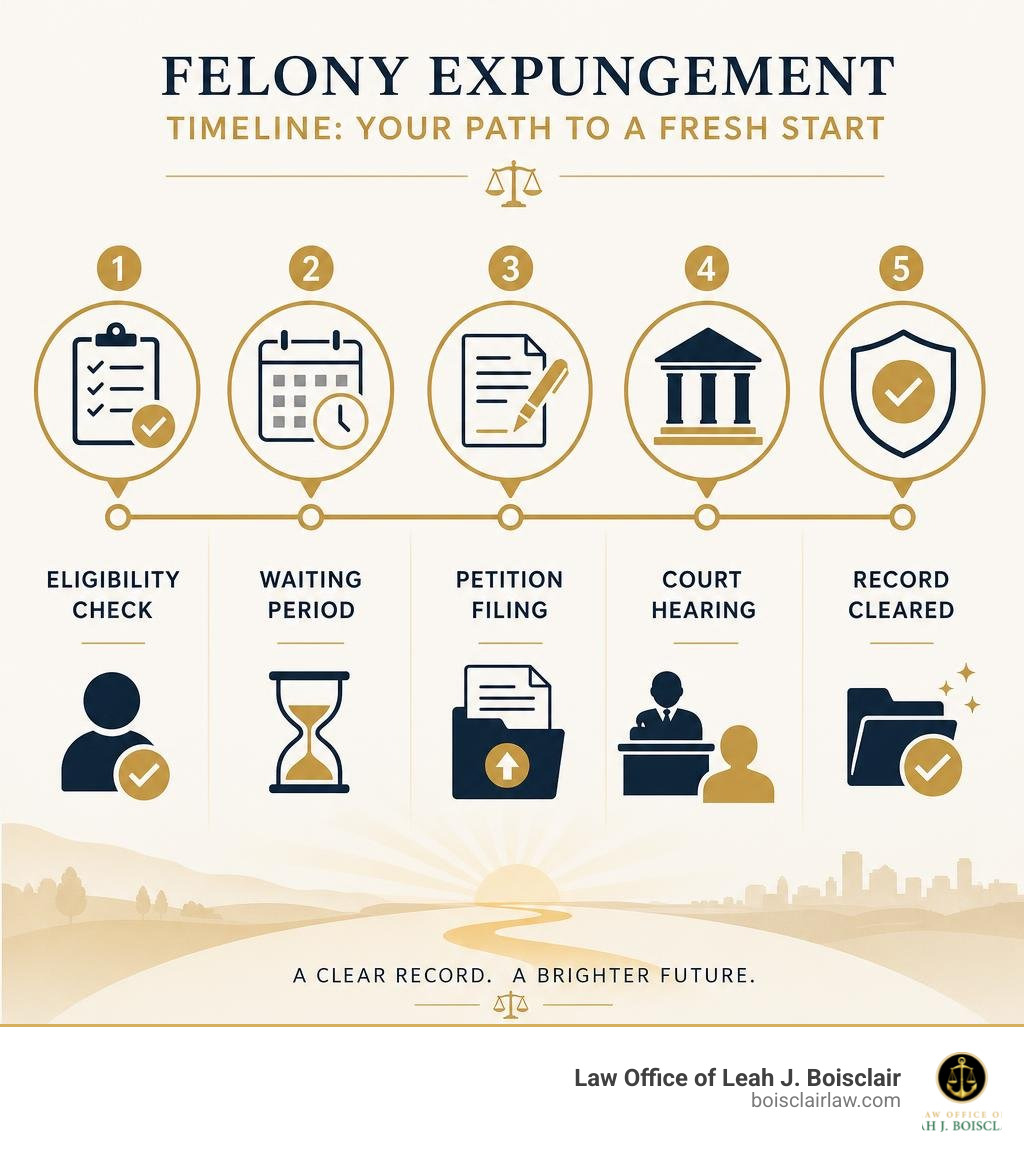
The journey to a clean slate requires careful preparation. Here is the step-by-step process we guide our clients through:
1. The Preliminary Background Check
Before filing anything, we must obtain a certified copy of your criminal history (often called a “triple-print” or BCI check) from the Rhode Island Department of Attorney General. This ensures we have an accurate record of every arrest and disposition.
2. Completing the Client Intake Form
To build a bulletproof petition, we gather comprehensive details about your life. This includes:
- Personal Details: Verification of identity, current address, and employment history.
- Case Details: Exact dates of arrest, arresting agencies, and final court dispositions.
- Legal History: Confirming that you have no active warrants, are not currently on probation, and have no pending charges in any state.
- Strategic Goals: Identifying whether your primary goal is career advancement, restoring firearm rights, or obtaining a professional license.
3. Drafting and Filing the Petition
We draft a formal Petition to Expunge and file it in the court where your case was resolved (District or Superior Court). We also serve copies of this petition to the arresting police department and the Attorney General’s office.
4. The Court Hearing
The court will schedule a hearing date, typically 4 to 8 weeks after filing. We represent you at this hearing, addressing any concerns the judge or prosecutor may raise.
5. Official Record Removal
If the judge grants the petition, they will sign an Expungement Order. We then distribute certified copies of this order to the Rhode Island State Police, the local arresting agency, and the court clerk’s office to ensure your records are physically destroyed and removed from public databases.
To prepare yourself for these steps, read our practical guide: Wipe Your Record Clean With These Expungement Steps.
The Real-World Impact of Expungement
Clearing your record has immediate, life-changing benefits:
- Employment Opportunities: You can confidently apply for jobs without worrying about a felony conviction showing up on a standard background check.
- Rental Applications: Landlords frequently run background checks. Expungement removes the primary barrier to securing safe housing.
- Professional Licensing: Careers in healthcare, real estate, finance, and education require state licensing. Removing a felony makes passing these character reviews significantly easier.
- Firearm Rights: In Rhode Island, a felony conviction strips you of your Second Amendment rights. While expunging a felony can restore these rights at the state level, federal law is highly complex, and we must analyze your specific offense to determine federal firearm eligibility.
- Immigration Status: For non-citizens, any felony arrest can impact residency or visa status. While expungement helps, immigration authorities (USCIS) often still require disclosure of all historical cases.
Frequently Asked Questions About Felony Expungement
Can a felony record expungement lawyer clear multiple offenses across different counties?
In Rhode Island, the law historically favored “first-time offenders” with only a single conviction on their record. However, legislative updates have expanded the ability to clear multiple non-violent offenses under specific circumstances.
If you have offenses in different counties (for example, a case in Providence County and another in Kent County), we cannot file a single consolidated petition. We must file separate petitions in each respective court jurisdiction. Navigating multiple filings requires a coordinated strategy to ensure one petition does not negatively impact the eligibility of another.
What should I do if my petition is denied by the court?
If a judge denies your petition, the first step is to analyze the reason for the denial. If it was denied due to a premature filing (not waiting the full 10 years) or an outstanding court fee, we can often correct the issue and re-file.
If the prosecutor objected based on your character or a lack of rehabilitation evidence, we may need to wait, build a stronger case of community involvement, and petition the court again. In some complex cases, we may explore other legal avenues, such as post-conviction relief. Learn more about this alternative in our article: Post Conviction Relief Your Second Chance In The Rhode Island Justice System.
How do I find the best felony record expungement lawyer for my case?
When selecting an attorney to clear your record, look for someone who focuses on criminal defense and expungements within your local jurisdiction. Look for:
- Local Experience: An attorney who regularly practices in Cranston, Providence, and Warwick knows the local judges and prosecutors.
- Clear, Flat-Fee Pricing: Avoid attorneys who charge unpredictable hourly rates for expungements. Look for transparent, flat-fee packages.
- Direct Attorney Access: You deserve personalized attention, not a case that gets passed down to an unsupervised paralegal.
Conclusion: Get Your Fresh Start Today
A felony record can feel like a life sentence, but it doesn’t have to be. The law provides a path to redemption, and we are here to help you walk it.
At the Law Office of Leah J. Boisclair, we provide personalized, compassionate advocacy for clients throughout Rhode Island, including Cranston, Providence, Warwick, Johnston, and surrounding communities. We understand the stress of carrying a criminal record, and we are proud of our proven track record of securing dismissals and clean slates for our clients.
Let us help you close the book on your past and open a new chapter. Contact us today to schedule your initial consultation.
- To learn more about clearing your driving record, read about Finding The Best Providence And Cranston DUI Expungement Help or explore how to Expunge DUI Record.
- If you need representation for an active matter, visit our DUI and Traffic Offenses Defense Attorney page.