

What Is the Difference Between Expungement and Sealing Under Rhode Island Law?
When you begin the journey to clear your background, you will likely encounter two legal terms: “expungement” and “sealing.” While many people use these terms interchangeably, Rhode Island law treats them as distinct legal remedies with different requirements and outcomes. Understanding this difference is the first step toward reclaiming your future.
Under Rhode Island law, expungement is defined as the physical destruction or permanent erasure of a conviction record. When the court grants an expungement, it directs all relevant state and local agencies to destroy their physical files and delete their digital records of the offense. Legally, the law treats the conviction as if it never occurred, allowing you to move forward with a completely clean slate.
Conversely, record sealing restricts public access to the record, but the record technically remains in existence. The files are not physically destroyed; instead, they are closed off from public view. This means landlords, employers, and the general public cannot access them, but certain law enforcement and government agencies may still view them under highly specific circumstances.
The type of legal remedy you seek depends entirely on how your case was resolved:
- Expungement applies strictly to cases that resulted in convictions or successful probation terms (such as deferred sentences).
- Sealing applies to cases that did not result in a conviction, including dismissals, acquittals (not guilty verdicts), and “no true bills” (where a grand jury declined to indict).
If you want to dive deeper into how to hide your past from public eyes, you can read our comprehensive guide on Rhode Island Record Sealing 101: Hiring a Pro to Ghost Your Criminal History or explore the process of Wiping the Slate Clean in Rhode Island.
To help you visualize how these two options compare, we have outlined their primary differences below:
| Feature | Expungement | Sealing |
|---|---|---|
| Primary Target | Convictions and completed probation cases | Dismissals, acquittals, and “no true bills” |
| Record Status | Physically destroyed or permanently erased | Restricted from public view but physically exists |
| Public Access | Completely blocked | Completely blocked |
| Government Access | Generally unavailable (with rare exceptions) | Accessible to law enforcement under specific court orders |
| Statutory Authority | R.I. Gen. Laws § 12-1.3 | R.I. Gen. Laws § 12-1 |
Legal Definitions and Access Levels
The statutory differences under Rhode Island General Laws dictate exactly who can see your past. When we help you secure a court order to clear your record, the public access restrictions are absolute. Standard background checks run by commercial screening companies, private employers, and leasing agents will return a “no record found” result.
However, it is important to understand the exceptions regarding government and law enforcement agency access. While state and local police databases in Rhode Island will show no record after an expungement, federal systems like the FBI’s National Crime Information Center (NCIC) operate under federal jurisdiction. Because state court orders do not automatically bind federal agencies, an experienced attorney is crucial to help you navigate how state-level relief interacts with federal background checks.
Who Is Eligible to Expunge a Misdemeanor Offense in Rhode Island?
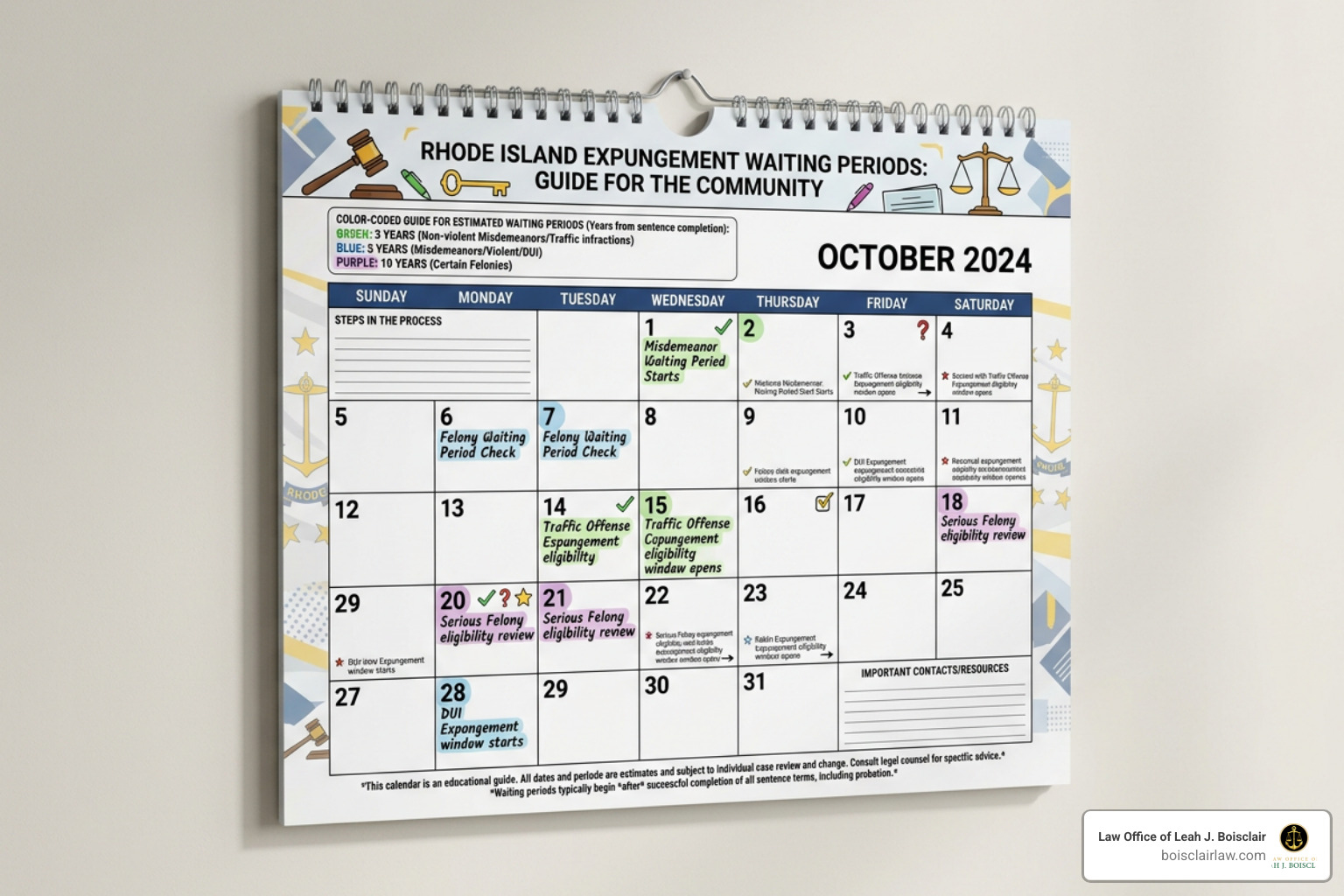
Rhode Island has some of the most accessible and forgiving record-clearing laws in the country, but you must still meet strict statutory criteria to qualify. The foundational rule for clearing a conviction is the “first-offender” rule. Under Rhode Island law, a first offender is defined as someone who has no prior felony convictions and is not currently facing any pending criminal proceedings.
If you meet this definition, your eligibility for a misdemeanor expungement is determined by specific waiting periods:
- Single Misdemeanor Conviction: You must wait 5 years from the date you successfully completed your sentence. This waiting period does not start on the day of your arrest or court date; it begins the moment you finish all terms of your sentence, including probation, community service, and suspended sentences.
- Multiple Misdemeanor Offenses: If you have more than one misdemeanor on your record, you are no longer considered a “first offender.” However, Rhode Island law allows individuals with multiple misdemeanor offenses, up to five, to seek an expungement after a 10-year waiting period, provided they have no felony convictions and have completed all sentences.
During these waiting periods, you must remain entirely arrest-free and conviction-free. Any new legal trouble resets the clock and can permanently jeopardize your eligibility. You can review the exact statutory language under Title 12 Criminal Procedure to see how these rules are codified.
If you are wondering whether your specific background qualifies, check out our resource on Can You Actually Clear Your Criminal Record? or read about our approach to securing favorable outcomes in Getting to Not Guilty with Proven RI Misdemeanor Defense.
Eligible Misdemeanor Offenses
Most standard misdemeanor offenses in Rhode Island are eligible for expungement once you have completed your waiting period. These include common offenses such as simple trespass, minor property damage, and disorderly conduct. Additionally, petty misdemeanors and municipal ordinance violations are eligible and often have shorter paths to resolution.
Furthermore, Rhode Island has decriminalized certain marijuana possession offenses. If you have a past conviction for possession of a small amount of marijuana, you may be eligible for an expedited expungement process that bypasses standard waiting periods entirely.
Excluded Misdemeanor Offenses and Exceptions
While Rhode Island is forgiving, the law strictly excludes certain misdemeanor offenses from standard expungement pathways. When evaluating your record, we must carefully analyze whether your offense falls into any of the following categories:
- Firearm Offenses: Any misdemeanor involving the illegal carrying, possession, or use of firearms is subject to strict limitations and is often excluded from streamlined expungement.
- DUI and Traffic Offenses: While a first-offense DUI may be expunged after a 5-year waiting period if you have a clean record, subsequent DUI offenses, breathalyzer refusals, or traffic offenses involving serious bodily injury face severe statutory barriers.
- Assault and Battery Offenses: Misdemeanor assault and battery offenses are treated with high scrutiny. If they involve significant violence, they may be permanently barred.
- Domestic Offenses: Misdemeanor domestic violence offenses, such as domestic simple assault or domestic disorderly conduct, have incredibly strict requirements. They cannot be expunged if you have multiple domestic convictions, and they require a showing of completed domestic violence counseling programs.
- Drug Offenses: While simple possession of certain substances is eligible, any misdemeanor drug offense involving intent to distribute or manufacture is heavily restricted.
- Public Peace Offenses: Standard disorderly conduct is eligible, but offenses that threaten public safety or involve resisting arrest require careful legal navigation.
- Property Offenses: Misdemeanor larceny or shoplifting is eligible, but you must prove that all restitution has been paid in full to the victim.
- White Collar Offenses: Misdemeanor check fraud or minor embezzlement is eligible, but outstanding financial obligations will result in an immediate denial.
- Sex Offenses: Any misdemeanor offense of a sexual nature is subject to intense court scrutiny and is frequently excluded from expungement eligibility to protect public safety.
- Violent Offenses: Any offense classified as a violent offense under Rhode Island law, even if treated as a misdemeanor, is permanently barred from expungement.
- Computer Offenses: Misdemeanors involving online harassment or unauthorized computer access are eligible but require a clear showing of rehabilitation.
How Do You File a Motion to Expunge a Misdemeanor in Rhode Island?
Filing a Motion to Expunge in Rhode Island is a precise legal process that requires absolute attention to detail. A single administrative error can result in your motion being dismissed or denied, forcing you to restart the process.
Here is the step-by-step breakdown of how we handle this process for our clients:
Step 1: Obtain Your Official BCI Record
Before filing any paperwork, you must obtain an official copy of your criminal record from the Bureau of Criminal Identification (BCI). You must visit the BCI office in Cranston, RI (located at 4 Howard Avenue) in person. You will need to present a valid photo ID and pay a $5 fee. It is critical to obtain this official record because online court portals do not always show the complete, certified history required by the court.
Step 2: Draft the Motion to Expunge
Once we have your certified BCI record, we draft the formal Motion to Expunge. This motion must be filed in the specific District Court where your offense occurred (such as the Third Division District Court in Warwick, RI, or the Sixth Division District Court in Providence, RI). The motion must accurately list the original offense date, the specific offense, the case number, and the date your sentence was completed.
Step 3: Serve the Mandatory 10-Day Notice
Rhode Island law requires you to provide at least 10 days’ notice of your expungement hearing to two specific entities:
- The Department of the Attorney General
- The local police department that originally arrested or charged you (e.g., the Cranston Police Department, Warwick Police Department, or Johnston Police Department)
This notice gives the state and the arresting agency the opportunity to review your file and object if they believe you do not meet the statutory requirements.
Step 4: Attend the Court Hearing
On your scheduled court date, you must appear before a judge. During this hearing, the judge will review your motion, your BCI record, and any objections from the Attorney General. We will present evidence of your rehabilitation, your steady employment history, and your good moral character to prove to the court that clearing your record is in the public interest.
To learn more about the official state guidelines, you can visit the state portal on Expunge My Criminal Record Under Rhode Island Law. For a simplified checklist, read Wipe Your Record Clean with These Expungement Steps or learn about our local services in Cranston by reviewing Cranston RI Expungement Services: How to Clear Your Criminal Record.
Timeline and Costs of the Expungement Process
The entire expungement process typically takes between 30 to 90 days from the date we file the initial motion to the date the judge signs the final order. This timeline depends heavily on the court’s current schedule and how quickly the arresting police department processes the notice.
Regarding the financial costs:
- Filing Fees: It is completely free to file a Motion to Expunge in Rhode Island courts.
- Court Order Fee: If the judge grants your motion, you must pay a $100 fee to the court clerk to obtain the certified Expungement Order.
- Attorney Fees: Most qualified Rhode Island expungement attorneys charge a reasonable, flat fee for misdemeanor expungements. This flat fee covers the BCI record review, drafting all motions, serving the required notices, and representing you in court.
How Do You Find and Choose a Qualified Rhode Island Expungement Attorney?

Finding the right attorney to handle your expungement can make the difference between a stressful, drawn-out process and a smooth, successful resolution. While you are legally allowed to represent yourself, hiring a professional ensures that your paperwork is flawless, your notices are served correctly, and your case is presented persuasively to the judge.
When searching for a qualified Rhode Island expungement lawyer, look for the following key qualities:
- Deep Local Experience: The court system in Rhode Island relies heavily on local procedures. An attorney who regularly practices in the District Courts of Providence, Warwick, Cranston, and West Warwick will understand the specific preferences of local judges and prosecutors.
- A Focus on Criminal Defense: Avoid general practice attorneys who try to handle everything from divorces to real estate. You want a lawyer who specializes in criminal defense and record-clearing.
- Excellent Client Communication: Your attorney should be responsive, compassionate, and willing to explain every step of the process in plain English.
- Proven Track Record: Look for verified client reviews and testimonials that specifically mention successful expungements and record-sealing cases.
For more detailed tips on vetting your legal representation, read our guides on Finding the Best Expungement Attorney in RI and Expungement Lawyer RI: 7 Things to Know Before Hiring.
Preparing for Your Legal Consultation
To make the most of your initial consultation, you should organize your personal information and legal history. We recommend filling out a standard client intake form to keep your details organized.
Below is a copy of our standard intake form that you can use to prepare:
====================================================================
 CLIENT INTAKE FORM
====================================================================

1. Personal Information

Full Name:
(First, Middle, Last) ______________________________________________
Date of Birth: ____________________________________________________
Social Security Number: ___________________________________________
Phone Number(s):
Mobile: ___________________________________________________________
Home: _____________________________________________________________
Work: _____________________________________________________________
Email Address: ____________________________________________________
Residential Address:
Street: ___________________________________________________________
City: ________________________ State: _______ ZIP: _________________
Mailing Address (if different from above):
Street: ___________________________________________________________
City: ________________________ State: _______ ZIP: _________________
Emergency Contact Name: __________________________________________
Relationship to You: ______________________________________________
Phone Number: ____________________________________________________

2. Case Information

Arrest Date: ______________________________________________________
Offenses Filed Against You:
(If known, please list all offenses you were accused of committing.)

Case/Incident Number: ____________________________________________
Arresting Agency (if known): ______________________________________
Location of Incident: _____________________________________________
(City, State, or Specific Address)

Date: __________________
Have you been arraigned? [ ] Yes  [ ] No
When is your next Court date? _____________________________________

3. Legal History

Have you been arrested or convicted of any offenses in the past?
[ ] Yes
[ ] No
If yes, please provide details of each prior arrest or conviction, including dates, offenses, and outcomes:
1.
2.
3.

Are you currently on probation, parole, or have a pending warrant?
[ ] Yes
[ ] No
If yes, please provide details: ____________________________________

Have you ever been incarcerated before?
[ ] Yes
[ ] No
If yes, provide dates and locations: _______________________________

4. Employment Information

Current Employer: _________________________________________________
Occupation/Job Title: _____________________________________________
Employer Address: ________________________________________________
Phone Number: ____________________________________________________
Have you been employed in the past 12 months?
[ ] Yes
[ ] No
If no, please explain: ____________________________________________

5. Case Strategy and Goals

What would you like to achieve from your legal representation?

Date: __________________
[ ] Reduced offenses or some dismissed   [ ] No loss of license
[ ] Dismissal of offenses
[ ] Negotiated plea deal
[ ] Trial
[ ] Expungement / Sealing
[ ] Other: ________________________________________________________

Is there any other important information that we should know about your case?
__________________________________________________________________
====================================================================
By gathering your arrest dates, specific offenses, and court case numbers beforehand, you will allow your attorney to quickly assess your eligibility.
At the Law Office of Leah J. Boisclair, we provide expert criminal defense representation for misdemeanors, felonies, DUI, expungements, and more in state and federal courts. Located in Cranston, RI, we offer personalized, compassionate advocacy with proven dismissals. We serve clients across Rhode Island, including Cranston, Providence, Warwick, Johnston, North Providence, East Providence, West Warwick, Pawtucket, East Greenwich, Coventry, and Scituate.
What Happens After Your Rhode Island Expungement Is Granted?
Once the judge signs your Expungement Order and you pay the $100 court fee, the legal transformation of your record begins. The court clerk will distribute the certified order to the Rhode Island State Police BCI division, the arresting police department, and the Department of the Attorney General.
These agencies are legally required to destroy or permanently seal all physical and digital records of the offense. This means:
- Your name is removed from public court dockets related to that case.
- Your mugshot and arrest fingerprints are removed from state databases.
- Your official Rhode Island BCI record will no longer show any trace of the arrest or conviction.
Under Rhode Island law, once your expungement is granted, you can legally and truthfully answer “no” to questions about prior arrests or convictions on standard job, housing, and loan applications.
Furthermore, private background check companies are regulated by the Fair Credit Reporting Act (FCRA). Under the FCRA, these companies are prohibited from reporting expunged or sealed cases. If a private background check company continues to show your expunged record, they are in violation of federal law, and we can help you force them to update their databases immediately.
To understand how this impact varies based on the severity of your past, read The Providence Misdemeanor Defense Guide: Your Rights and Your Future or check out State and Federal Felony Expungement Services: What You Need to Know.
Employment, Housing, and Licensing Benefits
Clearing a misdemeanor from your record has immediate, life-changing benefits:
- Employment: You can confidently apply for jobs, promotions, and professional licenses without worrying about a past mistake holding you back.
- Housing: Landlords and property management companies routinely run background checks. An expungement ensures your lease application is judged on your financial merits, not your past.
- Restoring Civil Rights: Depending on the nature of the original offense, an expungement can restore your eligibility for firearm ownership under federal and state law (subject to Firearm Offenses restrictions).
Exceptions to Post-Expungement Disclosure
While an expungement allows you to answer “no” to conviction questions on almost all standard applications, there are a few highly specific statutory exceptions in Rhode Island. You are still legally required to disclose an expunged conviction if you are applying for:
- A position in law enforcement or the judicial system.
- An early childhood education, daycare, or youth coaching role.
- Admission to the state bar to practice law.
Frequently Asked Questions about Rhode Island Misdemeanor Expungements
Can I expunge a misdemeanor DUI or domestic violence offense in Rhode Island?
Yes, but these offenses are subject to intense judicial scrutiny and strict eligibility rules.
For a first-offense DUI, you can file for an expungement 5 years after completing your sentence, provided you have no other convictions on your record and have paid all court-ordered fines and fees. However, subsequent DUI offenses or breathalyzer refusals are generally excluded.
For domestic violence misdemeanors, the court requires proof that you have completed a certified domestic violence intervention program. If you have multiple domestic violence convictions, the law permanently bars you from seeking an expungement to protect public safety.
What are the most common reasons a Rhode Island expungement is denied?
An expungement motion can be denied for several common reasons, almost all of which are entirely preventable with the help of an experienced attorney:
- Outstanding Financial Obligations: If you still owe court fines, restitution to a victim, or supervision fees, the judge will immediately deny your motion.
- New Legal Trouble: If you are arrested or convicted of a new offense during your 5-year or 10-year waiting period, you lose your “first-offender” status.
- Procedural and Notice Errors: Failing to provide the mandatory 10-day notice to the Attorney General and the arresting police department will result in your hearing being postponed or dismissed.
- Filing in the Wrong Court: You must file the motion in the exact District Court division that handled your original case.
Do I need to hire an attorney, or can I file for expungement on my own?
While you have the legal right to file for an expungement on your own, hiring an attorney is highly recommended. The process involves precise legal drafting, strict service deadlines, and a formal court appearance where you must argue your rehabilitation to a judge. If you have multiple offenses on your record, the legal analysis becomes incredibly complex. Working with an experienced professional ensures the job is done right the first time, saving you time, stress, and potential denial.
Conclusion
Clearing a misdemeanor from your record is one of the most powerful steps you can take to secure your career, your housing, and your peace of mind in June 2026. Rhode Island’s expungement laws are designed to give deserving individuals a genuine second chance, but navigating the court system, drafting the motion, and serving the mandatory notices requires precision and local legal expertise.
By choosing a qualified Rhode Island expungement attorney who understands the local courts in Cranston, Providence, Warwick, and the surrounding areas, you can ensure that your petition is handled flawlessly.
If you are ready to take control of your future and wipe your record clean, contact the Law Office of Leah J. Boisclair today. Let us provide the personalized, compassionate advocacy you deserve to help you secure a true fresh start. Explore our full range of services by visiting Law Office of Leah J. Boisclair Practice Areas.