
When You Need a Solicitor for Domestic Abuse: What to Know First
Finding a solicitor for domestic abuse is one of the most important steps you can take to protect yourself and your family. Here is a quick overview of what to do:
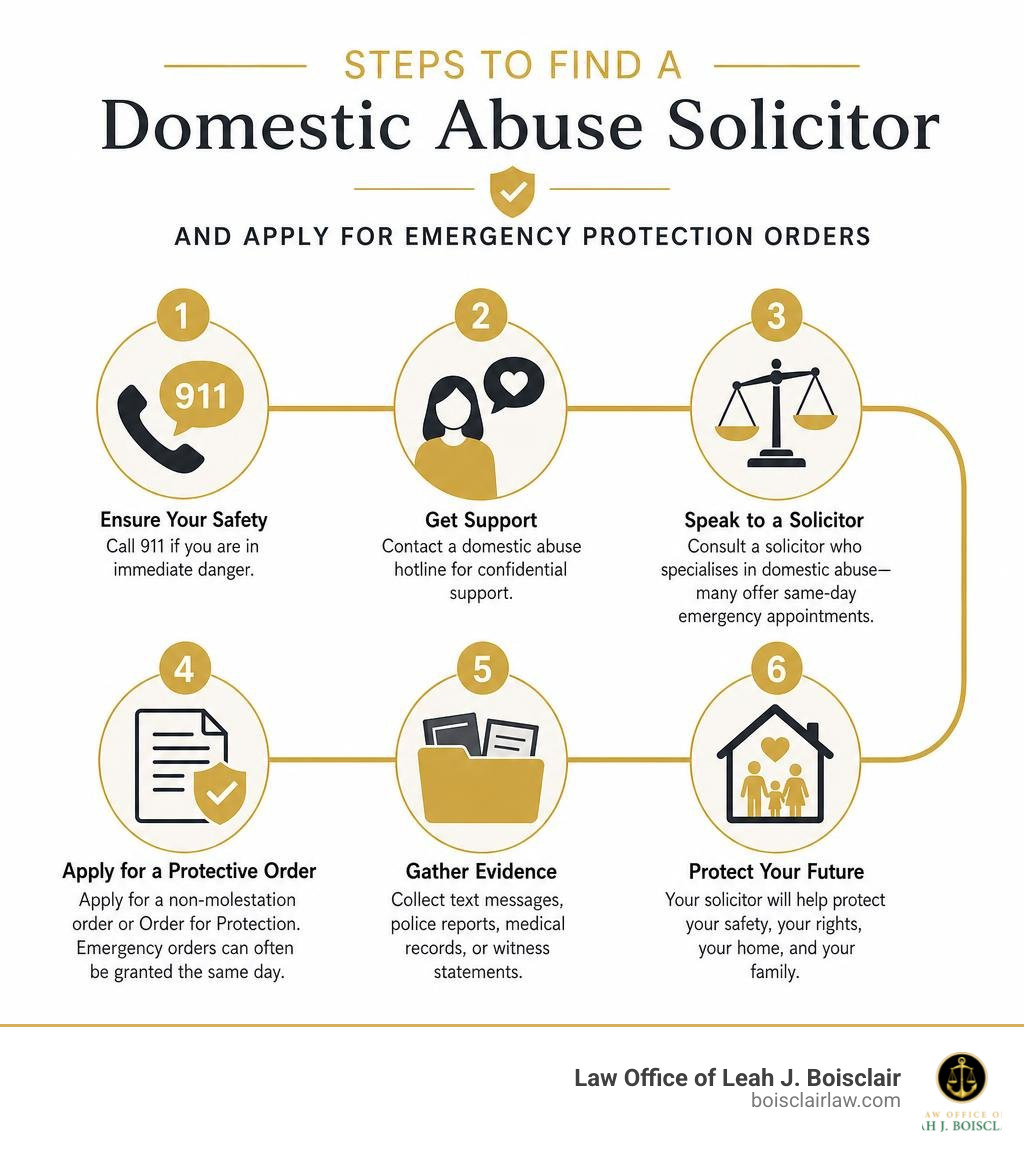
Immediate steps if you need help:
- Call 911 if you are in immediate danger
- Contact a domestic abuse hotline for confidential support (Minnesota DayOne: 866-223-1111)
- Speak to a solicitor who specialises in domestic abuse — many offer same-day emergency appointments
- Apply for a protective order such as a non-molestation order or Order for Protection
- Gather evidence — text messages, police reports, medical records, or witness statements
Domestic abuse is not only physical violence. It includes emotional abuse, coercive control, financial abuse, stalking, and harassment. Less than 40% of domestic abuse incidents are ever reported — which means many victims suffer in silence without knowing the legal protections available to them.
The law recognises that leaving or confronting an abuser is one of the hardest things a person can do. That is why legal protections exist — including emergency court orders that can be granted the same day, without the abuser being told in advance.
A specialist solicitor can guide you through every step: from filing for a protective order to protecting your home, your finances, and your rights in any criminal case against your abuser.
Relevant articles related to solicitor for domestic abuse:
- divorce attorneys specializing in emotional abuse
- domestic abuse defense lawyer
- domestic violence lawyer texas
Understanding Domestic Abuse and Your Legal Rights
Domestic abuse is a deeply pervasive issue that cuts across all segments of society, regardless of age, background, or economic status. Under the law, domestic abuse is not limited to physical violence. It encompasses a wide range of harmful behaviors designed to exert power and control over an intimate partner or family member.
In Rhode Island, domestic abuse is legally defined under state law as any act of physical harm, bodily injury, assault, or the infliction of fear of imminent physical harm, bodily injury, or assault between family or household members. This definition also covers criminal offenses such as stalking, cyberstalking, harassment, sexual assault, and terroristic threats. When these actions occur within a domestic relationship, they fall under the umbrella of Domestic and Family Related Offenses.
The Reality of Coercive Control
For many years, legal systems primarily focused on physical violence. However, modern legal frameworks recognize that psychological and emotional abuse can be just as damaging—and are often stronger indicators of long-term danger. Coercive control is a systematic pattern of behavior used by an abuser to dominate their victim. This includes:
- Isolation: Restricting contact with friends, family, or support networks.
- Deprivation: Controlling access to money, transportation, or communication devices.
- Monitoring: Tracking movements, checking phone logs, or using spyware.
- Humiliation: Constant verbal degradation, gaslighting, and threats of self-harm or false reports to authorities.
Recognizing these non-physical forms of abuse is vital. When seeking a solicitor for domestic abuse, you need an advocate who understands that a lack of physical bruises does not mean a lack of severe harm.
Vulnerable Groups and Special Considerations
Domestic abuse does not look the same for everyone. Certain groups face unique challenges when attempting to escape abusive relationships:
- Same-Sex Relationships: Victims in LGBTQ+ relationships may face threats of being “outed” to employers or family members by their abuser. A knowledgeable solicitor will provide a safe, non-judgmental space to address these issues.
- Children: Witnessing domestic abuse is highly traumatic for children and is recognized by courts as a form of emotional harm. Protective orders can be structured to shield children from witnessing further conflict.
- Elderly and Disabled Individuals: Vulnerable adults may rely on their abuser for physical care or financial management, making escape incredibly difficult.
No matter your circumstances, you have legal rights. Working with an experienced professional ensures that these unique dynamics are properly communicated to the court.
How a Solicitor for Domestic Abuse Can Help Secure Court Orders
When you are facing immediate threats or ongoing harassment, navigating the court system on your own can feel completely overwhelming. A solicitor for domestic abuse acts as your legal champion, helping you secure court orders that legally prohibit your abuser from contacting or approaching you.

In Rhode Island, the primary civil tool for protection is a Restraining Order (often referred to as a Protective Order). These orders can be filed in Family Court, District Court, or Superior Court depending on your relationship with the abuser. A protective order can:
- Order the abuser to stop abusing, harassing, or contacting you.
- Force the abuser to vacate a shared residence, even if they own the property.
- Award temporary custody of minor children.
- Order the abuser to surrender any firearms to law enforcement.
To understand how to navigate this process effectively, it is highly recommended to read our guide on How to Choose the Best Domestic Abuse Lawyer for Your Case.
Finding a Qualified Solicitor for Domestic Abuse Representation
If you are searching for legal representation, you may notice different terms used depending on where you look. In the United Kingdom, individuals searching for legal help often look for a solicitor for domestic abuse who specializes in family law and protective orders. While the term “solicitor” is widely used in the UK, in the United States, these legal professionals are referred to as attorneys or lawyers.
If you are located in Rhode Island—including Cranston, Providence, Warwick, Johnston, North Providence, East Providence, West Warwick, Pawtucket, East Greenwich, Coventry, or Scituate—you will need a local attorney licensed to practice in Rhode Island courts.
At the Law Office of Leah J. Boisclair, we provide personalized, compassionate advocacy. We understand the local court rules, the local judges, and how to present a compelling case to ensure your safety. We help clients navigate both civil restraining orders and defense matters surrounding domestic offenses.
Applying for Emergency Protection Orders
In urgent situations, you cannot afford to wait weeks for a court date. The law allows for “without-notice” (ex parte) applications. This means a judge can review your petition and issue a Temporary Restraining Order (TRO) immediately, without the abuser being present or notified beforehand.
This temporary order remains in effect until a formal hearing can be scheduled—usually within 15 days. At the formal hearing, both parties have the opportunity to present evidence. Because this hearing determines whether a long-term (one to three years) restraining order will be granted, having professional representation is critical. As outlined in our article, Don’t Go It Alone When Facing a Domestic Violence Case, having an attorney by your side dramatically increases your chances of securing a favorable and protective outcome.
Practical Protections: Housing, Finances, and Criminal Prosecutions
True safety requires more than just a piece of paper from a court. It requires securing your living situation, protecting your hard-earned money, and understanding your role if criminal charges are filed against your abuser.

If your abuser is arrested, the state may pursue criminal prosecution. It is important to remember that as a victim, you have specific rights in criminal proceedings, including the right to be notified of court dates, the right to provide a victim impact statement, and the right to be informed if the offender is released on bail. If you find yourself involved in a criminal domestic case, reading Why You Need a Criminal Defense Attorney for Domestic Violence Right Now can shed light on how criminal defense and victim advocacy intersect in the courtroom.
Protecting Your Home and Address
One of the greatest fears victims face is housing instability. Fortunately, Rhode Island law provides strong protections for tenants who are victims of domestic violence:
- Lease Termination: Under RI law, if you have a restraining order or a police report documenting domestic abuse, you can terminate your residential lease early without penalty by providing written notice to your landlord.
- Lock Changes: You have the right to request that your landlord change the locks on your apartment to keep your abuser out.
- Address Confidentiality (Safe at Home): Rhode Island offers a “Safe at Home” program through the Secretary of State’s office. This program provides a substitute mailing address for victims of domestic violence, stalking, or sexual assault, keeping your actual physical address off public records.
These housing protections are vital for establishing a secure, independent life away from your abuser. For more information on how domestic incidents impact your living and family status, refer to our overview of Domestic and Family Related Offenses.
Safeguarding Against Financial Abuse
Financial abuse occurs in nearly 99% of domestic violence cases. Abusers often restrict access to bank accounts, ruin their partner’s credit score, or run up debt in the victim’s name to prevent them from leaving.
To regain financial independence, consider taking these immediate steps:
- Request a Credit Freeze: Contact the three major credit bureaus (Equifax, Experian, and TransUnion) to freeze your credit. This prevents your abuser from opening new accounts or taking out loans in your name.
- Open a New Account: Set up a separate bank account at an entirely different financial institution than the one you shared with your partner.
- Obtain a New Social Security Number: In extreme cases of ongoing identity theft or severe safety risks, the Social Security Administration may issue a new Social Security number to victims of domestic violence.
Frequently Asked Questions About Hiring a Solicitor for Domestic Abuse
To help you understand the different legal paths available, here is a comparison between civil protection orders and criminal prosecutions for domestic offenses:
| Feature | Civil Protection Order (Restraining Order) | Criminal Offenses (Domestic Violence Prosecution) |
|---|---|---|
| Who Files It? | You (the victim/plaintiff) file a petition in court. | The state (prosecutor) files a criminal case against the abuser. |
| Standard of Proof | “Preponderance of the evidence” (more likely than not). | “Beyond a reasonable doubt” (very high standard). |
| Purpose | To keep the abuser away from you and secure immediate safety. | To punish the offender, deter future offenses, and rehabilitate. |
| Potential Outcomes | Restraining order, temporary custody, stay-away order. | Jail time, probation, mandatory batterer’s intervention programs, criminal record. |
What should I do if I am in immediate danger?
If you are in immediate physical danger, call 911 immediately. For ongoing support, safety planning, and local resources, you can reach out to the West Warwick Police Department’s domestic unit or review the Domestic Violence Info – West Warwick Police Department page. Local advocacy groups can help you find emergency shelter, food, and emotional support.
How do I find a solicitor for domestic abuse if I cannot afford one?
If you cannot afford private representation, there are several resources available. You can search directories like Best Domestic Violence Lawyers in Rhode Island – Justia, Best Domestic Violence Lawyers in Warwick, RI – Justia, or Best Domestic Violence Lawyers in East Providence, RI – Justia.
Additionally, organizations such as Rhode Island Legal Services provide free legal representation to low-income victims of domestic violence. You can also look up resources through the North Providence Domestic Violence Attorneys | LII Rhode Island … directory or contact local legal aid clinics and domestic violence advocacy groups that offer pro bono legal assistance.
Can a solicitor help me if my abuser is facing criminal offenses?
Yes. If your abuser is facing criminal offenses, an attorney can help you navigate the criminal justice system, prepare you for testifying in court, and advocate for your safety with the prosecutor.
At the Law Office of Leah J. Boisclair, we handle a wide variety of domestic-related offenses. Whether you need assistance understanding your rights as a victim or require robust defense representation because a domestic dispute resulted in cross-complaints or false allegations, we are here to provide the compassionate, expert advocacy you deserve.
Conclusion
Escaping domestic abuse requires immense courage, but you do not have to walk this path alone. From securing immediate, same-day protective orders to navigating complex court hearings and protecting your financial independence, a dedicated legal advocate makes all the difference.
If you are located in Cranston, Providence, Warwick, or any of the surrounding Rhode Island communities, the Law Office of Leah J. Boisclair is ready to stand by your side. We offer personalized, compassionate advocacy tailored to your unique situation.
To take the first step toward a safer, more secure future, contact us today to discuss your options regarding restraining orders, family court advocacy, or any questions surrounding Domestic and Family Related Offenses. Your safety and peace of mind are our absolute priorities.