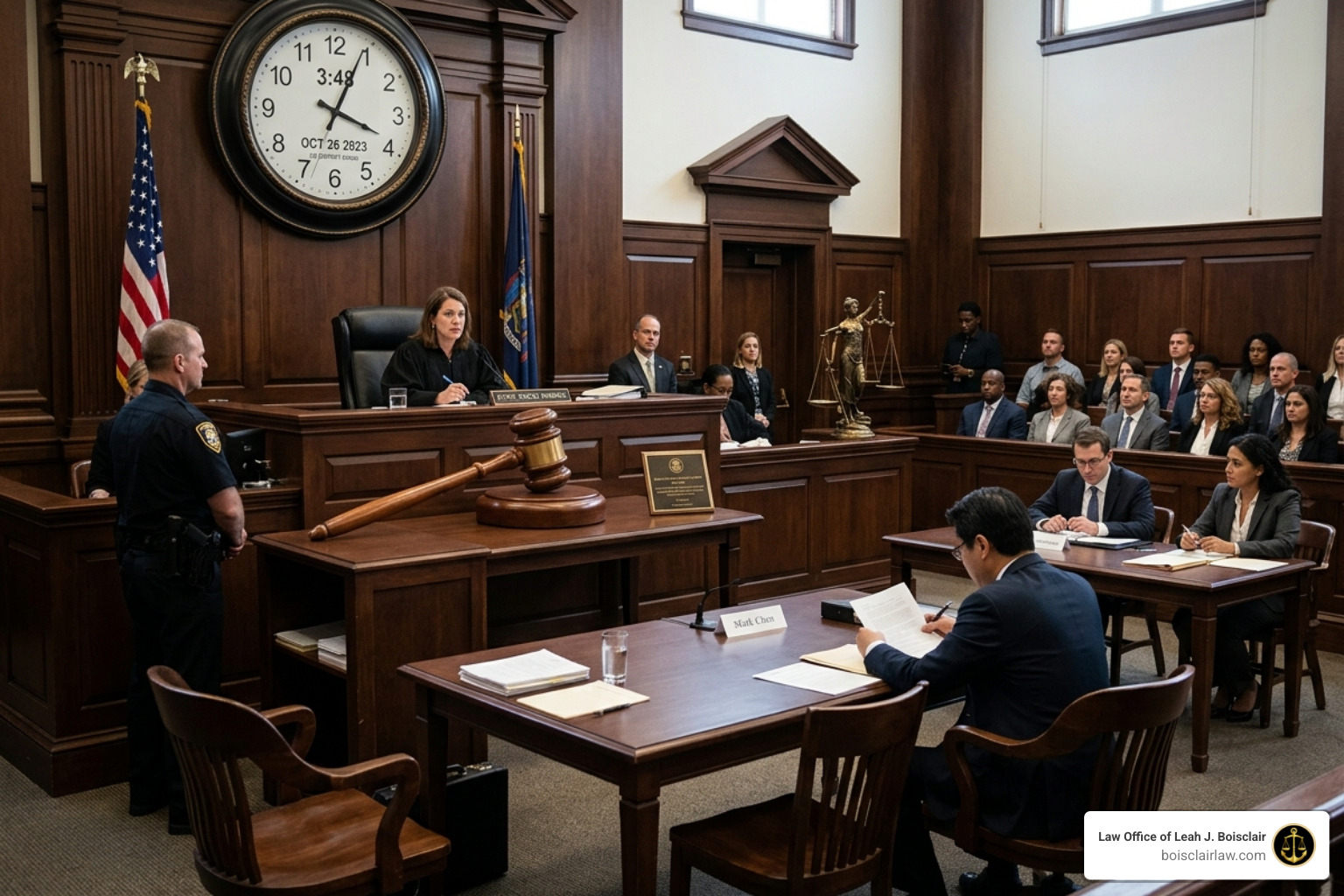

When a Domestic Violence Offense Changes Everything
If you’re looking for a criminal defense attorney for domestic violence, here is what you need to know right now:
Your most important next steps:
- Say nothing to police without an attorney present
- Hire a defense attorney immediately — before your first court date
- Do not contact the alleged victim — even if they want to talk
- Preserve all evidence — texts, emails, photos, witness names
- Understand that Offenses may proceed even if the accuser wants to drop them
A domestic violence Offense can turn your entire life upside down in a matter of hours. We’re talking about potential jail time, losing your right to own a firearm, losing access to your children, and carrying a criminal record that follows you into every job interview, housing application, and background check for years to come.
And here’s the part many people don’t realize: even if the person who called the police changes their mind, the state can — and often does — continue prosecuting the case anyway. Once a police report is filed, the decision to move forward belongs to the prosecutor, not the alleged victim.
Domestic violence Offenses are also handled differently than most other criminal Offenses. Many jurisdictions assign specialized prosecution units to these cases, meaning the attorneys on the other side do this all day, every day. They are experienced, aggressive, and prepared.
That is exactly why having the right legal defense in your corner — from the very first moment — is not optional. It is essential.
Understanding Domestic Violence Offenses in 2026

In April 2026, the legal landscape surrounding domestic abuse is more stringent than ever. To build a proper defense, we first have to look at what the law actually considers “domestic.” Under Domestic and Family Related Offenses, these Offenses aren’t limited to spouses living under the same roof. The law casts a wide net to include various “household members” and intimate partners.
Domestic violence, as defined by the U.S. Department of Justice, occurs when a person commits a criminal act–such as physical assault, battery, or even certain verbal acts–against someone with whom they share a specific type of relationship. In Rhode Island and beyond, these Offenses are prioritized by the court system because of the high emotional stakes involved.
Defining Domestic Relationships Under the Law
You might be surprised by who qualifies as a “domestic” partner under modern statutes. The law typically covers:
- Dating partners: Individuals who are currently in or were previously in a significant romantic relationship.
- Former cohabitants: People who used to live together, even if they weren’t romantically involved (like roommates).
- Blood relatives: Family members related by birth or adoption.
- Co-parents: People who have a child in common, regardless of whether they ever lived together or were married.
Beyond Physical Acts: Threats and Harassment
One of the biggest misconceptions we encounter at the Law Office of Leah J. Boisclair is that you need “bruises or broken bones” to be charged. In 2026, the definition of domestic abuse has expanded significantly. You can face serious legal consequences for:
- Stalking: A pattern of behavior intended to harass or frighten.
- Terroristic threats: Making someone afraid for their physical safety through verbal or written threats.
- Psychological harm: Conduct that causes severe emotional distress.
- Unlawful restraint: Preventing someone from leaving a room or moving freely.
Why You Need a Criminal Defense Attorney for Domestic Violence Immediately
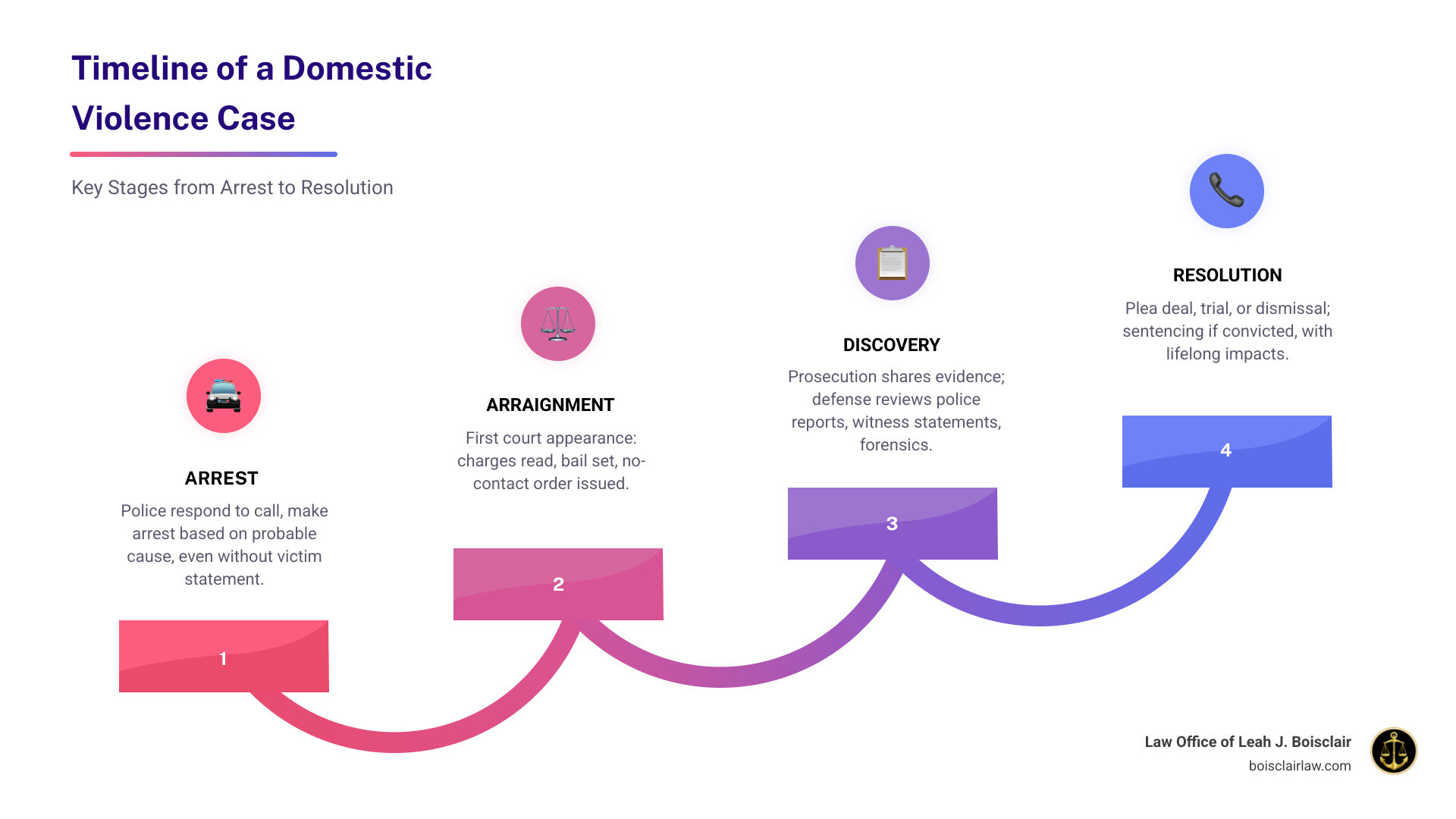
Time is your greatest enemy after an arrest. The moment the handcuffs go on, the prosecution begins building its case. This is why we tell everyone: Don’t Go It Alone When Facing a Domestic Violence Offense.
Immediate action allows us to preserve evidence that might otherwise vanish–like doorbell camera footage that gets overwritten every 48 hours or text message threads that might be deleted. Furthermore, domestic violence Offenses often involve specialized prosecution units. These prosecutors are trained to pursue convictions even when evidence is thin. You need a RI Criminal Attorney who understands these tactics and can counter them effectively.
Navigating the Legal System with a Criminal Defense Attorney for Domestic Violence
The legal process is a maze of deadlines and high-pressure hearings. Here is how we help you navigate it:
- Arraignment: This is your first appearance where you enter a plea. We ensure you don’t accidentally say something that jeopardizes your future.
- Client Intake: We use a detailed process to gather your personal information, employment history, and your side of the story. This helps us understand your goals–whether that is a full dismissal or a negotiated plea to avoid jail.
- Discovery: We demand the prosecution hand over every piece of evidence they have.
- Case Strategy: Knowing What to Do if You’ve Been Arrested in RI is the first step; the second is executing a strategy tailored to the specific facts of your life.
Challenging the Prosecution’s Narrative
Prosecutors often rely on a single police report that only tells one side of the story. Our job is to provide the full picture. We perform independent witness interviews to find discrepancies in the accuser’s story. If necessary, we collaborate with forensic experts or evidence analysts to challenge the “facts” presented by the state. We also look for constitutional challenges–did the police have probable cause to arrest you? Were your rights violated during questioning? These nuances can often lead to a case being dismissed before it ever reaches trial.
Types of Domestic Violence Offenses and Potential Penalties
The severity of your situation depends largely on the specific Offenses you are faced with. Understanding the difference between Felonies and Misdemeanors is crucial for managing your expectations and your defense.
Misdemeanor vs. Felony Offenses
In many states, a first-time domestic incident is charged as a misdemeanor. For example, in Washington, an “Assault 4 DV” is a gross misdemeanor carrying up to 364 days in jail. In Illinois, a Class A misdemeanor domestic battery can lead to a year in jail and $2,500 in fines. Michigan follows a similar path, with first convictions carrying up to 93 days in jail. While “misdemeanor” sounds less scary than “felony,” a conviction still leaves you with a permanent criminal record.
Severe Penalties for Aggravated and Repeat Offenses
If there are “aggravating factors,” the Offenses quickly escalate to felonies. These factors include the use of a weapon, serious bodily injury, or the presence of a child.
- Repeat Offenses: In Arizona, a third domestic violence Offense within seven years is an automatic felony.
- Child Abuse: In Florida, aggravated child abuse is a first-degree felony punishable by up to 30 years in prison. Even simple child abuse is a third-degree felony with a 5-year maximum.
- Aggravated Battery: In Illinois, this Class 2 felony can carry up to seven years in prison and $25,000 in fines.
Long-Term Impacts on Life and Liberty
The “hidden” costs of a conviction are often worse than the court-ordered fines. The Ultimate Guide to RI Criminal Attorneys highlights that a domestic violence record can lead to:
- Employment Loss: Many employers will not hire someone with a violent Offense on their record.
- Child Custody: Family court judges are extremely hesitant to grant custody to anyone with a domestic violence conviction.
- Travel Restrictions: Some countries, like Canada, may deny entry to individuals with domestic violence records.
Common Defenses Used by a Criminal Defense Attorney for Domestic Violence
Just because you’ve been charged doesn’t mean you’re guilty. As your Violent Offenses Defense Attorney, we explore every possible avenue to protect your freedom. There are several common defense strategies that can be highly effective when executed correctly.
Proving Self-Defense and Defense of Others
One of the most frequent scenarios in domestic calls is mutual combat–where both parties were physical. To claim self-defense, we must show:
- Imminent Harm: You reasonably believed you were about to be hurt.
- Proportional Force: You only used as much force as was necessary to stop the threat.
- Reasonable Belief: A “reasonable person” in your shoes would have done the same thing.
Addressing False Accusations in Family Disputes
It is a sad reality that domestic violence Offenses are sometimes used as a weapon in divorce or custody battles. An accuser might fabricate a story to gain leverage in family court. We look for “motive to lie” and point out inconsistent statements made to police versus what was said in text messages or social media posts. Collecting this evidence early is vital to exposing the truth.
Procedural and Constitutional Defenses
Sometimes the best defense has nothing to do with what happened in the house, but what happened during the arrest. Why Hire a Rhode Island Criminal Defense Attorney? Because we know how to spot:
- Unlawful Arrest: Did the police arrest you without enough evidence?
- Miranda Violations: Did they question you without reading your rights?
- Illegal Search and Seizure: Did they enter your home or search your phone without a warrant or valid exception?
Protection Orders and Firearm Offenses
When a domestic incident occurs, the court almost always issues a Protection Order or No-Contact Order. These are civil orders, but violating them is a criminal act. Understanding our Practice Areas means knowing how these orders intersect with your daily life.
The Risks of Violating No-Contact Orders
A No-Contact Order is usually “one-directional.” This means the accuser can call you, text you, or show up at your work, and they won’t get in trouble–but the moment you respond, you are in violation.
- Mandatory Arrest: In many jurisdictions, police are required to arrest you if they have probable cause to believe you violated an order.
- Separate Offenses: A violation is a new criminal Offense, independent of the original domestic violence Offense.
- Contempt of Court: You could face additional jail time just for the act of disobedience.
Impact on Gun Rights and Firearm Offenses
This is perhaps the most permanent consequence of a domestic violence conviction. Under the federal Lautenberg Amendment, anyone convicted of even a misdemeanor crime of domestic violence is permanently banned from possessing a firearm for life. This isn’t just a state rule; it’s a federal law. If you are a hunter, a gun collector, or work in a field that requires a sidearm (like law enforcement or security), a conviction will end that part of your life forever. We treat Firearm Offenses with the extreme seriousness they deserve.
Frequently Asked Questions about Domestic Violence Defense
What if the accuser wants to drop the Offenses?
This is the most common question we hear. The answer is: It’s not up to them. Once the police are called and a report is filed, the case becomes The State vs. You. While a “recanting victim” makes the prosecutor’s job harder, they can still use 911 tapes, police bodycam footage, and medical records to try to convict you without the accuser’s cooperation.
How does a domestic violence Offense differ from other criminal Offenses?
Domestic violence Offenses move fast. There are often “fast-track” hearings for protection orders that happen within days of an arrest. Additionally, the rules of evidence are sometimes relaxed, allowing the state to bring up your past history in ways they couldn’t in a typical theft or drug Offense. There is also a significant societal stigma that can influence a jury, making an expert defense even more critical.
Can a criminal defense attorney for domestic violence help with alternatives to conviction?
Yes! We are often able to negotiate alternatives to a permanent criminal record. This might include:
- Dismissals: Getting the case thrown out due to lack of evidence.
- Deferred Prosecution: If you complete certain requirements (like counseling), the state drops the Offenses.
- SOC Agreements: A “Stipulated Order of Continuance” where the case is put on hold and eventually dismissed if you stay out of trouble.
Conclusion
Facing a domestic violence Offense is one of the most stressful experiences a person can go through. At the Law Office of Leah J. Boisclair, we provide the personalized, compassionate advocacy you need during this difficult time. Based in Cranston, RI, we serve clients throughout Rhode Island with a focus on protecting your rights and your future. We don’t just see a case number; we see a person whose life is on the line.
Whether you are dealing with a misdemeanor or a complex felony, you shouldn’t face the system alone. More info about domestic and family related Offenses is available on our site, or you can contact us directly to start building your defense today. Your future is worth fighting for.