
What a Plea Bargain Criminal Attorney Does — and Why It Matters
A plea bargain criminal attorney can be the difference between a life-altering conviction and a manageable outcome when you’re facing criminal charges in Rhode Island, Massachusetts, or Connecticut.
Here’s what a plea bargain criminal attorney does for you:
- Reviews all evidence — reads every page of discovery before advising on any offer
- Identifies weaknesses in the prosecution’s case — finds constitutional violations, shaky witnesses, or missing evidence
- Negotiates with the prosecutor — pushes for reduced charges, lighter sentences, or alternative programs like drug court
- Explains all consequences — including hidden ones like immigration status, housing, and professional licenses
- Protects your rights — ensures any plea you accept is voluntary, informed, and truly in your best interest
- Advises you on trial vs. plea — so you’re not making a life-changing decision in the dark
The reality is stark: according to the Pew Research Center, 97% of federal cases and 94% of state cases resolve through plea agreements — not trials. That means for most people facing charges, the real battle is fought at the negotiation table, not in a courtroom.
But not every plea deal is a good deal. Accepting the wrong offer — or accepting one before your attorney has fully investigated your case — can lock you into consequences that follow you for decades.
If you’re facing criminal charges right now, the most important step you can take is consulting an experienced criminal defense attorney before responding to any offer from the prosecution.
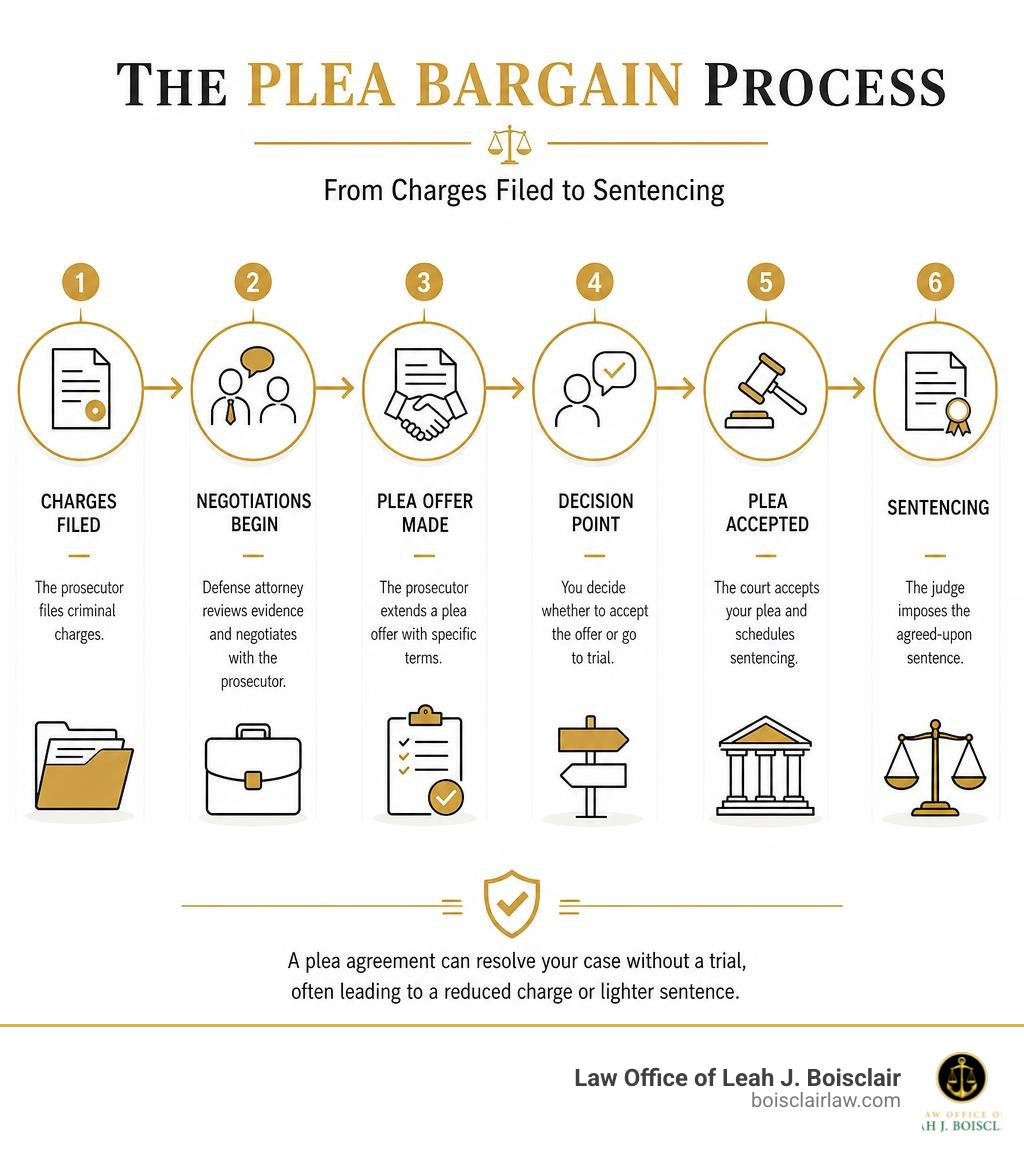
Plea bargain criminal attorney terms you need:
Understanding Plea Bargains vs. Going to Trial
When you are charged with an offense, you stand at a major crossroads: do you fight the charges all the way through a trial, or do you work out a negotiated settlement with the prosecution? In the legal world, this settlement is known as a plea bargain. It is essentially a contract between you (the defendant) and the state, represented by the prosecutor.
Deciding between a plea agreement and going to trial is one of the most critical decisions you will ever make. It is not a decision to be made in a hurry or out of fear. It requires a disciplined analysis of the evidence, the potential risks of a trial, and the benefits of a negotiated settlement.
| Feature | Plea Bargain (Negotiated Agreement) | Going to Trial (Jury or Bench) |
|---|---|---|
| Certainty of Outcome | High. You know exactly what the sentence or charge reduction will be before you agree. | Low. You could be completely acquitted, or you could face the maximum possible sentence. |
| Time to Resolve | Fast. Often resolved in a few pre-trial conferences. | Slow. Can take months or even years of preparation and courtroom litigation. |
| Financial Cost | Generally lower. Requires fewer hours of legal representation and expert witness fees. | Generally higher. Trial preparation and trial days require intensive legal work. |
| Public Record | Yes. A guilty or no-contest plea is a matter of public record (though some records can be sealed later). | Yes. Trials are highly public, and the details of the offense are aired in open court. |
| Control | High. You have the final say on whether to accept or reject the prosecutor’s offer. | Low. The decision of guilt is entirely in the hands of a judge or a jury. |
What is a Plea Bargain and How Does It Work?
At its core, a plea bargain is an agreement in which a defendant agrees to plead “guilty” or “no contest” (nolo contendere) to a specific charge in exchange for a concession from the prosecution. This concession typically comes in one of three forms:
- Charge Reduction: Pleading guilty to a less severe offense (for example, reducing a felony to a misdemeanor).
- Sentence Recommendation: The prosecutor agrees to recommend a lighter sentence, probation, or no jail time to the judge.
- Count Dismissal: If you are facing multiple charges, the prosecutor may agree to dismiss some of them in exchange for a plea on one or two counts.
If you have recently found yourself in handcuffs, understanding these options is step number one. For a clear, step-by-step breakdown of your immediate rights and what happens next, check out our guide on What to Do If You’ve Been Arrested in RI.
Why Most Criminal Offense Cases Resolve Through Plea Agreements
It might surprise you to learn that fewer than 5% to 10% of all criminal convictions nationwide are the result of a trial. In fact, approximately 94% of state cases and 97% of federal cases are resolved through plea bargains.
Why is this the norm? The simple answer is systemic pressure. If every single person accused of an offense demanded a full jury trial, the court system would collapse under its own weight within a week. Judges, prosecutors, and even public defenders face massive caseloads.
Beyond system efficiency, however, plea agreements offer a release valve for both sides. For the prosecution, it guarantees a conviction without the risk, time, and expense of a trial. For the defendant, it removes the terrifying unpredictability of a jury and often dramatically limits their exposure to prison time. To see how we navigate these high-stakes negotiations across various types of charges, explore the Law Office of Leah J. Boisclair Practice Areas.
Weighing the Advantages and Disadvantages of a Plea Deal
Before signing any agreement, you must carefully weigh the pros and cons.
The Advantages:
- Reduced Sentences and Offenses: You can often secure probation or a suspended sentence instead of active jail time.
- Faster Resolution: You can put the stress and anxiety of a pending criminal charge behind you much faster, allowing you to move on with your life.
- Cost Savings: Avoiding a trial saves thousands of dollars in legal fees, investigator costs, and expert witness expenses.
- Privacy: A quick plea prevents a detailed, public airing of the evidence against you in a courtroom.
The Disadvantages:
- A Permanent Criminal Record: Pleading guilty or no contest means you will have a criminal conviction on your record, which can impact your future.
- Waiver of Constitutional Rights: When you accept a plea, you voluntarily waive your right to a jury trial, your right to confront your accusers, and your right to appeal the conviction in most circumstances.
- The Coercion Factor: Sometimes, innocent defendants feel immense pressure to accept a plea deal simply because the threat of a massive prison sentence if they lose at trial is too terrifying to risk.
If you are worried that rushing into a plea deal is violating your right to have your case heard in a timely, fair manner, read our detailed post: A Comprehensive Guide to Your Right to a Speedy Trial.
How a Plea Bargain Criminal Attorney Negotiates Your Case

A skilled plea bargain criminal attorney does not simply act as a messenger who delivers offers back and forth between you and the prosecutor. Instead, they act as a strategic shield and a fierce negotiator.
An elite defense attorney negotiates from a position of strength. They do this by thoroughly investigating the facts, identifying the legal flaws in the state’s case, and preparing as if they are ready to go to trial. When a prosecutor knows a defense attorney is trial-ready and highly capable, the quality of the plea offers improves dramatically.
To ensure your attorney is handling your case with this level of diligence—rather than practicing “meet ’em, greet ’em, and plead ’em” assembly-line justice—you should ask them these critical questions:
- Have you received and personally reviewed every single page of discovery and evidence in my case?
- What are the three biggest weaknesses in the prosecution’s case against me?
- Are there any constitutional violations or illegal searches that would justify filing a motion to suppress evidence?
- What is my realistic sentencing exposure if we reject this deal and lose at trial, compared to the maximum legal penalty?
- What are the specific, long-term collateral consequences of this plea on my employment, housing, and background checks?
- Have we explored alternative resolutions, such as pre-trial diversion or drug court?
- How much courtroom experience do you have in this specific court with this prosecutor and judge?
- What would you advise a member of your own family to do if they were in my exact position?
- Are there any further investigations or witness interviews we should conduct before we make a decision?
- If we decide to reject this offer, are you fully prepared to take this case to trial and fight for an acquittal?
Evaluating the Strength of the Prosecution’s Evidence
The first step in any negotiation is a meticulous review of the state’s evidence (known as “discovery”). Your attorney must examine police reports, dashcam videos, body camera footage, witness statements, and forensic laboratory results.
If the police violated your constitutional rights—such as conducting an illegal traffic stop, searching your home without a warrant, or failing to read you your Miranda rights—your attorney can file a motion to suppress that evidence. If key evidence is thrown out, the prosecutor’s case may collapse entirely, forcing them to either offer an incredibly favorable deal or dismiss the charges altogether.
Navigating these complex constitutional issues is exactly why having professional representation is so vital. You can read more about why this matters on our page: Why Hire a Rhode Island Criminal Defense Attorney.
Crafting Creative Sentencing Alternatives and Diversion Programs
In many cases, the best defense strategy is not just negotiating a lower jail sentence, but avoiding jail entirely through creative sentencing alternatives. An experienced plea bargain criminal attorney knows how to present you to the prosecutor as a human being who deserves a second chance, rather than just a case file number.
We frequently negotiate alternatives such as:
- Pre-Trial Diversion Programs: If you complete community service, counseling, or educational courses, the prosecution will dismiss the charges entirely.
- Drug Court or Mental Health Court: Specialized court tracks that focus on treatment and rehabilitation rather than punishment.
- Withheld/Deferred Sentences or Filings: In Rhode Island, a “filing” or a deferred sentence can keep your record clean. If you stay out of trouble for a specified period (usually one year), the charges are dismissed and can be expunged.
- Restitution Agreements: In property or financial cases, arranging to pay back any losses upfront can often convince a prosecutor to reduce a felony charge to a misdemeanor.
To learn more about how we advocate for these creative resolutions, visit the Law Office of Leah J. Boisclair Practice Areas.
Plea Negotiations Across Different Offenses
Plea bargaining strategies vary wildly depending on the specific charges you face. Here is how negotiations generally play out across different types of offenses:
- Firearm Offenses: Gun charges often carry strict mandatory minimum sentences. Negotiating these cases requires a deep dive into search-and-seizure laws to challenge how the firearm was discovered by law enforcement.
- DUI and Traffic Offenses: We frequently negotiate DUI charges down to “Reckless Driving” or “Refusal” charges to help our clients avoid a criminal record, keep their driver’s licenses, and bypass mandatory ignition interlock requirements.
- Assault and Battery Offenses: In violent altercations, we look for evidence of self-defense or mutual combat. A plea negotiation might involve reducing a felony assault to simple assault with mandatory anger management classes instead of jail.
- Domestic Offenses: These charges often carry mandatory domestic violence counseling and strict no-contact orders. We work diligently to resolve these cases through filings or counseling programs that protect your clean record.
- Drug Offenses: Whether it is simple possession or possession with intent to distribute, drug charges are prime candidates for diversion programs, drug court, and treatment-focused plea deals.
- Disorderly Conduct and Public Peace Offenses: These minor charges are highly negotiable. We can often secure a “filing” or community service, resulting in a dismissal after a short period.
- Property Offenses: For larceny, shoplifting, or vandalism, we leverage upfront restitution (paying for the damage or stolen goods) to secure a misdemeanor reduction or a complete dismissal.
- White Collar Offenses: Charges like embezzlement or fraud require a highly sophisticated defense. We focus on forensic accounting reviews and structured restitution plans to avoid active prison sentences.
- Sex Offenses: Note: We do not handle or discuss anal sex offenses. For other qualifying sex offenses, negotiations are incredibly delicate due to the high stakes of mandatory sex offender registration. We focus on challenging the credibility of the allegations and negotiating charges that do not require registration.
- Violent Offenses: In high-stakes cases like robbery or felony assault, negotiations focus on mitigating factors, mental health evaluations, and reducing multi-decade exposure to a structured, manageable sentence.
- Computer Offenses: Cybercrimes often involve complex digital evidence. We work with forensic experts to challenge the link between the IP address and the defendant, using technical weaknesses to force the prosecutor to offer favorable terms.
Collateral Consequences and Judicial Limits of Plea Agreements
Many defendants make the mistake of looking only at the immediate sentence—such as “no jail time” or “probation”—and ignoring the massive, long-term consequences that come with a criminal conviction. These are known as collateral consequences, and they can outlast your actual court-ordered sentence by decades.
How a Plea Bargain Criminal Attorney Protects Your Future
A dedicated plea bargain criminal attorney will look at your case holistically. We don’t just ask, “How do we keep you out of jail today?” We ask, “How do we protect your life five, ten, or twenty years from now?”
Accepting a plea can permanently impact:
- Immigration Status: For non-citizens (including green card holders), pleading guilty to certain offenses—such as “crimes of moral turpitude” or “aggravated felonies”—can trigger mandatory deportation, denial of citizenship, or exclusion from entering the United States. Attorneys have a strict constitutional duty to advise you on these specific risks.
- Employment Background Checks: A felony conviction can bar you from careers in healthcare, education, finance, and government.
- Housing Options: Many landlords run criminal background checks and will deny housing to individuals with felony records or drug-related convictions.
- Professional Licensing: Convictions can result in the suspension or revocation of licenses for nurses, real estate agents, contractors, and lawyers.
Protecting your future requires a proactive, personalized defense strategy. Discover why local representation makes all the difference by reading Why Hire a Rhode Island Criminal Defense Attorney.
Can a Judge Reject a Plea Bargain Agreement?
Yes. It is a common misconception that if you and the prosecutor agree on a deal, it is set in stone. The ultimate authority to impose a sentence rests solely with the trial judge.
When a plea agreement is presented, the judge will conduct what is often called a “providency hearing” or a plea colloquy. During this hearing, the judge will ask you a series of questions under oath to ensure that:
- You understand the charges against you and the rights you are waiving.
- Your plea is completely voluntary and has not been coerced.
- There is a sufficient “factual basis” for the plea (meaning you admit to doing what you are accused of).
If the judge believes the negotiated sentence is too lenient based on your prior criminal history, the pre-sentence investigative report, or emotional victim impact statements, they have the absolute right to reject the agreement. If the judge rejects the deal, you are typically allowed to withdraw your guilty plea and take your case to trial.
Frequently Asked Questions About Plea Bargains
How Can a Plea Bargain Criminal Attorney Prevent Ineffective Assistance of Counsel?
Under the Sixth Amendment, you have a constitutional right to effective legal representation. This right applies just as strongly to the plea-bargaining phase as it does to a trial.
An attorney provides ineffective assistance of counsel if their performance falls below an objective standard of reasonableness and directly harms your case. Examples include failing to investigate the evidence, failing to convey a plea offer from the prosecutor to you, or giving completely incorrect advice about the immigration consequences of a plea.
By hiring a diligent, communicative defense firm, you ensure that every step of your case is thoroughly investigated, documented, and explained, protecting you from incompetent representation.
Can I Withdraw a Plea Bargain After Accepting It?
Withdrawing a plea after a judge has accepted it is incredibly difficult. Once you say “guilty” or “no contest” in open court, the law views that as a binding decision.
To successfully withdraw a plea, your attorney must file a formal motion and prove that a “manifest injustice” occurred. This generally requires showing that:
- Your plea was coerced or involuntary.
- You did not understand the consequences of the plea due to severe language barriers or mental illness.
- Your attorney provided constitutionally ineffective assistance.
- The prosecutor breached the terms of the agreement.
Simply having “buyer’s remorse” or realizing a few weeks later that the conviction is making it hard to find a job is not a legal ground to withdraw a plea.
What is the Difference Between a Felony and a Misdemeanor Offense?
The main difference lies in the severity of the potential sentence and the long-term impact on your civil rights.
- Misdemeanors: Less serious offenses that carry a maximum penalty of up to one year in a local jail (or house of correction) and smaller fines.
- Felonies: Highly serious offenses carrying potential state or federal prison sentences of more than one year, massive fines, and the loss of civil rights (such as the right to vote or own firearms).
To understand how these categories are treated under local laws, read our detailed breakdown of Felonies and Misdemeanors.
What is the Process of a Criminal Offense Case in Rhode Island?
While every case is unique, a standard criminal case in Rhode Island moves through several distinct phases:
- Arraignment: You are formally read the charges against you, a plea of “not guilty” is temporarily entered, and bail conditions are set.
- Discovery: Your defense attorney requests and reviews all evidence held by the prosecution.
- Pre-Trial Conferences: The defense and prosecution meet to discuss legal issues, file motions, and begin plea negotiations.
- Plea Negotiations: If a mutually agreeable deal is reached, a change-of-pleen hearing is scheduled.
- Trial: If no agreement can be reached, the case goes to a jury or a bench trial for a final verdict.
What Types of Sentences Can Result from a Plea Bargain?
A plea bargain can result in several different types of sentences:
- Suspended Sentence: You are sentenced to prison, but the execution of that sentence is suspended. As long as you comply with probation, you do not go to prison.
- Probation: You remain free in the community under the supervision of a probation officer.
- Deferred Sentence: Sentencing is delayed for a set period. If you successfully complete the terms, the charges are dismissed.
- One-Year Filing: Unique to Rhode Island, the charge is put “on hold” for a year. If you keep a clean record, the case is dismissed and can be expunged.
How Does Court Jurisdiction Affect Your Plea Bargain?
Jurisdiction determines which court has the authority to hear your case. In Rhode Island:
- District Court: Handles misdemeanor offenses and initial arraignments for felonies. Plea bargains for misdemeanors are fully resolved here.
- Superior Court: Handles felony offenses. If you are facing a felony charge, your plea bargain must ultimately be approved and sentenced by a Superior Court judge.
- State vs. Federal Court: Federal offenses (like interstate drug trafficking or money laundering) are handled in federal district court, where the sentencing guidelines are incredibly strict and complex compared to state court.
Conclusion
Facing criminal charges can feel like navigating a stormy sea in pitch-black darkness. The pressure to accept the first deal thrown your way by the prosecution can be overwhelming, but rushing into a plea agreement without a skilled advocate by your side is a dangerous risk.
At the Law Office of Leah J. Boisclair, we provide personalized, compassionate advocacy designed to protect your rights, your freedom, and your future. Based in Cranston, RI, we serve clients across Providence, Warwick, Johnston, and throughout Rhode Island. Our ultimate goal is always a complete dismissal of your charges—but when a plea bargain is the smartest strategic move, we negotiate from a position of absolute strength to secure the most favorable terms possible.
Don’t leave your future to chance or settle for assembly-line legal representation. Contact us today to schedule a confidential consultation, and let us help you find the best path forward. Explore our services at the Law Office of Leah J. Boisclair Practice Areas.