
What is the Difference Between Expunging and Sealing a DUI Record in Rhode Island?
When you are looking to clear your background, you will often hear the terms “expungement” and “record sealing” used interchangeably. However, under Rhode Island law, these terms represent two distinct legal pathways with different eligibility rules and procedures. Understanding these differences is the first step toward reclaiming your future.
The core distinction lies in the final outcome of your case:
- Expungement is the process used to clear a record that resulted in a conviction (such as a guilty plea, a plea of nolo contendere, or a guilty verdict at trial).
- Sealing is the process used to clear a record for cases that did not end in a conviction (such as dismissals, acquittals, or cases where the prosecution chose not to proceed).
Both pathways are designed to restrict public access to your records, meaning that standard background checks run by employers, landlords, and credit agencies will no longer show the event. This is incredibly impactful: individuals who successfully clear their records in Rhode Island experience a 32% higher callback rate from employers compared to those with a visible history of offenses.
To understand how this applies to your specific situation, we recommend reviewing our comprehensive guide on Rhode Island Record Sealing 101: Hiring a Pro to Ghost Your Criminal History, which details how we help clients make these records virtually invisible. If you are wondering about the overall feasibility of this process, you can also read about whether you Can You Actually Clear Your Criminal Record? to understand the legal mechanics behind record clearing.
Expungement of DUI Convictions
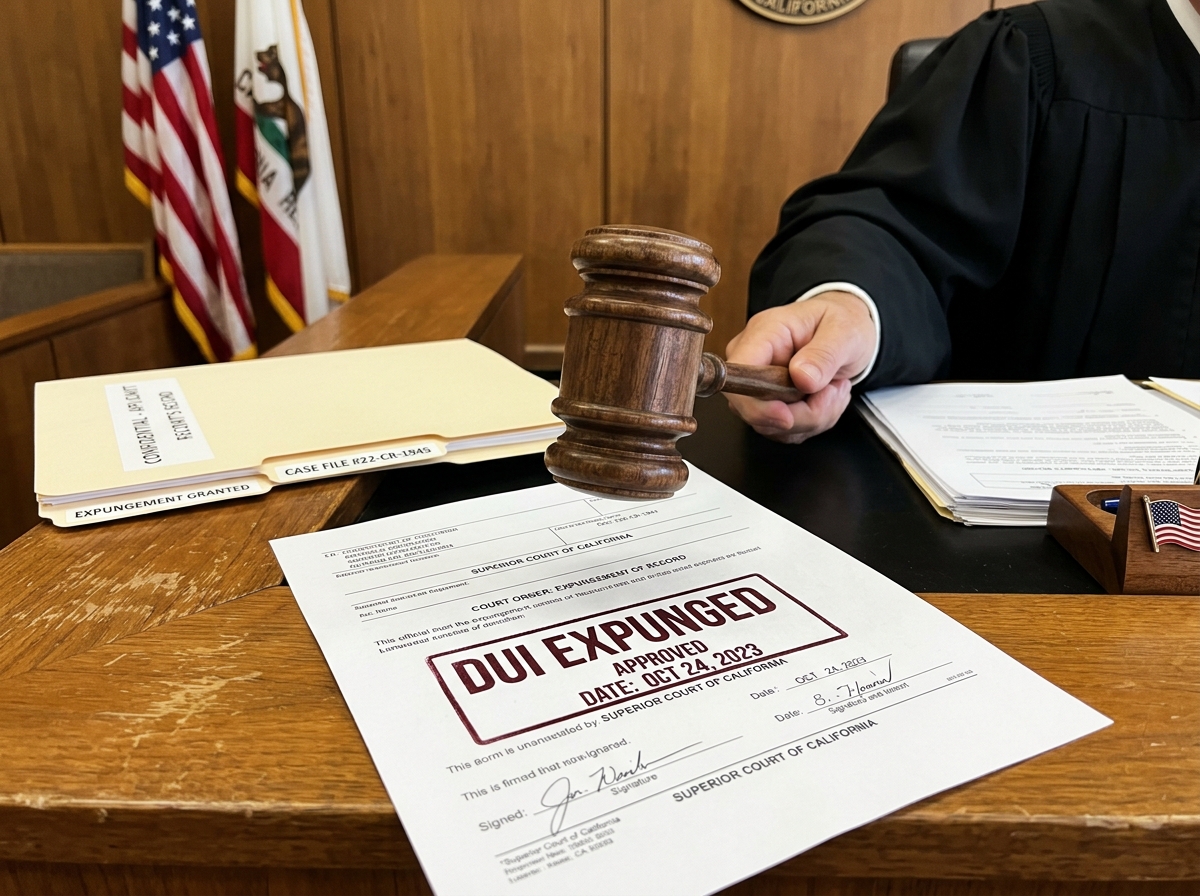
If your DUI case resulted in a conviction—meaning you pleaded guilty, pleaded nolo contendere (no contest), or were found guilty by a judge or jury—your only path to clearing the record is through a formal motion for expungement under Rhode Island General Laws (RIGL) Chapter 12-1.3.
An expungement legally orders the destruction and sealing of all court records, police reports, booking photos, fingerprints, and probation files associated with the conviction. Once the court grants the motion, you can legally state on job and housing applications that you have never been convicted of the offense. However, there are five narrow statutory exceptions where you must still disclose the expunged conviction, including applications for law enforcement, bar admission, teaching, coaching, or early childhood education positions.
Sealing of Dismissed DUI Cases
If your DUI charge was dismissed, if you were found not guilty (acquitted), or if the case ended with a “no-information” or “no-true-bill” filing, you are eligible to have the record sealed under §§ 12-1-12 and 12-1-12.1.
Because there was no conviction, the law is much more favorable. Sealing a dismissed case completely removes the arrest and charge from public view. Unlike an expungement of a conviction, which requires a lengthy waiting period, a dismissed DUI case or an acquittal is often eligible for immediate sealing, ensuring that a wrongful arrest or a dropped charge does not continue to haunt your professional life.
What Are the Eligibility Requirements and Waiting Periods for a Rhode Island DUI Expungement?

You cannot simply walk into court the day after a conviction and ask to have it removed. Rhode Island has established strict statutory waiting periods and eligibility criteria that must be met before you can file a petition.
To qualify for a DUI expungement, you must meet the following baseline requirements:
- First-Offender Status: Under RIGL § 12-1.3-1, you must qualify as a “first offender.” This means you have only one conviction on your record (felony or misdemeanor) and have no other pending charges in any court.
- Completion of Sentence: The statutory clock does not start on the day of your arrest or even the day of your conviction. It only begins once you have successfully completed every single aspect of your sentence. This includes serving any probation, completing your license suspension period, finishing community service, and paying all court fines, fees, and restitution.
- Good Moral Character: You must demonstrate to the court that you have been successfully rehabilitated, have stayed out of trouble, and possess “good moral character.” The judge has the ultimate discretion to deny your petition if they believe clearing your record is not in the public interest.
It is highly important to note that DUI is not classified as a “violent offense” under RIGL § 12-1.3-1. While violent offenses like robbery, sexual assault, and burglary can never be expunged, a first-offense DUI is eligible for relief. However, because DUI is specifically excluded from Rhode Island’s multi-misdemeanor expungement pathway, you cannot expunge a DUI if you have multiple misdemeanor convictions on your record.
To learn more about the specific steps required to evaluate your eligibility, read our detailed article on how to Expunge DUI Record. For professional representation throughout this process, you can also consult a dedicated Rhode Island Expungement Attorney to ensure your petition is filed correctly, or visit our primary resource page on Rhode Island Expungement Attorney to see how we structure our services.
Misdemeanor vs. Felony DUI Expungement Timelines
The waiting period to clear your record depends entirely on whether your DUI was charged as a misdemeanor or a felony. Most first-offense DUIs in Rhode Island are charged as misdemeanors, but certain aggravating factors—such as a DUI resulting in serious bodily injury or death—can elevate the charge to a felony.
| Offense Level | Waiting Period | Filing Fee | Court Jurisdiction |
|---|---|---|---|
| First-Offense Misdemeanor DUI | 5 Years post-sentence completion | $100.00 | District Court |
| First-Offense Felony DUI | 10 Years post-sentence completion | $100.00 | Superior Court |
Prohibited Offenses and Exclusions
Rhode Island law strictly prohibits certain offenses from ever being expunged. Under the statutory definition of “violent offenses,” charges such as murder, manslaughter, arson, kidnapping, child abuse, and domestic assault cannot be cleared.
Additionally, if you have any pending charges in state or federal court, or if you have previously been convicted of a felony, you are disqualified from seeking an expungement for a misdemeanor DUI. The court will order a thorough background check before your hearing to ensure you have maintained a completely clean record during your waiting period.
How Does the Expungement Process Work for Misdemeanor vs. Felony DUI Offenses?

The path to clearing your record involves navigating the specific court system where your case was originally resolved. Whether you are dealing with a misdemeanor or a felony, the process requires careful attention to detail and strict adherence to court rules.
It is vital to understand that the statutory waiting period (5 years for a misdemeanor, 10 years for a felony) only begins after you have completed all terms of your sentence. If you were sentenced to one year of probation, a six-month license suspension, and $1,000 in fines, your waiting period does not start until the probation has ended, your license is fully reinstated, and every dollar of your fines has been paid in full to the court clerk.
There is, however, an important exception for dismissed cases. Thanks to legislative updates, cases dismissed under Rule 48(a) on or after January 1, 2023, are sealed automatically by the court within 10 to 20 days, requiring no action or fees on your part. However, if your dismissal occurred before 2023, or if your case ended in an acquittal, you must still file a formal motion and provide a 10-day notice to the Attorney General’s office to clear your history.
Additionally, you must keep in mind that a criminal expungement only affects your court and BCI records. It does NOT clear your separate driving record maintained by the Rhode Island Division of Motor Vehicles (DMV) under Title 31. Because insurance companies evaluate your rates based on your DMV record, an expungement will not automatically lower your auto insurance premiums.
For a deeper dive into how felony charges are handled, you can read our guide on State and Federal Felony Expungement Services: What You Need to Know. If you live in Kent County or Providence County, you may also find our localized resources helpful, such as Cranston RI Expungement Services: How to Clear Your Criminal Record.
First-Offense Misdemeanor DUI Process
For a standard first-offense misdemeanor DUI, the process is handled in the Rhode Island District Court (such as the Third Division District Court in Warwick or the Sixth Division District Court in Providence).
Once your 5-year waiting period has passed, we will draft and file a Motion to Expunge along with a Sworn Affidavit. We must serve these documents to the Department of the Attorney General and the police department that originally arrested you. The court will then schedule a hearing where we will present your case to a District Court judge, demonstrating that you have met all statutory requirements and have maintained a clean record.
First-Offense Felony DUI Process
If you were convicted of a felony DUI, the process is significantly more rigorous. Felony expungements are handled exclusively in the Rhode Island Superior Court and require a 10-year waiting period.
Because a felony conviction carries much heavier weight, Superior Court judges scrutinize these petitions with extreme care. During the hearing, we must present compelling evidence of your exemplary rehabilitation, stable employment, and community involvement to prove that expunging the felony is consistent with the public interest.
How Do You File for a DUI Expungement in Rhode Island Courts?
Filing for an expungement is a highly procedural task. A single mistake on your paperwork, a missed deadline, or an unpaid court fee can result in the immediate denial of your petition, forcing you to restart the process.
The first step in any successful filing is obtaining a certified copy of your Bureau of Criminal Identification (BCI) report. This official document, issued by the Rhode Island Attorney General’s Office, provides a complete history of your arrests and dispositions in the state. We use this report to verify your eligibility and ensure that the dates on your petition match the state’s database exactly.
Once eligibility is confirmed, the filing process moves forward through these critical steps:
- Drafting the Motion and Affidavit: We prepare the formal Motion to Expunge and a Sworn Affidavit stating that you have no pending charges and have never been convicted of a prior felony.
- Filing with the Court: The motion is filed with the clerk of the court where your case was resolved.
- Serving Notice: Rhode Island law requires that you provide a 10-day written notice of the hearing to both the Attorney General’s Office and the arresting police department. This gives the state the opportunity to review your file and object if they believe you do not meet the criteria.
- Paying the Court Fee: If the judge grants your motion, a $100.00 court filing fee must be paid to the clerk to finalize the order and distribute it to the relevant law enforcement agencies.
This process is highly successful when handled correctly. In 2023, Rhode Island courts processed 1,248 expungement petitions, with a 78% approval rate for eligible first-offense misdemeanor cases.
To prepare yourself for these steps, we encourage you to read our guide, Wipe Your Record Clean with These Expungement Steps. You can also learn more about what to expect by reading Expungement Lawyer RI: 7 Things to Know Before Hiring.
Required Documents for Filing
To ensure a seamless filing, we must compile a complete packet of supporting documentation. This checklist includes:
- A certified copy of your original court disposition showing the final judgment.
- Official proof of sentence completion (such as a probation discharge letter).
- Receipts showing that all court fines, restitution, and fees have been paid in full.
- A current, certified Rhode Island BCI report.
- The correctly formatted Motion to Expunge and Sworn Affidavit.
The Court Hearing and Judicial Discretion
The court hearing is the final hurdle. While some simple sealing motions can be handled administratively, an expungement of a conviction almost always requires a formal hearing before a judge.
During the hearing, the prosecutor from the Attorney General’s Office or the local municipality may object to your petition. Our role as your legal representative is to present a persuasive argument showing that you have been fully rehabilitated, that you pose no threat to public safety, and that clearing your record is essential for your professional and personal growth.
What Should You Look for When Choosing a Rhode Island Expungement Attorney?
Clearing your record is too important to leave to chance. When selecting an attorney to represent you, you need a professional who possesses deep, localized experience in Rhode Island’s court system.
Your attorney should have extensive experience handling not just expungements, but also the underlying offenses, including DUI and Traffic Offenses, Firearm Offenses, and other misdemeanor and felony charges. This background ensures they understand how prosecutors and judges in cities like Cranston, Providence, and Warwick view these cases.
To make your initial consultation as productive as possible, we recommend gathering your information ahead of time. A standard client intake form is an excellent way to organize your details. You should be prepared to provide:
- Personal Information: Your full name, date of birth, and contact details.
- Case Information: The date of your arrest, the specific offenses charged, the arresting agency, and the court case number.
- Legal History: Any prior arrests, convictions, or probation terms, as well as your current probation status.
- Employment History: Your current job title and employer details, which help demonstrate your stability and rehabilitation.
- Case Strategy Goals: What you hope to achieve, such as securing better employment, protecting a professional license, or restoring your clean history.
To help you find the right fit, you can read our guide on Finding the Best Expungement Attorney in RI. If you are specifically dealing with a DUI charge in Kent or Providence County, you can also consult our resource on The Best Cranston DUI Attorney for Your Specific Case.
Key Questions to Ask Your Attorney
When meeting with a potential lawyer, do not hesitate to ask direct questions about their practice:
- How many DUI expungements have you successfully handled in Rhode Island?
- Are you familiar with the specific judges and prosecutors in the court where my case was resolved?
- Will you personally handle my court hearing, or will you hand it off to an associate?
- What is your fee structure, and does it include the $100 court filing fee?
Preparing Your Case Information
Organizing your paperwork before your meeting saves time and allows us to evaluate your eligibility immediately. Bring any court documents, receipts for paid fines, and letters of recommendation you have gathered. The more complete your information, the faster we can draft and file your petition.
How Can the Law Office of Leah J. Boisclair Help Restore Your Clean History?
At the Law Office of Leah J. Boisclair, we provide expert criminal defense representation for misdemeanors, felonies, DUI, expungements, and more in state and federal courts. Located in Cranston, Rhode Island, our firm is built on the foundation of personalized, compassionate advocacy with a proven track record of dismissals.
We understand that a past mistake should not define your entire future. We take the burden of the legal process off your shoulders by managing every step of your expungement, from retrieving your BCI report and drafting the petition to representing you in court so you do not have to face the judge alone.
Our firm provides comprehensive representation across a wide range of practice areas, including:
- Firearm Offenses
- DUI and Traffic Offenses
- Assault and Battery Offenses (which we handle as a dedicated, specialized practice area separate from other violent charges)
- Domestic Offenses
- Drug Offenses
- Disorderly Conduct and Public Order Offenses
- Property Offenses
- White Collar Offenses
- Sex Offenses (strictly excluding anal sex cases)
- Violent Offenses
- Computer Offenses
For localized assistance, we invite you to explore our resource on Finding the Best Providence and Cranston DUI Expungement Help, or visit our primary service page at the Law Office of Leah J. Boisclair Practice Areas to learn more about how we can help protect your rights.
Our Compassionate Approach to Record Clearing
We believe in second chances. When you work with us, you are not just a case number; you are an individual with unique goals, family responsibilities, and career aspirations. We listen to your story, evaluate your eligibility with extreme care, and build a personalized strategy designed to secure a clean slate.
Schedule a Consultation to Review Your Eligibility
Taking the first step toward clearing your record is easy. Contact our Cranston office today to schedule a comprehensive case evaluation. We will review your history of offenses, explain your options under Rhode Island law, and guide you on the path to restoring your clean history.
What Are the Most Frequently Asked Questions About Rhode Island DUI Expungements?
Can I expunge more than one DUI conviction in Rhode Island?
Generally, no. Rhode Island’s multi-misdemeanor expungement pathway explicitly excludes DUI and Traffic Offenses, as well as domestic violence offenses. This means that if you have more than one DUI conviction, or if you have a DUI conviction alongside another unrelated misdemeanor conviction, you are generally ineligible to expunge the DUI conviction. You can typically only expunge a single, first-offense DUI conviction under the first-offender pathway.
Will an expunged DUI still count as a prior offense if I face subsequent proceedings?
Yes. Even after a DUI record is successfully expunged, the record is not completely erased from existence for law enforcement purposes. Under Rhode Island law, if you are charged with a subsequent DUI within the state’s 10-year look-back period, the courts and prosecutors can access your sealed record and use it as a prior offense to enhance your charges and penalties (such as elevating a second offense to mandatory jail time).
Does an expunged DUI record disappear from federal background checks?
While a Rhode Island expungement orders state, municipal, and local databases to destroy or seal your records, federal agencies (such as the FBI or Department of Homeland Security) are not directly bound by state court orders. Consequently, an expunged arrest may still appear on highly sensitive federal background checks, such as those required for military enlistment, federal security clearances, or international travel visas.
Conclusion
As of June 2026, Rhode Island law remains highly favorable for individuals seeking to clear a first-offense misdemeanor DUI and move forward with their lives. By understanding the critical differences between expungement and record sealing, meeting your statutory waiting periods, and filing the correct paperwork in court, you can successfully restore your clean history and open doors to better employment, housing, and peace of mind.
You do not have to navigate this complex legal maze alone. Partnering with an experienced Cranston expungement attorney ensures that your petition is handled with the precision and care it deserves. Contact the Law Office of Leah J. Boisclair today, and let us help you take the first step toward your fresh start.