

How a Criminal Record Affects Your Life — and What You Can Do About It
Finding a skilled expungement attorney in RI is often the first step toward leaving a past mistake behind for good.
Quick Answer: What to Know About Rhode Island Expungement
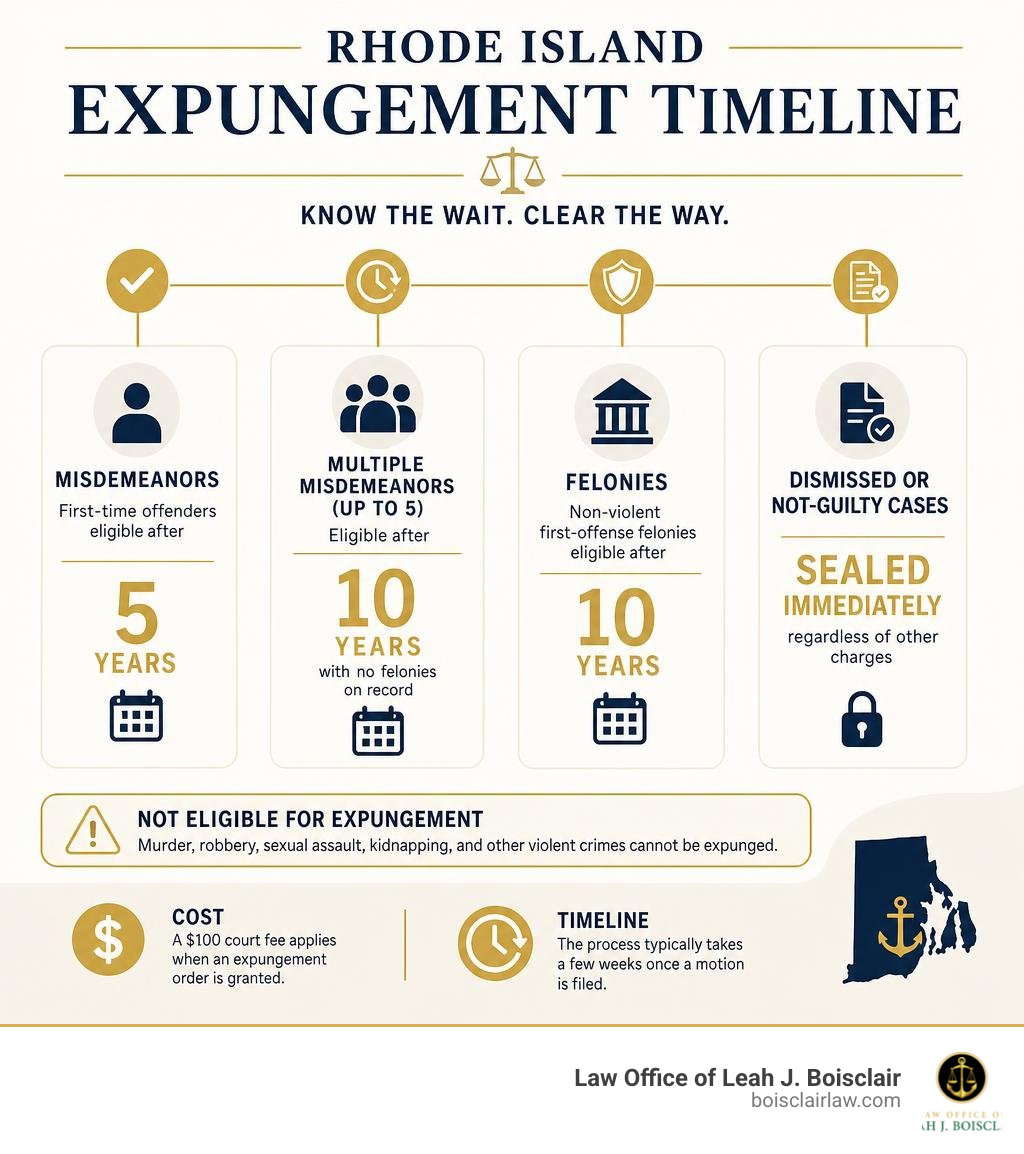
- Misdemeanors: Eligible for expungement after a 5-year waiting period (first-time offenders)
- Multiple misdemeanors (up to 5): Eligible after a 10-year waiting period with no felonies on record
- Felonies: Non-violent first-offense felonies eligible after a 10-year waiting period
- Dismissed or not-guilty cases: Can be sealed immediately, regardless of other charges
- Ineligible offenses: Murder, robbery, sexual assault, kidnapping, and other violent crimes cannot be expunged
- Cost: A $100 court fee applies when an expungement order is granted
- Timeline: The process typically takes a few weeks once a motion is filed
A criminal record doesn’t just follow you through the justice system. It shows up on job applications, rental screenings, loan requests, and background checks that employers and landlords run every day. One in three adults in the United States has a criminal record — and many of them don’t realize a legal path to clearing it may already be open to them.
Rhode Island law allows eligible individuals to have certain convictions completely destroyed from the court record — treated as if they never happened. That’s not just a technicality. It can mean the difference between getting hired or being passed over, finding housing or being turned away, or rebuilding your life on solid ground.
But the process involves multiple state agencies, strict eligibility rules, and deadlines that are easy to miss without guidance. That’s why working with an experienced Rhode Island expungement lawyer matters.
Simple guide to expungement attorney in ri:
Rhode Island Expungement vs. Sealing: What is the Difference?
When people talk about clearing their criminal history, they often use the terms “expungement” and “sealing” interchangeably. While both processes achieve the ultimate goal of hiding your past from public view, Rhode Island law distinguishes between them based on how your court case ended.

Under Rhode Island General Laws, here is how the two paths differ:
- Expungement: This process applies to cases that resulted in a conviction, a plea of nolo contendere (no contest), or a guilty plea followed by probation or a suspended sentence. When a court grants an expungement, the record of the conviction is legally destroyed or sealed. Legally speaking, the law directs the court and other state agencies to treat the offense as if it never occurred.
- Sealing: This process applies specifically to cases that did not lead to a conviction. If your case was dismissed, if you were found not guilty (acquitted) at trial, or if the prosecution decided not to pursue the charges (nol-prossed), your records can be sealed. Unlike expungements, which have strict waiting periods, dismissed or acquitted cases are generally eligible for sealing immediately.
While the legal definitions differ, the practical impact on your daily life is virtually identical. Both remedies prevent the public—including nosey neighbors, landlords, and prospective employers—from seeing your past legal troubles during a routine background check.
However, there is a minor catch. Sealing completely hides the records from public view, but the physical files still exist in some secure government archives and can be accessed under very narrow, court-ordered circumstances (such as future sentencing enhancements). Expungement, on the other hand, is a more aggressive “destruction” of the active record.
If you are wondering whether your specific charges qualify for a complete clean slate, you can read more about your options in our detailed guides on Can You Actually Clear Your Criminal Record? and Wiping the Slate Clean in Rhode Island.
Eligibility, Waiting Periods, and Ineligible Offenses in Rhode Island
Before you can file a motion with the court, you must meet Rhode Island’s strict eligibility criteria. The state has specific rules regarding who qualifies as a “first-time offender” and how long you must wait after completing your sentence before you can ask a judge to clear your record.
To help make sense of these timelines, here is a quick reference table comparing the required waiting periods:
| Type of Offense / Case Outcome | Waiting Period Required | Special Conditions |
|---|---|---|
| Dismissed, Acquitted, or Nol-Prossed | Immediate (0 years) | No waiting period; eligible for sealing regardless of other history |
| Prostitution Charges | 1 Year | Must complete any sentence or probation requirements first |
| Juvenile Offenses | 3 Years | Applies to eligible juvenile adjudications |
| First-Time Misdemeanor Conviction | 5 Years | Calculated from the date the sentence or probation successfully ends |
| Multiple Misdemeanor Convictions (2 to 5) | 10 Years | Eligible under expanded law if there are no felony convictions |
| First-Time Non-Violent Felony Conviction | 10 Years | Calculated from the date the sentence or probation successfully ends |
To understand how these waiting periods apply to your specific situation, it helps to dive deeper into the legal nuances. If you want a step-by-step breakdown of how to prepare, check out our guide on how to Wipe Your Record Clean With These Expungement Steps. If you have already completed a sentence but need to address past legal errors first, you may also want to explore Post Conviction Relief: Your Second Chance in the Rhode Island Justice System.
Eligible Offenses and Waiting Periods
Let’s look closely at how Rhode Island handles different categories of eligible offenses:
- Misdemeanors (First-Time Offenders): If you have a single misdemeanor conviction on your record, you must wait 5 years after successfully completing your sentence (including probation, community service, and paying all court-ordered fines) before you can apply.
- Multiple Misdemeanors: Rhode Island law previously only allowed first-time offenders to expunge their records. Fortunately, the law was expanded. You can now petition to expunge multiple misdemeanor convictions (specifically between 2 and 5 convictions) if you have waited 10 years since the completion of your last sentence, have no felony convictions on your record, and have kept a clean record during that 10-year look-back period.
- Felonies (First-Time Offenders): If you were convicted of a single, non-violent felony, you are eligible to file a motion to expunge 10 years after your sentence has fully expired.
- Juvenile Offenses: Mistakes made in your youth do not have to haunt your adulthood. Juvenile records can typically be expunged after a 3-year waiting period.
- Prostitution Charges: Recognizing the unique circumstances surrounding these offenses, Rhode Island law allows individuals convicted of prostitution-related charges to apply for expungement after a brief 1-year waiting period.
Ineligible Offenses and Violent Crimes
While Rhode Island’s expungement laws are relatively generous, certain serious crimes are completely barred from being cleared. If a charge is classified as a “crime of violence,” it can never be expunged.
Ineligible violent offenses include:
- Murder and manslaughter
- Kidnapping
- First- and second-degree sexual assault
- Child molestation
- Burglary and robbery
- First-degree arson
In addition to these violent crimes, eligibility varies across other legal categories:
- Domestic Offenses: Domestic violence convictions are subject to intense scrutiny. While some first-offense domestic misdemeanors may eventually be eligible, repeat domestic violence offenses or domestic felonies are generally barred from expungement.
- DUI and Traffic Offenses: First-time misdemeanor DUI convictions can often be sealed or expunged after a 5-year waiting period, provided you have no other offenses. However, felony DUIs (such as a third offense) or chemical test refusals have much stricter rules and are far more difficult to clear.
- Firearm Offenses: Convictions involving violent crimes committed with firearms or certain illegal weapons charges cannot be expunged.
- Assault and Battery Offenses: Simple assault misdemeanors may be eligible after 5 years for first-time offenders, but felony assault or assault with intent to commit violent crimes are strictly ineligible.
- Drug Offenses: Many non-violent drug possession charges—including past marijuana offenses—are highly eligible for expungement or immediate sealing.
- Disorderly and Public Conduct Offenses: Minor public order charges, such as disorderly conduct, are some of the easiest offenses to expunge once the 5-year waiting period is met.
- Property Offenses, White Collar Offenses, Sex Offenses, and Computer Offenses: Non-violent property and white-collar crimes (like petty theft or embezzlement) are often eligible if they are first offenses. However, serious sex offenses and high-level computer crimes are typically excluded.
Step-by-Step Guide to Filing a Motion to Expunge
Filing a motion to expunge in Rhode Island is a precise legal process. A single mistake or a missing document can cause the court to deny your petition, forcing you to start all over again.

Here is the exact step-by-step process we guide our clients through:
- Obtain Your Criminal Record (BCI): First, you must obtain a copy of your official criminal history. You can get this from the Bureau of Criminal Identification (BCI) unit at the Rhode Island Attorney General’s Office.
- Determine the Correct Court: You must file your motion in the exact court where your case was resolved. For example, if your misdemeanor was handled in the District Court in West Warwick, that is where your motion must be filed. If you need help finding local court information, resource directories like the West Warwick Attorneys – Rhode Island – Lawyers – Cornell University page can help point you in the right direction.
- Draft and File the Motion: You must prepare a formal “Motion to Expunge” along with a sworn, notarized affidavit stating that you meet all legal eligibility requirements (such as having no pending charges and maintaining good moral character).
- Notify the Necessary Agencies: Once the court clerk accepts your motion and schedules a hearing date, you must formally serve copies of the motion to the Attorney General’s Office and the local police department that arrested you. This must be done at least 10 days before your scheduled hearing.
- Attend the Court Hearing: You (or your attorney) must appear before a judge. The prosecutor may object to your expungement, so you must be prepared to present evidence of your rehabilitation and good character.
- Pay the Court Fee and Distribute the Order: If the judge approves your motion, you must pay a $100 court fee to obtain the certified Expungement Order. You must then mail certified copies of this order to the BCI, the arresting police department, and the court records department to ensure your files are physically destroyed or sealed.
Why You Need an Experienced Expungement Attorney in RI
While some individuals attempt to handle their own expungements, navigating the Rhode Island court system can be incredibly stressful. If the prosecution objects to your motion, or if you cannot clearly demonstrate your rehabilitation to the judge, your petition will likely be denied.
Hiring a dedicated expungement attorney in ri ensures that your petition is drafted flawlessly, all state agencies are notified correctly, and your rights are aggressively defended in court. At the Law Office of Leah J. Boisclair, we handle every step of this process for you, saving you from making stressful court appearances alone. If you are dealing with a past driving offense, you can learn more about how we handle these specific hearings by reading about Finding the Best Providence and Cranston DUI Expungement Help.
How an Expungement Attorney in RI Evaluates Your Case
When you first contact us, we don’t just file paperwork. We conduct a comprehensive review of your entire legal history to build a customized strategy.
During our initial evaluation, we use a detailed client intake process to gather critical information:
- Personal & Case Information: We verify your arrest dates, the specific charges filed against you, and the arresting agencies.
- Legal History Analysis: We review whether you have any out-of-state charges, prior convictions, or active probation terms that could affect your eligibility.
- Employment & Life Goals: We look at how your record is currently impacting your career, housing, or professional licensing goals to present the strongest possible case to the judge.
Navigating Court Hearings with an Expungement Attorney in RI
The court hearing is the most critical part of the expungement process. Rhode Island law requires petitioners to prove to the judge that they have exhibited “good moral character” and that their rehabilitation outweighs any public interest in keeping the record public.
We know exactly what judges look for. We help you gather letters of recommendation, proof of steady employment, and evidence of community involvement. We then present these facts in a persuasive legal argument, directly addressing any objections raised by the prosecutor.
What Happens After Your Rhode Island Expungement is Granted?
Once the judge signs the expungement order and the relevant agencies process the paperwork, the change is life-altering.
Here is what happens next:
- Employment background checks come back clean: You can legally state on job applications that you have never been arrested or convicted of the expunged crime.
- Your constitutional rights are restored: For felony expungements, your civil rights—including your right to vote and your eligibility for firearm ownership—are fully restored under Rhode Island law.
- Housing opportunities open up: You no longer have to worry about rental agencies or landlords denying your lease application due to a past mistake.
There are, however, a few rare professional exceptions. Under Rhode Island law, you must still disclose an expunged conviction if you are applying for positions in early childhood education, law enforcement, youth sports coaching, or the practice of law.
If you are currently serving a sentence or seeking an early end to probation so you can become eligible for expungement, read our guide on Providence Early Release Petitions and How to Navigate Them.
Frequently Asked Questions About Rhode Island Expungements
Can a DUI Offense Be Expunged in Rhode Island?
Yes, but only under specific circumstances. If you were convicted of a first-offense misdemeanor DUI, you can apply to have it expunged 5 years after successfully completing your sentence, provided you have no other criminal convictions on your record. However, repeat DUI offenses or chemical test refusals are subject to much stricter rules. You can find more details in our dedicated guide on how to Expunge DUI Record.
How Much Does It Cost to Expunge a Record in RI?
The state of Rhode Island charges a $100 court fee to process and execute a certified Expungement Order once it is approved by a judge. Additional minor costs include obtaining your official BCI transcript (around $5). Our attorney fees are highly competitive, and we offer flat-rate pricing so you know exactly what to expect before we begin.
How Long Does the Expungement Process Take?
The entire process, from our initial consultation to the final destruction of your records, typically takes 3 to 6 weeks. This timeline depends largely on how quickly the court schedules your hearing and how fast the local police departments and the Attorney General’s Office update their databases.
Conclusion
A past mistake shouldn’t dictate your future. At the Law Office of Leah J. Boisclair, we provide personalized, compassionate, and aggressive representation for clients throughout Cranston, Providence, Warwick, Johnston, and the surrounding Rhode Island communities. We understand how heavy a criminal record can feel, and we are here to help you lift that burden.
Let us handle the paperwork, coordinate with the state agencies, and stand by your side in court. Schedule a consultation with our experienced legal team today, and let’s take the first step toward wiping your slate clean.