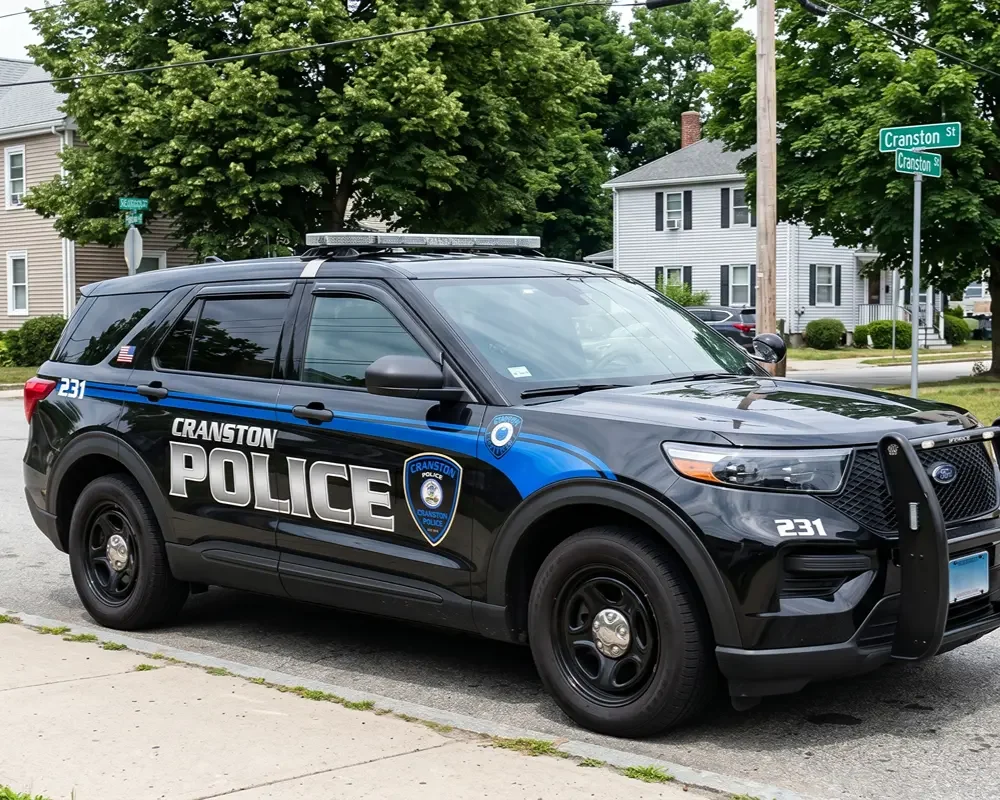
Facing a Gun Charge in Cranston? Here’s What You Need to Know First
If you’re looking for a Cranston gun charge attorney, here is a quick summary of what matters most right now:
- Hire an attorney immediately — the first 24 to 72 hours after an arrest are the most critical for your defense
- Do not speak to police or investigators without a lawyer present
- Firearm Offenses in Rhode Island are aggressively prosecuted and can mean up to 10 years in prison and a $10,000 fine for unlicensed carry alone
- Firearm Offenses can be challenged — through illegal search motions, forensic evidence gaps, and possession disputes
- Both state and federal Offenses are possible — each carries very different consequences
Rhode Island’s firearm laws are among the most seriously enforced in New England. As of May 2026, gun crimes account for 6.6% of all convictions in Rhode Island, according to the United States Sentencing Commission. That number reflects just how actively prosecutors pursue these cases.
A firearm offense in Cranston is not a minor legal matter. A single conviction can mean mandatory prison time, permanent damage to your record, and the loss of your right to ever own a firearm again. And if federal Offenses are involved, the stakes get even higher — federal sentences carry no parole eligibility, and defendants must serve at least 85% of their sentence.
The Law Office of Leah J. Boisclair represents people across Rhode Island facing exactly these situations. Whether you are dealing with an unlicensed carry offense, a prohibited possessor allegation, or a firearm enhancement attached to a felony, the right defense starts with understanding what you are up against.
This guide walks you through everything — from how Rhode Island defines a firearm, to what defenses actually work, to how the legal process unfolds from arrest to resolution.
Understanding Common Firearm Offenses in Cranston
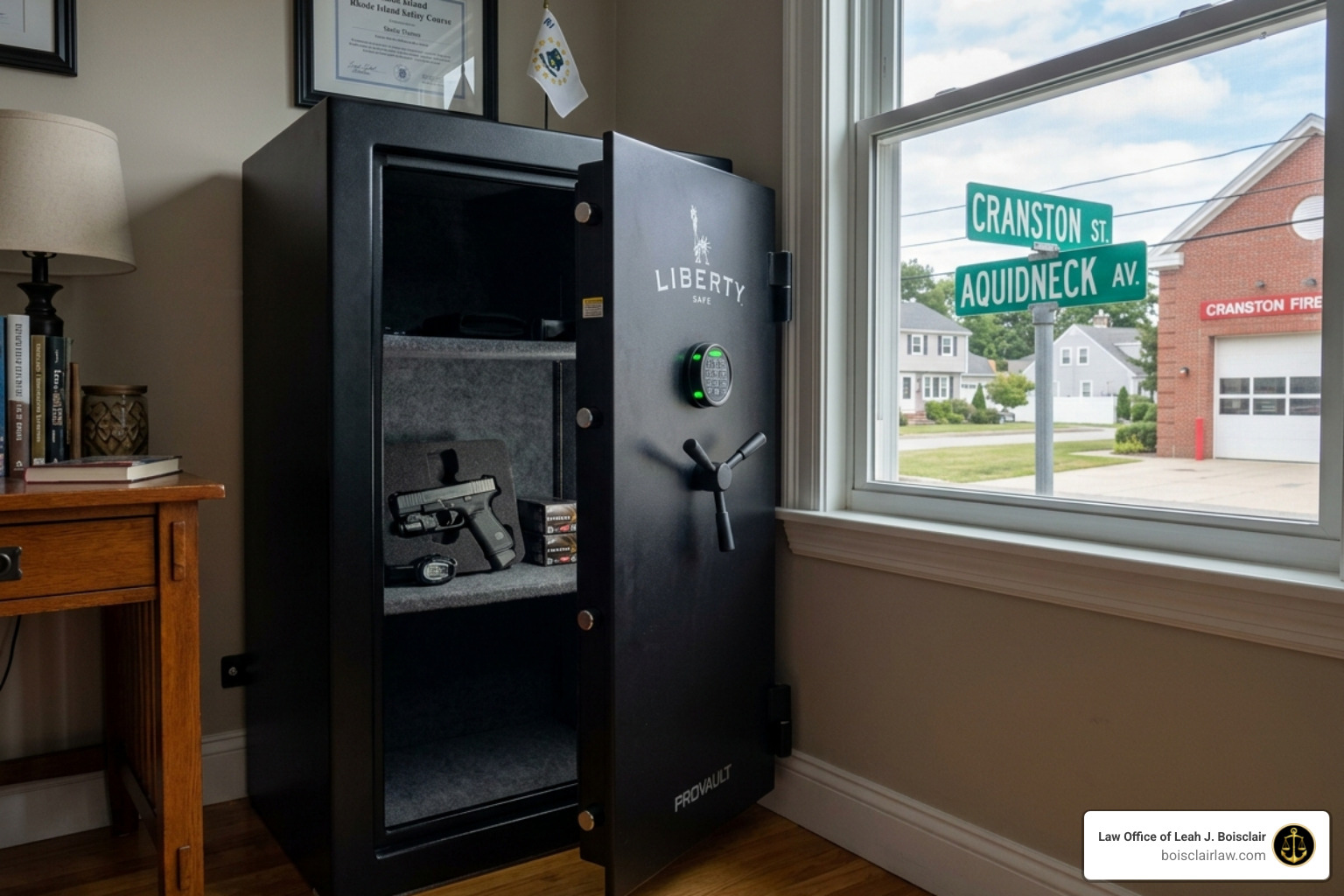
Navigating the “complex web” of Rhode Island firearm laws requires more than just a passing glance at the statutes. In Cranston, we see a wide variety of Offenses that can land a person in hot water. The most frequent issue is the unlicensed carry offense. Under state law, carrying a pistol or revolver without a valid license or permit can result in a felony conviction with a penalty of up to 10 years in prison.
Another major area involves prohibited possessors. Rhode Island law is very clear about who cannot touch a gun. This list includes:
- Individuals convicted of a felony or a “crime of violence.”
- Those with certain domestic violence convictions.
- Fugitives from justice.
- Persons who are unlawful users of controlled substances.
If you fall into one of these categories, simply being in the same room as a gun can lead to a Firearm Offenses Defense situation.
We also have to consider modern legal shifts. As of May 2026, Rhode Island has strict regulations regarding “ghost guns” (untraceable firearms without serial numbers) and magazine capacity limits. Currently, semi-automatic handguns are generally limited to a 10-round capacity. Furthermore, Rhode Island’s “Red Flag” laws allow the state to temporarily remove firearms from individuals deemed a danger to themselves or others.
One thing that surprises many of our clients is how broadly the state defines a “firearm.” Under R.I. Gen. Laws § 11-47-2, a firearm includes not just pistols and rifles, but also machine guns, blank guns, and even BB guns or air rifles that fire a metal projectile. If it can propel a projectile via an explosive or air pressure, the law likely treats it as a weapon.
Penalties and Enhancements for Rhode Island Convictions

The consequences of a conviction in Rhode Island are designed to be punitive. For a standard unlicensed carry offense, you face a 10-year maximum prison sentence and a fine of up to $10,000. However, the legal landscape changes significantly when you move from Felonies and Misdemeanors to Offenses involving violence.
Under R.I. Gen. Laws § 11-47-3.2, the state applies a “firearm enhancement” if a gun is used or possessed during a crime of violence or certain drug Offenses. This carries a mandatory minimum of 10 years imprisonment. The most critical part? This sentence must be served consecutively to the underlying felony. This means if you are sentenced to 5 years for a drug offense and 10 years for the gun enhancement, you are looking at 15 years total—you don’t get to serve them at the same time.
As a Violent Offenses Defense Attorney, we emphasize that the damage goes far beyond the prison walls. A gun conviction creates a permanent criminal record that can:
- Bar you from many types of employment.
- Make it nearly impossible to secure housing in certain areas.
- Strip you of your voting rights while incarcerated.
- Result in a lifetime ban on firearm ownership under federal law.
State vs. Federal Jurisdiction and ATF Investigations
When you are arrested for a gun offense in Cranston, you might find yourself in one of two very different court systems. Most cases start in the Rhode Island District Court (for initial appearances) and move to the Superior Court (for felonies). However, if the federal government gets involved, you will head to the U.S. District Court for the District of Rhode Island.
Federal jurisdiction is usually triggered by the “interstate nexus.” Because almost all firearms are manufactured in one state and sold in another, the ATF (Bureau of Alcohol, Tobacco, Firearms and Explosives) argues that the gun traveled in “interstate commerce,” giving the federal government the right to prosecute you.
If you receive an ATF target letter or are contacted by federal agents, you need a Ri Criminal Attorney immediately. Federal court operates under the Bail Reform Act, which makes it much harder to get out on bail compared to state court.
| Feature | Rhode Island State Court | Federal Court |
|---|---|---|
| Sentencing | Varies; Parole possible | Sentencing Guidelines; No Parole |
| Time Served | Often eligible for early release | Must serve at least 85% of time |
| Bail | Based on flight risk/danger | Stricter “Dangerousness” standards |
| Investigation | Local/State Police | ATF / FBI / Federal Task Forces |
Strategic Defenses Used by a Cranston Firearm Offenses Attorney
Just because a gun was found doesn’t mean the case is closed. We look at every detail to build a defense. One of the most common legal battles involves the concept of possession.
There are two types of possession:
- Actual Possession: The gun was physically on your person (in your pocket or hand).
- Constructive Possession: The gun was not on you, but you knew it was there and had the “power and intent” to control it (like in a glove box or under a bed).
Constructive possession is much harder for the state to prove. If a gun is found in a car with four people, the prosecutor has to prove you specifically knew it was there and had control over it. Simply being near a weapon isn’t enough for a conviction.
We also aggressively pursue 4th Amendment challenges. If the Cranston Police pulled you over without a valid reason or searched your home without a proper warrant, that gun might be suppressed (thrown out of evidence). Without the gun, the state usually has no case.
Other strategies include:
- Forensic Evidence Gaps: Are there fingerprints or DNA on the weapon? If not, we highlight the lack of physical connection.
- Lack of Knowledge: If someone else left a firearm in your vehicle without your knowledge, you are not legally in possession of it.
Check out our Case Results to see how these strategies have worked for our clients in the past. Understanding Why Hire a Rhode Island Criminal Defense Attorney comes down to having someone who knows how to spot these technical openings.
The Legal Process: Bail, Timeline, and Resolution
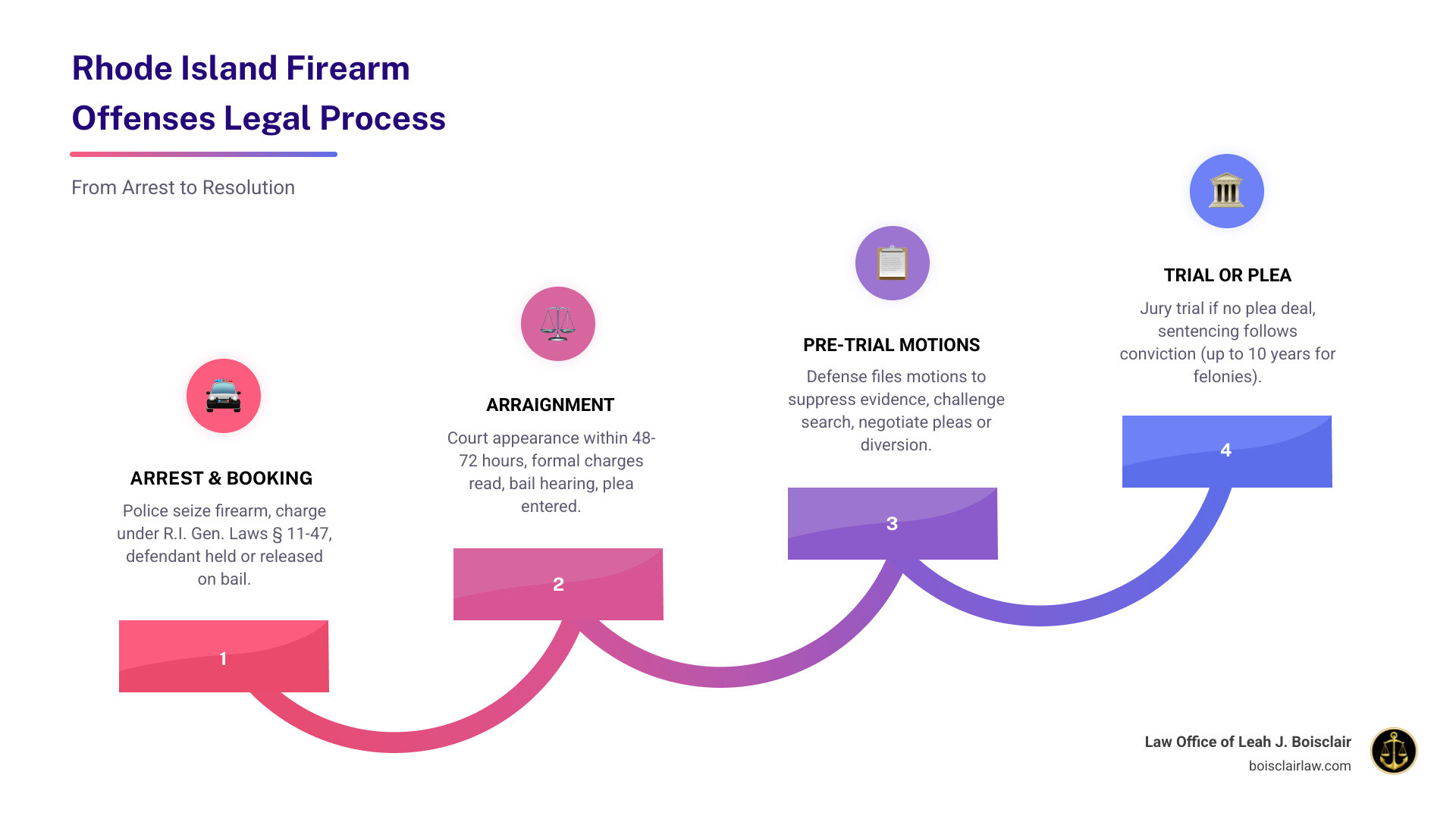
The process of a criminal case can be slow and stressful. It typically begins with an Arraignment, where the Offenses are read and bail is set. In Rhode Island, firearm Offenses often lead to “dangerousness” hearings where the state tries to keep you in jail without bail. We fight these by presenting “biographical packets” that show your ties to the community and lack of flight risk.
After the initial What To Do If Youve Been Arrested In RI phase, the case moves into discovery and Pre-trial motions. This is where we challenge the evidence. Many cases are resolved through Diversion programs (for first-time offenders) or plea negotiations, while others proceed to a full jury trial.
Our Practice Areas cover the full spectrum of the Rhode Island legal system:
- Firearm Offenses: Possession, carry, and use violations.
- DUI and Traffic Offenses: Protecting your license and freedom.
- Assault and Battery: From simple disputes to felony allegations.
- Domestic Offenses: Sensitive cases requiring a careful touch.
- Drug Offenses: Possession and trafficking defense.
- Community Safety Offenses: Addressing public order and safety concerns.
- Property Offenses: Larceny, burglary, and vandalism.
- White Collar Offenses: Fraud and financial crimes.
- Sex Offenses: Serious allegations with lifelong consequences.
- Violent Offenses: High-stakes felony defense.
- Computer Offenses: Digital crimes and internet-based allegations.
Client Intake and Case Strategy
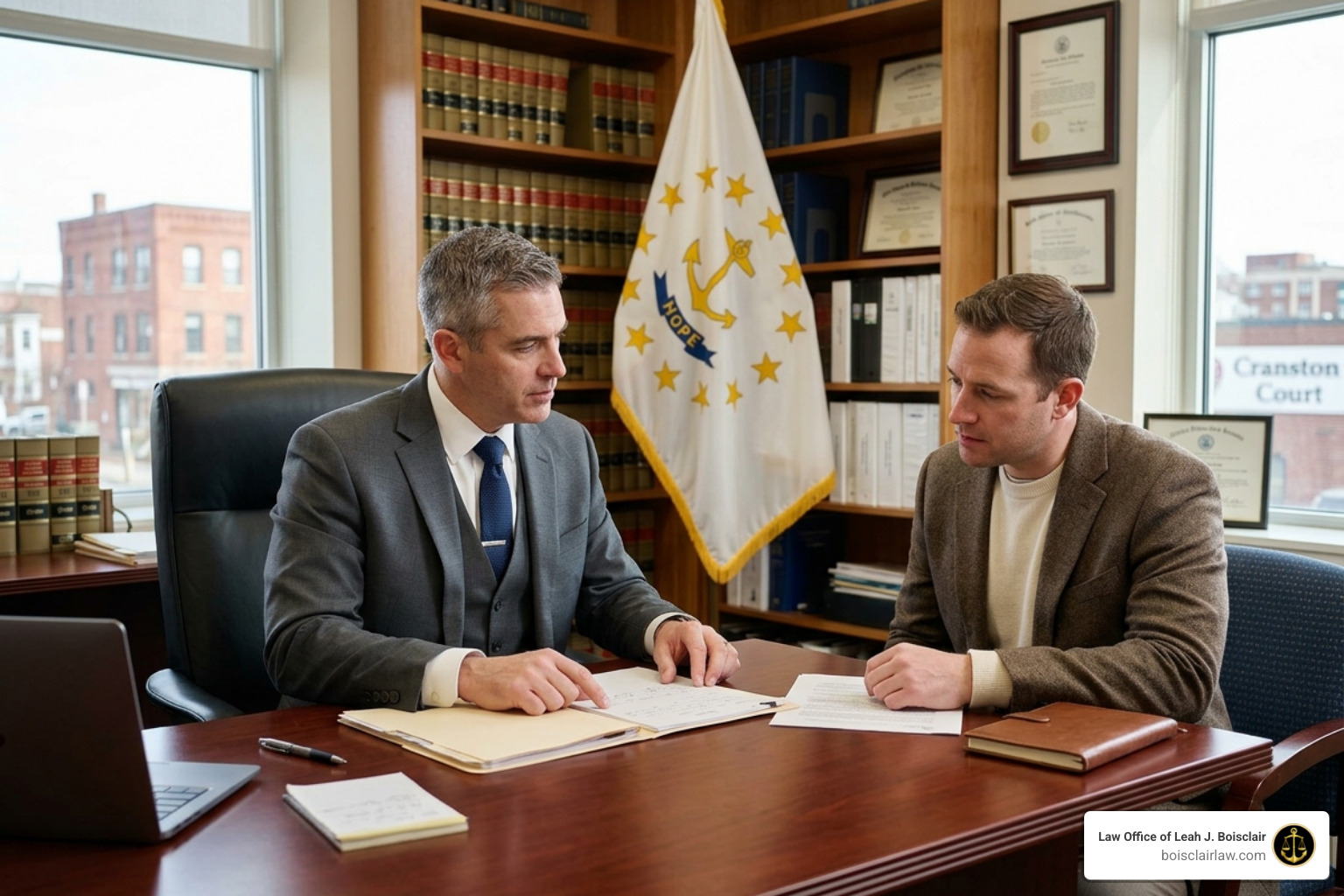
When you meet with a Cranston gun charge attorney, being prepared is half the battle. We use a comprehensive intake process to ensure we have every piece of information needed to protect you.
Information we will need from you includes:
- Personal Information: Full name, date of birth, social security number, contact details, and emergency contact information.
- Case Information: Arrest date, specific Offenses filed, incident location, and whether you have been arraigned or have a future court date.
- Legal History: Details of any prior arrests or convictions, and your current probation or parole status.
- Employment Information: Current employer details, job title, and employment history over the past 12 months.
- Case Strategy & Goals: Your objectives, such as seeking a dismissal, reduced Offenses, a negotiated plea, or preparing for a trial. We also focus on goals like avoiding the loss of your driver’s license.
Frequently Asked Questions about Firearm Offenses
What is the difference between a felony and a misdemeanor?
The primary difference is the potential prison time. A misdemeanor in Rhode Island is an offense punishable by no more than one year in jail. A felony is any offense that carries a potential sentence of more than one year. Firearm Offenses in Rhode Island are almost exclusively felonies, which means they carry much heavier fines, longer prison sentences, and the permanent loss of certain civil rights.
What is constructive possession in a Cranston firearm offenses case?
Constructive possession is a legal theory used when a gun isn’t found on your body. To convict you, the state must prove you had knowledge of the weapon’s presence and the intent and power to exercise control over it. For example, if a gun is in a locked safe that only you have the key to, that is constructive possession. If it’s in a shared living room where five people live, it is much harder for the state to prove it belongs to you.
Why hire a Cranston firearm offenses attorney immediately?
The first 48 to 72 hours are when the police are most active in gathering evidence and when the prosecutor makes initial charging decisions. An attorney can intervene early to prevent you from making self-incriminating statements, preserve surveillance footage that might disappear, and begin negotiating for lower bail or reduced Offenses before the case even reaches a courtroom. You can learn more about our approach to Firearm Offenses Defense here.
Can a firearm offense be reduced or dismissed in Rhode Island?
Yes. Offenses are frequently reduced or dismissed if we can show that the police violated your rights during a search, if the forensic evidence (like DNA) is inconclusive, or if you are eligible for a diversion program. We use plea negotiations to leverage the weaknesses in the prosecution’s case to get the best possible outcome. You can see examples of this in our Case Results.
Conclusion
Facing a gun offense is a life-altering event, but it does not have to be a life-ending one. At the Law Office of Leah J. Boisclair, we provide personalized, compassionate advocacy for those caught in the Rhode Island criminal justice system. We understand that behind every case file is a person with a family, a job, and a future worth protecting.
If you or a loved one are facing firearm allegations in Cranston, Providence, or anywhere in Rhode Island, don’t wait for the state to build its case against you. Take the first step toward your defense today.
Contact a Cranston Firearm Offenses Defense Attorney at the Law Office of Leah J. Boisclair for a confidential consultation.