What Is Violent Crime Defense and Why It Matters
Violent crime defense refers to the legal strategies and actions taken to protect someone accused of an offense involving force, threatened force, or bodily harm to another person. According to the FBI’s Uniform Crime Reporting (UCR) Program, these offenses are categorized by the use of force or threat of force.
If you or someone you know is facing violent offense charges, here is a quick overview of what matters most:
- Get a defense attorney immediately — early legal help protects your rights from the very first moment
- Common offenses include assault, robbery, homicide, kidnapping, domestic violence, and firearm offenses
- Key defense strategies include self-defense, lack of intent, mistaken identity, alibi, and challenging evidence
- Penalties are severe — ranging from up to one year for a misdemeanor assault to life imprisonment or even the death penalty for Class A felonies like murder
- Constitutional violations — like illegal searches or Miranda rights breaches — can lead to evidence being thrown out or charges dismissed entirely
The stakes could not be higher. A conviction does not just mean prison time. It can cost you your job, your professional licenses, your right to own a firearm, and your reputation — for the rest of your life.
Being accused of a violent offense is terrifying, especially if you believe the charges are wrong or exaggerated. The legal process moves fast, and what you say or do in the early hours and days after an arrest can shape the entire outcome of your case.
The good news? With the right legal strategy and an experienced defense attorney in your corner, charges can be reduced, dismissed, or successfully defended at trial — even in cases that seem overwhelming at first.
Understanding Violent Offenses and Common Charges
When we talk about violent offenses in April 2026, we are looking at a broad spectrum of legal categories. In Rhode Island and across the country, these charges are treated with the highest level of scrutiny by prosecutors. Understanding exactly what you are up against is the first step in building a violent crime defense.
The Heavy Hitters: Homicide and Robbery
- Murder and Homicide: These are the most serious offenses on the books. First-degree murder involves premeditation, while second-degree murder typically involves an intentional killing without prior planning. Manslaughter covers deaths resulting from recklessness or “heat of passion” moments.
- Robbery: This isn’t just theft; it’s taking property through force or fear. If a weapon is involved, it often escalates to armed robbery, carrying significantly steeper penalties.
Personal Liberty and Safety Offenses
- Kidnapping and Carjacking: These involve the unlawful restraint or seizure of a person or vehicle. Because they often involve high levels of trauma for the victim, prosecutors rarely offer lenient deals without a fight.
- Domestic Violence: These are offenses committed against family or household members. They carry unique social stigmas and specific legal hurdles, such as mandatory “no-contact” orders.
- Sex Offenses: These charges are exceptionally sensitive and require a nuanced defense to protect the accused from both legal penalties and lifelong registration requirements.
Other Critical Legal Areas
Our team at the Law Office of Leah J. Boisclair also handles a wide variety of other criminal matters that frequently intersect with violent offense allegations:
- Firearm Offenses: Possessing or using a gun during another offense can trigger “enhancements” that add years to a sentence.
- DUI and Traffic Offenses: While often seen as separate, a DUI resulting in an accident can lead to violent felony charges like vehicular manslaughter.
- Drugs and Property Offenses: Many violent incidents arise from disputes over property or controlled substances.
- White Collar and Computer Offenses: Even non-physical offenses can sometimes lead to threats or extortion charges categorized under violent statutes.
- Public Order and Safety Offenses: These include things like rioting or public brawling, where the “violence” is directed at the community’s peace.
Penalties and Sentencing Enhancements for Convictions
In criminal law, not all offenses are created equal. The penalties for a conviction are designed to be life-altering.
Felony Degrees and Prison Time
For the most severe offenses, known as Class A felonies, the consequences are staggering. Convictions for murder or first-degree domestic violence can result in 10 years to life in prison. In some jurisdictions, capital murder can even lead the prosecution to seek the death penalty. Even a “lesser” felony, such as Assault in the First Degree, can carry a mandatory sentence of 5 to 25 years.
Sentencing Enhancements
A sentence can be “enhanced” (made longer) based on specific factors:
- Great Bodily Injury (GBI): If the victim suffered permanent damage or loss of a limb, extra years are often tacked on.
- Weapon Use: Using a firearm can add a decade or more to a standard sentence.
- Prior Convictions: Repeat offenders face the “Three Strikes” logic, where prior violent felonies can lead to mandatory life sentences.
- Gang Activity: If the offense is linked to organized criminal groups, penalties often double.
Collateral Consequences
The punishment doesn’t end when you leave prison. A conviction can lead to the permanent loss of firearm rights, the revocation of professional licenses (like nursing or teaching), and barriers to housing. This is why understanding Domestic And Family Related Offenses is vital—a conviction here can even affect your parental rights.
Effective Strategies for Violent Crime Defense

We don’t just wait for the trial; we build a proactive defense from day one. There are several ways to legally justify or excuse actions that the state calls “violent.”
Affirmative Defenses
- Self-Defense: This is the most common violent crime defense. We must show that you had a reasonable belief of immediate danger and used a proportional amount of force to protect yourself.
- Stand Your Ground and Castle Doctrine: Depending on the specific circumstances, you may not have a “duty to retreat” if you are in your own home or a place you have a right to be.
- Defense of Others: Similar to self-defense, this applies when you act to protect someone else from harm.
Fact-Based Defenses
- Lack of Intent: Many violent offenses require “specific intent.” If we can prove the harm was an accident or that you didn’t intend the specific outcome, the charges may be dropped or reduced.
- Mistaken Identity and Alibi: Eyewitnesses are notoriously unreliable. We use cell phone records, GPS data, and surveillance footage to prove you weren’t even there.
- Mental Health and Duress: Sometimes, a person’s mental state or the fact that they were being threatened (duress) means they cannot be held fully responsible for their actions.
Challenging Evidence in a Violent Crime Defense
The prosecution’s case is only as strong as the evidence they are allowed to use. As your Violent Crimes Defense Attorney, we scrutinize every piece of paper and digital file.
- Constitutional Violations: Did the police have a warrant? Did they read you your Miranda rights? If they performed an illegal search, we can file a motion to suppress that evidence.
- Witness Credibility: We use “impeachment” to show that a witness is lying, has a motive to fabricate stories, or has a history of dishonesty.
- Forensic Validity: DNA and ballistics aren’t always the “slam dunk” they look like on TV. Lab errors, contaminated samples, and outdated testing methods can all be challenged.
Assault and Battery Offenses: Misdemeanors vs. Felonies
Assault and battery are often used interchangeably, but they have distinct meanings. Assault is the threat or attempt to cause harm, while battery is the actual physical contact.
| Feature | Simple Assault (Misdemeanor) | Aggravated Battery (Felony) |
|---|---|---|
| Harm Caused | Minor or no physical injury | Serious bodily harm or disfigurement |
| Weapon | No weapon involved | Use of a deadly weapon (gun, knife, etc.) |
| Max Sentence | Up to 1 year in jail | 5 to 25+ years in prison |
| Intent | General intent to scare or touch | Intent to cause serious injury or kill |
In many cases, a simple disagreement can spiral into a charge of The Legal Lowdown On Public Brawling And Fighting. If the incident involves a partner or family member, the stakes rise even further. We strongly advise that you Dont Go It Alone When Facing A Domestic Violence Case, as these charges often carry mandatory counseling and strict protective orders.
Navigating the Legal Process from Arrest to Trial
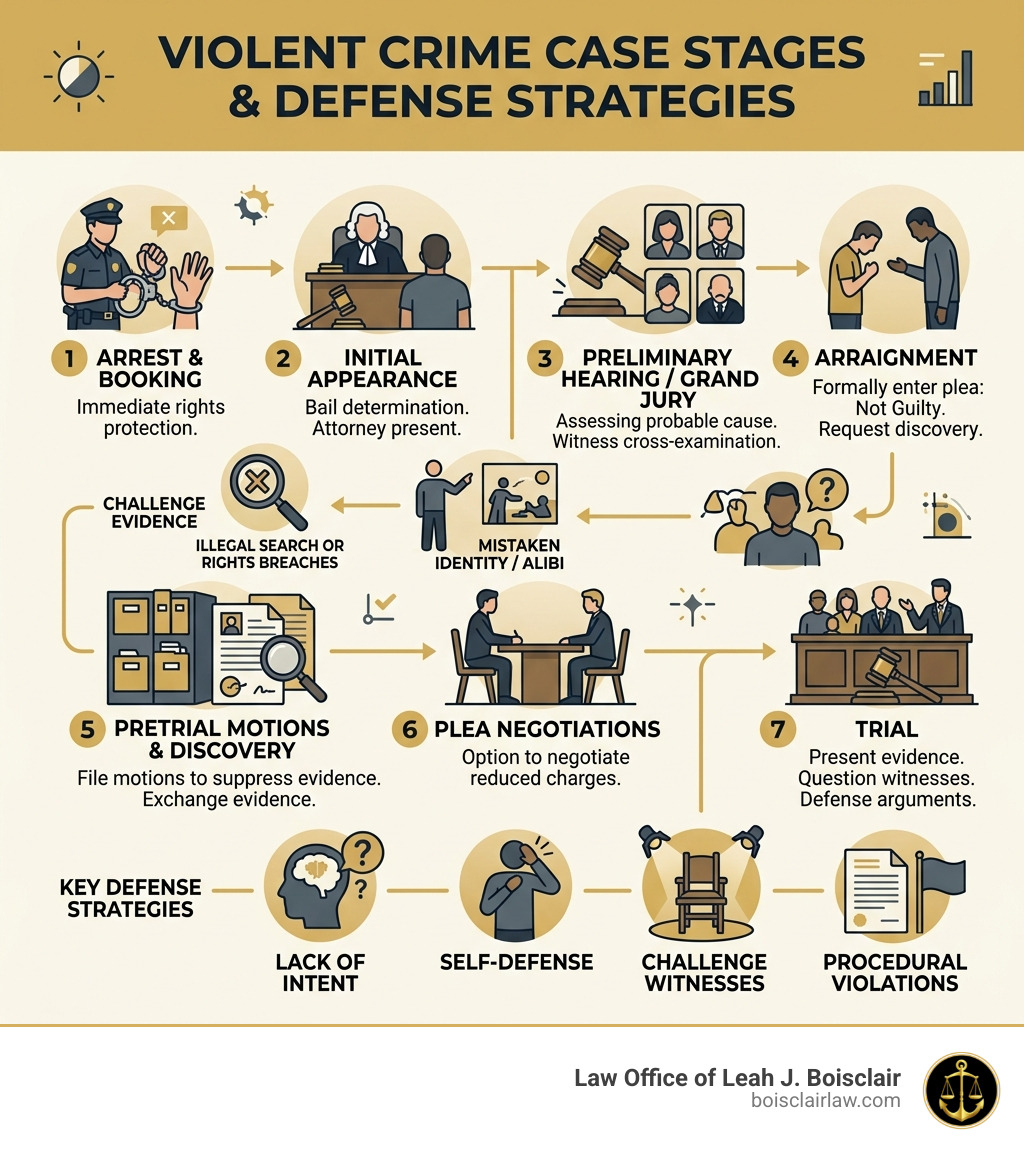
The legal system can feel like a maze designed to trip you up. Here is what the journey usually looks like in Cranston and throughout Rhode Island:
- Arrest and Booking: You are taken into custody, fingerprinted, and photographed. Do not speak to the police without us present.
- Bail Hearings: We argue for your release so you can fight your case from home. We look at your ties to the community and your prior record to convince the judge you aren’t a flight risk.
- Arraignment: This is your first formal court appearance where the charges are read, and you enter a plea (usually “Not Guilty”).
- Discovery and Pretrial Motions: We receive all the evidence the state has against you. We file motions to dismiss charges or suppress evidence based on procedural errors.
- Grand Jury: In felony cases, a group of citizens decides if there is enough evidence to proceed to trial.
- Trial: If a resolution isn’t reached, the case goes before a judge or jury.
Whether your case is in state or federal court, the jurisdiction matters. Local rules in Cranston can differ from federal protocols, and having an attorney who knows the local judges and prosecutors is a major advantage.
The Role of a Defense Attorney in Protecting Your Rights
We aren’t just your lawyers; we are your shield. The Law Office of Leah J. Boisclair provides personalized, compassionate advocacy. We know that behind every case file is a human being with a family and a future.
Our role includes:
- Exhaustive Investigation: We hire private investigators and forensic experts to find what the police missed.
- Plea Bargaining: If a trial is too risky, we use our reputation to negotiate for reduced charges or “diversion” programs that keep your record clean.
- Proven Dismissals: We take pride in our track record of getting charges dropped before they ever reach a jury.
When to Contact a Violent Crime Defense Lawyer
The best time to call us was yesterday. The second best time is right now.
- Immediate Arrest: The moments after an arrest are when the most mistakes are made.
- Investigation Phase: If you hear that the police are “asking questions” about you, call us. We can often stop charges from being filed in the first place.
- False Accusations: If you are being framed or wrongly accused, you need an aggressive defense to uncover the truth before the system’s momentum becomes unstoppable.
Frequently Asked Questions about Violent Crime Defense
What is the difference between a felony and a misdemeanor violent offense?
A misdemeanor is generally punishable by up to one year in a local jail. A felony is a much more serious “high crime” punishable by more than a year in state prison. Felonies also carry “collateral” punishments, like losing your right to vote or own a gun.
Can a violent offense charge be dismissed before trial?
Yes! Charges are frequently dismissed if we can show that the police violated your rights, if a key witness is found to be lying, or if the evidence is simply too weak to meet the “beyond a reasonable doubt” standard.
How does a prior record affect sentencing for new violent charges?
A prior record is a “weight” on the scale. Judges use it to justify higher bail and longer sentences. However, we can often argue that old or unrelated convictions shouldn’t be used against you in your current case.
Conclusion
Facing the justice system is a battle for your life. From the moment of arrest, the state is working to build a case against you. You deserve a violent crime defense that is just as rigorous and dedicated.
The Law Office of Leah J. Boisclair provides expert criminal defense representation for misdemeanors, felonies, DUI, expungements, and more in state/federal courts. We offer personalized, compassionate advocacy with proven dismissals right here in Cranston, RI. Don’t leave your freedom to chance.
Contact a Violent Crimes Defense Attorney today to start building your defense.