
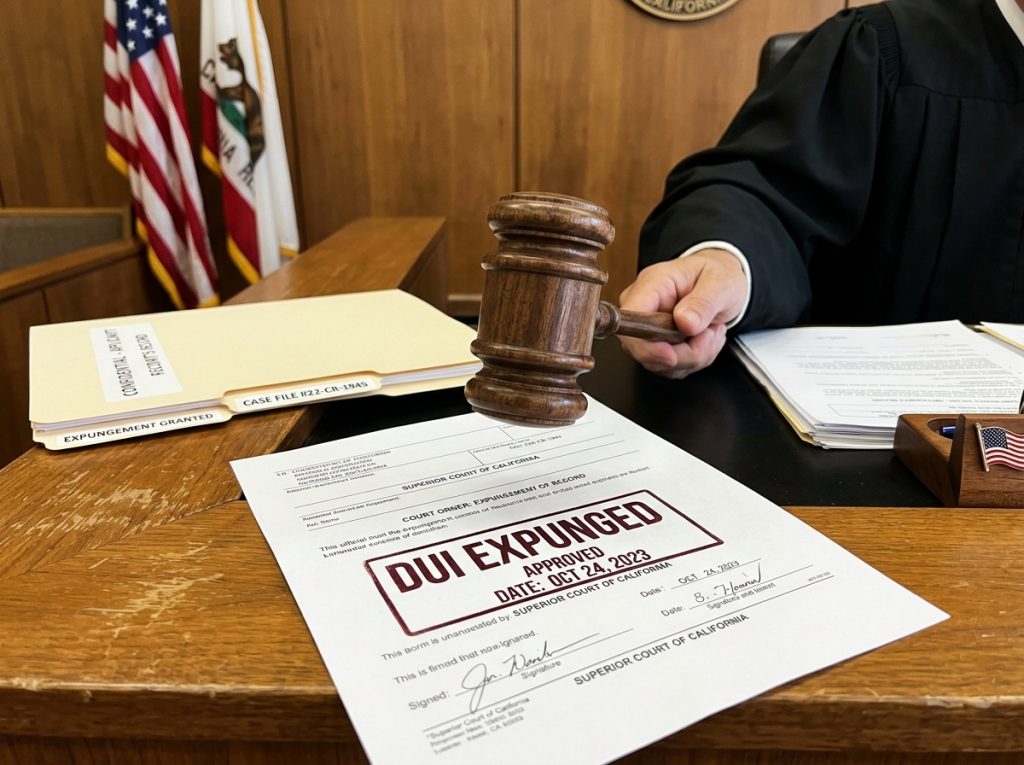
A DUI on Your Record Doesn’t Have to Be Permanent
Expunge DUI record is possible in 28 states — here’s how to get started:
- Check if your state allows it — 22 states (including Florida and Georgia) prohibit DUI expungement entirely
- Confirm you meet eligibility requirements — typically: first offense, probation completed, no new charges
- Wait out the required period — ranges from right after probation ends to 10+ years depending on your state
- File a petition with the court — include supporting documents and pay filing fees ($100–$500)
- Attend your hearing — a judge reviews your case and decides whether to grant the order
A DUI conviction can follow you for years — affecting jobs, housing, professional licenses, and even loan applications. Long after the fines are paid and probation is finished, that record keeps showing up.
The good news? For many people, it doesn’t have to stay that way.
Depending on where you live and the details of your case, you may be able to have your DUI conviction sealed, set aside, or fully removed from public records. The process takes time and paperwork — but the relief it brings can be life-changing.
This guide walks you through every step.

Expungement vs. Sealing: What Happens to Your Record?
When we talk about clearing a record, we often use the word “expungement” as a catch-all term. However, the law is a bit more nuanced than that. Depending on the state where your conviction occurred, the relief you receive might look a little different.
At its core, the goal is to prevent the general public—like potential employers or landlords—from seeing your past mistakes. But how the court achieves that varies. Some states “destroy” the record, while others simply “lock” it away.
According to the National Conference of State Legislatures research on expungement, expungement is a court-ordered process where a record is sealed, destroyed, or marked as expunged in official databases. This makes it inaccessible to most public and private background-check inquiries. If you are dealing with the aftermath of a conviction, understanding these distinctions is the first step toward a fresh start. For more specific guidance, you can learn more info about driving offense defense to see how these laws apply to your unique situation.

Defining True Expungement
A “true” expungement is the gold standard of record clearing. In some jurisdictions, this means the physical and digital records are actually destroyed or returned to the individual. In others, it means the record is “isolated” so thoroughly that for legal purposes, the conviction no longer exists.
For example, under California Penal Code § 1203.4 dismissal details, a petitioner can ask the court to set aside a guilty plea or verdict and dismiss the accusations. Once granted, the individual is released from most “penalties and disabilities” resulting from the offense. While it doesn’t completely vanish from law enforcement eyes, it allows you to truthfully tell most employers that you have not been convicted of a crime.
Understanding Record Sealing and Set-Asides
If true expungement isn’t available, you might seek “record sealing” or a “set-aside.”
- Record Sealing: The record still exists, but it is hidden from public view. It’s like putting a “Do Not Disturb” sign on your file. Employers won’t see it, but a judge or a police officer might if you get into trouble again.
- Set-Aside: Common in states like Arizona under A.R.S. § 13-905, a set-aside vacates the judgment of guilt. The record remains, but it is updated to show that the conviction was dismissed by the court.
Whether you are dealing with felonies and misdemeanors, these legal remedies provide a path to move forward without your past defining your future.
Eligibility and Waiting Periods Across the US
You can’t just walk into a courthouse the day after your sentencing and ask to expunge dui record. The law requires you to prove you’ve learned your lesson and stayed on the straight and narrow. This is usually measured through “waiting periods.”
These periods typically begin only after you have successfully completed every part of your sentence—including jail time, community service, and most importantly, probation. If you are wondering what to do next, check out more info about what to do after an arrest to ensure you are meeting all legal obligations.
Eligibility Requirements to Expunge DUI Record
While every state has its own rulebook, most share a few common hurdles:
- Sentence Completion: You must have paid all fines and finished all court-ordered alcohol education or treatment programs.
- Clean Record: You generally cannot have any pending criminal charges or new convictions during your waiting period.
- Offense Severity: Misdemeanor DUIs are much easier to clear than felony DUIs. If your DUI involved a serious injury or a very high BAC, you might be barred from relief.
State-Specific Prohibitions and Allowances
The “map” of DUI relief is a bit of a patchwork quilt. About 28 states allow some form of relief, while 22 states have an absolute ban on clearing a DUI conviction.
- The Prohibited: States like Florida, Georgia, Illinois, and Ohio generally do not allow you to expunge or seal a DUI conviction. In these states, the record is permanent.
- The Patient: In Kansas, you might wait 5 years for a first offense and 10 years for a second. In Michigan, a 5-year rule applies to first-time misdemeanor DUIs.
- Rhode Island: Our local laws offer specific pathways for those who have stayed out of trouble. You can find the official Rhode Island expungement laws through the Attorney General’s office, which outlines the requirements for “first offenders” and those with multiple misdemeanors.
Step-by-Step Guide to Expunge DUI Record
Ready to start? Grab a pen and some coffee, because there’s paperwork ahead. While you can technically do this yourself, many people find that the complexity of the law makes it worth it to hire a RI defense attorney to handle the heavy lifting and ensure no deadlines are missed.
Step 1: Verify Your Specific Eligibility
Don’t spend money on filing fees until you are sure you qualify. You’ll need to pull your “Certified Court Disposition” for the DUI case and a full copy of your criminal history.
- Check the date you were “discharged” from probation.
- Count the years from that date to today.
- Ensure no other arrests have popped up in the meantime. For those in neighboring states, resources like the NJ Courts expungement navigator can help clarify eligibility, but always check the specific rules for the state where the conviction happened.
Step 2: File the Petition and Pay Fees
Once you’ve confirmed you’re eligible, you must file a formal “Petition for Expungement” (or your state’s equivalent) in the court where you were convicted. This usually involves:
- A signed affidavit.
- A motion for relief.
- Paying a filing fee, which typically ranges from $100 to $500. If you cannot afford the fee, you can often file a “poverty affidavit” to ask the court to waive the cost. For a look at how digital systems work, you can view this step-by-step guide for electronic filing used in some jurisdictions.
Step 3: Attend the Hearing and Update Agencies
After filing, you must “serve” the prosecutor’s office with a copy of your petition. They have a window (usually 30–60 days) to object. If they don’t object, or if the judge wants to hear more, you’ll attend a hearing.
- The Hearing: You may need to present evidence of your rehabilitation, such as steady employment or completion of advanced treatment.
- The Order: If the judge signs the order, it’s not over yet! You (or your lawyer) must ensure that the signed order is sent to every agency that holds your record—the police, the state repository, and even the FBI’s Interstate Identification Index (III).
Common Costs to Expunge DUI Record
Budgeting for this process is important. Here is a quick breakdown of what to expect:
- Filing Fees: $100–$500.
- Certified Records: $10–$50.
- Fingerprinting: $20–$50.
- Attorney Fees: These vary but often range from $500 to $2,000 depending on the complexity of the case.
Life After Expungement: Employment and Driving Records
What happens once the judge bangs the gavel and says “Granted”? For most people, it feels like a weight has been lifted. You can finally apply for that dream job or that nice apartment without fear of the “background check” monster.
However, it is important to have realistic expectations. Expungement is powerful, but it isn’t a magic “undo” button for everything in your life.
Does Expungement Clear Your DMV Record?
This is the most common misconception. Criminal expungement does NOT automatically clear your driving record. The court system and the Department of Motor Vehicles (DMV) are two separate entities. While the court may seal your criminal conviction, the DMV usually maintains its own history of license suspensions and traffic violations.
- Insurance: Because insurance companies look at your driving record (not just criminal records), your rates may not drop immediately after an expungement.
- SR-22: If you were required to have an SR-22 insurance certificate, that requirement usually stays in place until the DMV’s designated time period ends.
Who Can Still See an Expunged DUI?
While the general public is locked out, certain “high-level” entities can often still see the record. This includes:
- Law Enforcement: If you get another DUI, the “expunged” one will almost certainly be used to enhance your penalties as a “prior” offense.
- Professional Licensing Boards: If you are applying to be a doctor, lawyer, or nurse, boards like the Federation of State Medical Boards often require you to disclose expunged records.
- Immigration: Federal immigration officials do not always recognize state expungements and may still consider the conviction during residency or citizenship applications.
Frequently Asked Questions about DUI Expungement
Can I expunge a felony DUI or multiple convictions?
It’s tough, but sometimes possible. Most states limit expungement to “first offenders” with misdemeanors. However, some states (like Kansas or Minnesota) allow for the clearing of multiple offenses or even certain felonies after a much longer waiting period (often 10+ years) and a clean track record.
What happens if my expungement petition is denied?
If a judge denies your request, don’t panic. You usually have the right to know why. Common reasons include unpaid fines or filing too early. In many cases, you can re-apply after a certain amount of time has passed or after you’ve corrected the issue (like paying off that last $50 fine).
Do I really need a lawyer to expunge my record?
You aren’t legally required to have one, but the process is full of “legal landmines.” One wrong form or a missed deadline can result in a denial and a lost filing fee. A lawyer ensures the paperwork is perfect and can argue your case effectively if the prosecutor objects.
Conclusion
A DUI conviction is a chapter in your life, but it doesn’t have to be the whole book. By taking the steps to expunge dui record, you are investing in your future and reclaiming your reputation.
At the Law Office of Leah J. Boisclair, we provide expert criminal defense representation for misdemeanors, felonies, DUI, and expungements in both state and federal courts. We pride ourselves on offering personalized, compassionate advocacy with a track record of proven results. Based in Cranston, RI, we understand the local court systems and the specific hurdles you face.
Ready to move forward? Wipe your record clean with our practice area expertise and let us help you navigate the path to a second chance.